Ticonderoga in Essex County, New York — The American Northeast (Mid-Atlantic)
Gen. Henry Knox Trail
Photographed by Bill Coughlin, July 11, 2008
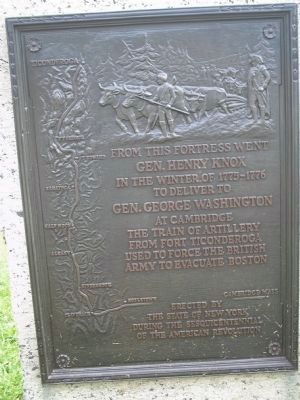
1. Knox Trail Marker
The Henry Knox Cannon Trail follows the route that Henry Knox used to transport 59 cannons from Fort Ticonderoga and Crown Point to Cambridge, Mass in the winter of 1775-76.
Gen. Henry Knox
in the winter of 1775-1776
to deliver to
Gen. George Washington
at Cambridge
the train of artillery
from Fort Ticonderoga
used to force the British
Army to evacuate Boston
Erected by
The State of New York
during the sesquicentennial
of the American Revolution
Erected 1926 by State of New York. (Marker Number NY-1.)
Topics and series. This historical marker is listed in these topic lists: Military • War, US Revolutionary. In addition, it is included in the General Henry Knox Trail series list.
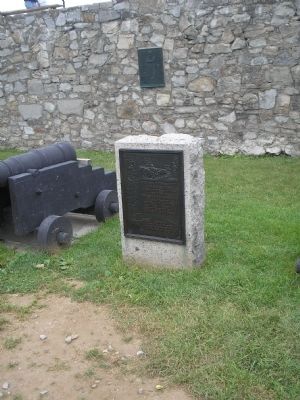
Location. 43° 50.502′ N, 73° 23.253′ W. Marker is in Ticonderoga, New York, in Essex County. It can be reached from Sandy Redoubt, on the right when traveling east. The marker is in the Parade Ground of Fort Ticonderoga, near the South parapet wall. Touch for map. Marker is in this post office area: Ticonderoga NY 12883, United States of America. Touch for directions.

Regionally, this marker is in Upstate New York, in the Adirondacks & North Country, and in the Champlain Valley. It is also in the American Northeast and in the Mid-Atlantic.
this page online
Other nearby markers. At least 8 other markers are within walking distance of this marker: 200th Anniversary of Washington’s Inspection (a few steps from this marker); Magasin du Roi, 1756 (a few steps from this marker); Through this entrance . . . (within shouting distance of this marker); Preservation and Restoration at Ticonderoga (within shouting distance of this marker); French Bake Ovens, 1757 (within shouting distance of this marker); 150th Anniversary of the Capture of This Fort (within shouting distance of this marker); Colonel Ethan Allen (within shouting distance of this marker); a different marker also named French Bake Ovens, 1757 (within shouting distance of this marker). Touch for a list and map of all markers in Ticonderoga.
More about this marker. The top of the marker contains a relief scene of Gen. Knox overseeing several teams of oxen dragging
Photographed by Bill Coughlin, July 11, 2008
2. Marker in the Parade Gound of Fort Ticonderoga
Related markers. Click here for a list of markers that are related to this marker. These markers follow the route used by Knox to transfer cannons from Fort Ticonderoga to Cambridge, Mass.
Also see . . .
1. The Knox Trail - Heritage Tour Guide. The Hudson River Valley Institute website entry (Submitted on August 1, 2008, by Bill Coughlin of Woodland Park, New Jersey.)
2. Fort Ticonderoga National Historic Landmark. Fort website homepage (Submitted on August 1, 2008, by Bill Coughlin of Woodland Park, New Jersey.)
3. Henry Knox. Wikipedia biography (Submitted on June 3, 2021, by Larry Gertner of New York, New York.)
Photographed by Bill Coughlin, November 10, 2018
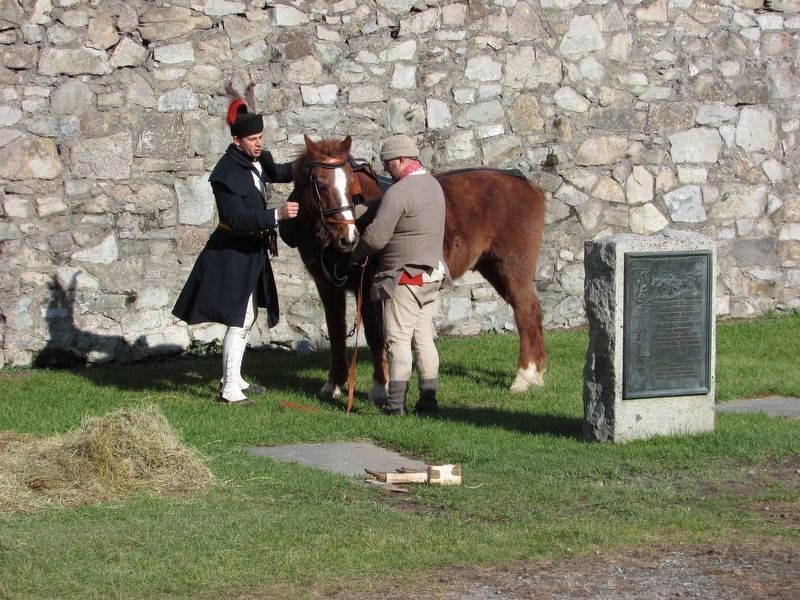
3. Rev. War Soldiers at the Gen. Henry Knox Trail Marker
Photographed by Bill Coughlin, July 11, 2008
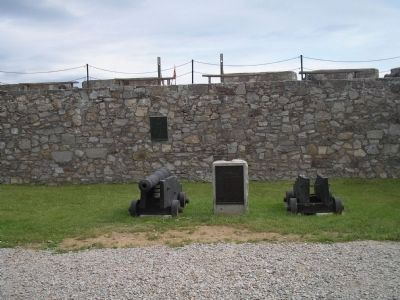
4. Knox Cannon Trail Marker
The marker at Fort Ticonderoga is the first of 56 markers that were placed along the route followed by Henry Knox's train of artillery.
Photographed by Bill Coughlin, July 11, 2008
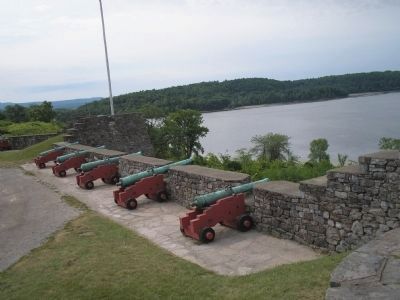
5. Artillery at Fort Ticonderoga
These cannons at Fort Ticonderoga were captured, along with the Fort, in May of 1775 by Benedict Arnold and Ethan Allen with his Green Mountain Boys.
Photographed by Allen C. Browne, August 9, 2015
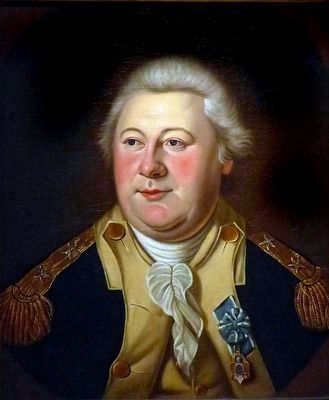
6. Henry Knox
This portrait of Henry Knox by Charles Peale Polk after the c.1783 original by Charles Willson Peale hangs in the National Portrait Gallery in Washington, DC.
“Henry Knox 1750-1806 . Born Boston, Massachusetts An overweight twenty-five-year old Boston bookseller who had taught himself military engineering and artillery out of books, Henry Knox was chief of artillery for the Continental army. In 1775, with Boston under British control, Knox commanded the 300-mile trek to Fort Ticonderoga to bring back by ox sleds the fifty-nine cannons mounted on Dorchester Heights that forced the British to evacuate the city. Throughout the seven years of battle, Knox would be by General Washington's side, his close friend and indispensable colleague and later the man the president would pick to be his secretary of war.
Knox is painted here in the uniform of a major general. He wears the badge of the Order of the Society of the Cincinnati, the fraternity of Continental army officers that he envisioned in 1783.” — National Portrait Gallery
“Henry Knox 1750-1806 . Born Boston, Massachusetts An overweight twenty-five-year old Boston bookseller who had taught himself military engineering and artillery out of books, Henry Knox was chief of artillery for the Continental army. In 1775, with Boston under British control, Knox commanded the 300-mile trek to Fort Ticonderoga to bring back by ox sleds the fifty-nine cannons mounted on Dorchester Heights that forced the British to evacuate the city. Throughout the seven years of battle, Knox would be by General Washington's side, his close friend and indispensable colleague and later the man the president would pick to be his secretary of war.
Knox is painted here in the uniform of a major general. He wears the badge of the Order of the Society of the Cincinnati, the fraternity of Continental army officers that he envisioned in 1783.” — National Portrait Gallery
Photographed by Bill Coughlin, July 11, 2008
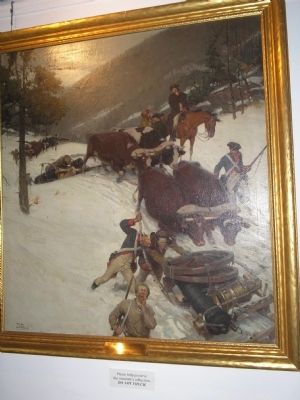
7. Noble Train of Artillery
This painting of Knox transporting the cannons is on display at Fort Ticonderoga. It was painted by Tom Lovell.
Photographed by Bill Coughlin, November 10, 2018
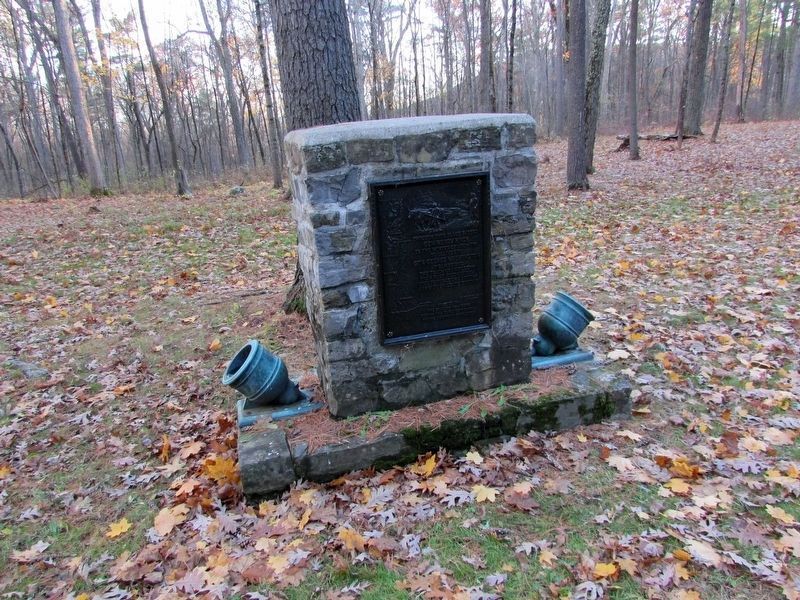
8. Gen. Henry Knox Trail Marker
Another marker for the Knox Cannon Trail is located along the exit road from Fort Ticonderoga.
Credits. This page was last revised on June 3, 2021. It was originally submitted on August 1, 2008, by Bill Coughlin of Woodland Park, New Jersey. This page has been viewed 4,599 times since then and 116 times this year. Photos: 1, 2. submitted on August 1, 2008, by Bill Coughlin of Woodland Park, New Jersey. 3. submitted on November 11, 2018, by Bill Coughlin of Woodland Park, New Jersey. 4, 5. submitted on August 1, 2008, by Bill Coughlin of Woodland Park, New Jersey. 6. submitted on August 26, 2015, by Allen C. Browne of Silver Spring, Maryland. 7. submitted on August 1, 2008, by Bill Coughlin of Woodland Park, New Jersey. 8. submitted on November 11, 2018, by Bill Coughlin of Woodland Park, New Jersey.
