Tuskegee Airmen National Historic Site in Macon County, Alabama — The American South (East South Central)
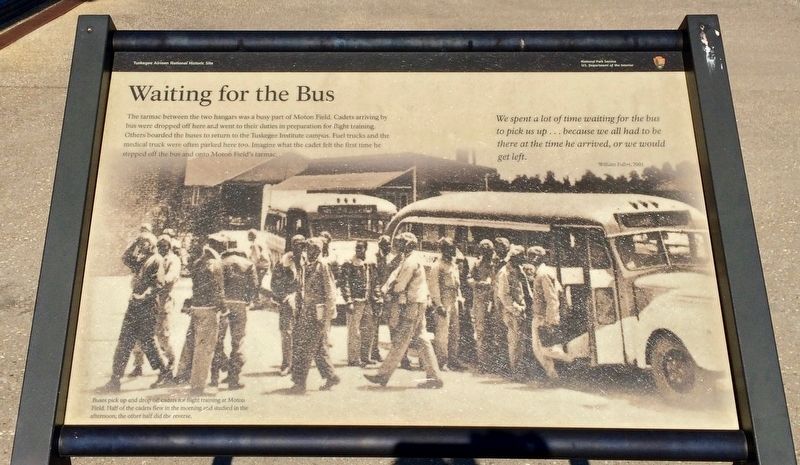
Waiting for the Bus
Tuskegee Airmen National Historic Site
Photographed by Mark Hilton, November 16, 2016
1. Waiting for the Bus Marker
We spent a lot of time waiting for the bus to pick us up...because we all had to be there at the time he arrived, or we would get left.
William Fuller, 2001
{Photo Caption}
Buses pick up and drop off cadets for flight training at Moton Field. Half of the cadets flew in the morning and studied in the afternoon; the other half did the reverse.
Erected by National Park Service, Department of the Interior.
Topics. This historical marker is listed in these topic lists: African Americans • Air & Space • War, World II. A significant historical year for this entry is 2001.
Location. 32° 27.425′ N, 85° 40.812′ W. Marker is in Tuskegee Airmen National Historic Site, Alabama, in Macon County. It can be reached from
this page online

Regionally, this marker is in the American South, specifically in the Deep South, and in the Black Belt. Globally, it is in North America, a Gulf of Mexico state, the Western Hemisphere, the Western World, and the Anglosphere. Historically, it finds itself in what was once the territory of the Mississippian Culture, one of the Confederate States of America, and the Antebellum South.
Other nearby markers. At least 8 other markers are within walking distance of this marker: Oil Storage Shed (a few steps from this marker); A Bit to Eat (a few steps from this marker); Hangar No. 1 (within shouting distance of this marker); Bath and Locker House (within shouting distance of this marker); Moton Field Expands (within shouting distance of this marker); FIRE! (within shouting distance of this marker); It Was Called "Dope" (within shouting distance of this
Photographed by Mark Hilton, November 16, 2016
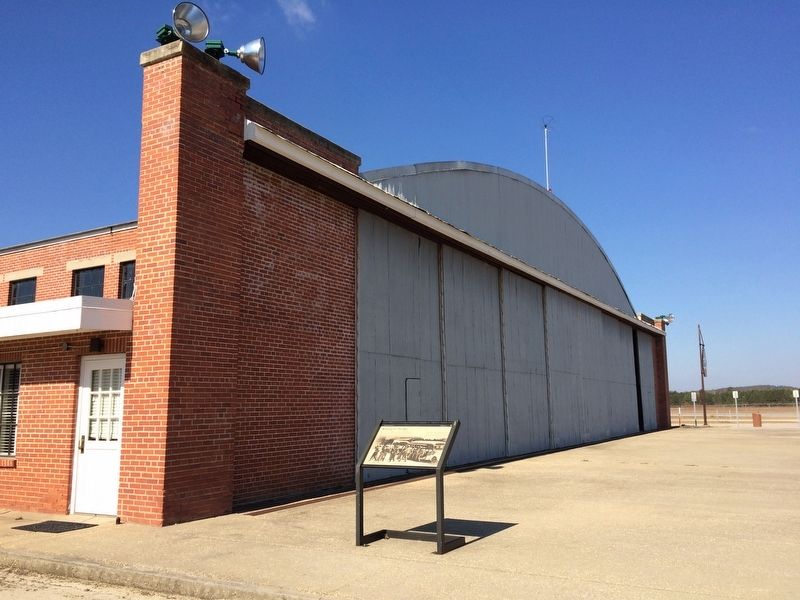
2. Waiting for the Bus Marker at Hangar #1 near Moton Field.
Photographed by Mark Hilton, November 16, 2016
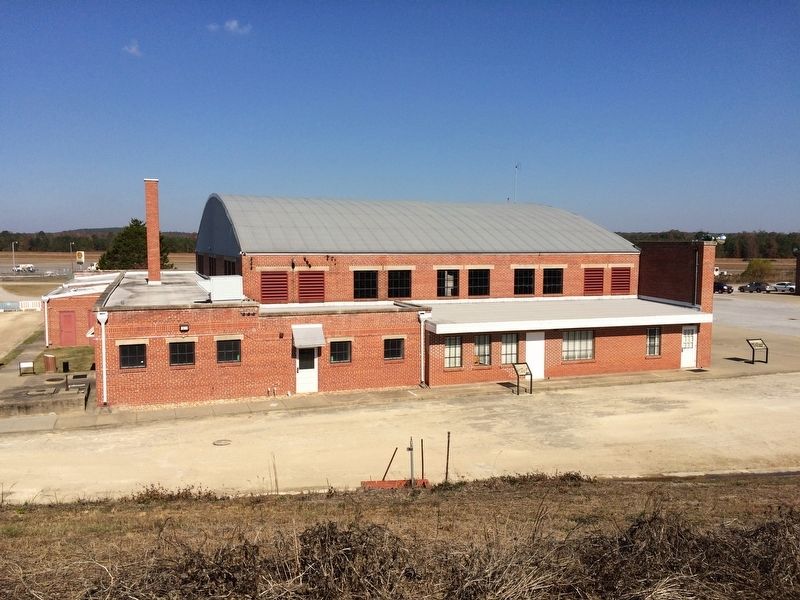
3. Overview of Hangar #1 at Moton Field.
Photographed by Mark Hilton, November 16, 2016
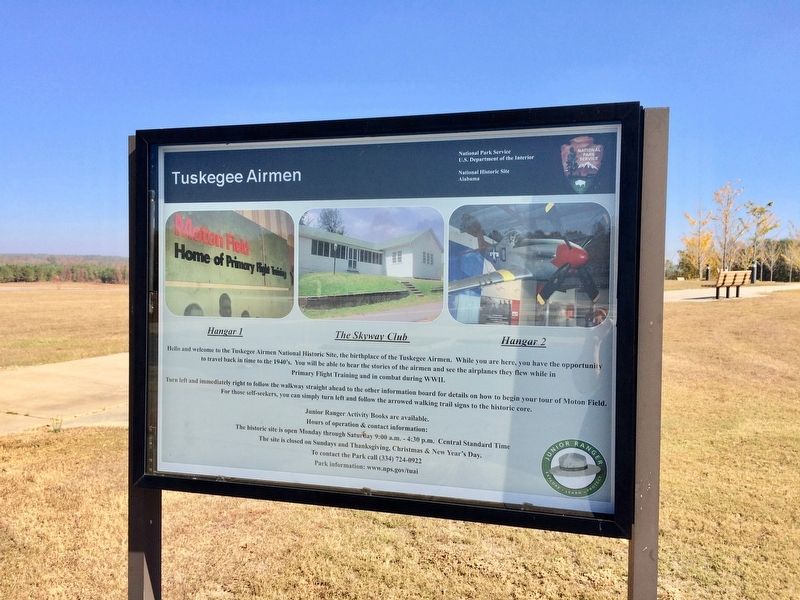
4. Tuskegee Airmen Historic Site entrance marker at top of hill.
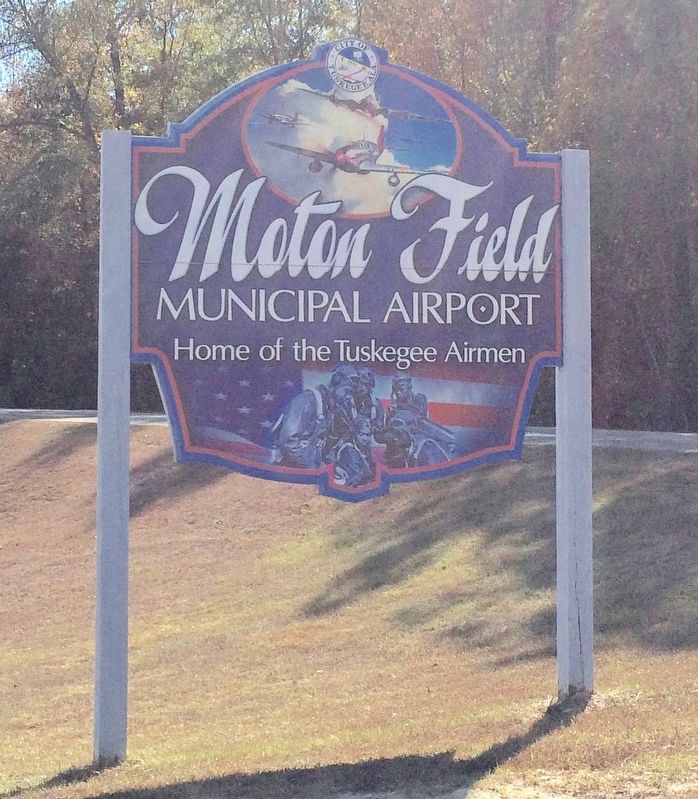
Photographed by Mark Hilton, November 16, 2016
5. Moton Field entrance sign.
Credits. This page was last revised on November 11, 2025. It was originally submitted on November 16, 2016, by Mark Hilton of Montgomery, Alabama. This page has been viewed 591 times since then and 25 times this year. Photos: 1, 2, 3, 4, 5. submitted on November 16, 2016, by Mark Hilton of Montgomery, Alabama.
