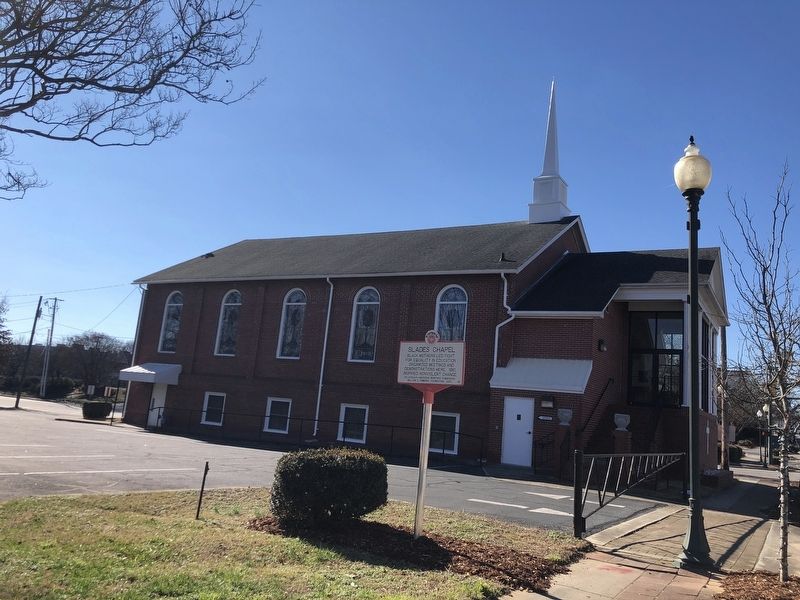
This trail honors the people and places – both the well-known and the unsung – that were critical to the Civil Rights Movement in North Carolina. Plans call for installing 50 markers across the Tar Heel State between 2021 and 2023. Supported by the William G. Pomeroy Foundation, the trail is presented by the NC African American Heritage Commission in partnership with the NC Office of Archives & History and Visit NC.
Black mothers led fight for equality in education. Organized meetings and demonstrations here, 1961. Inspired nonviolent change. — — Map (db m240443) HM
African Americans, led by local high school students, held sit-ins and picketed businesses in Feb. 1960 to demand desegregation. — — Map (db m196330) HM
East Tarboro Citizens League formed here June 1963. Led by Dr. Moses Ray. Improved housing, jobs, and voting rights for black residents. — — Map (db m226885) HM
On Dec. 7, 1955, six Black
men teed up at whites-only
Gillespie Golf Course. Act
of civil disobedience paved
way for 1962 integration. — — Map (db m234029) HM
African American doctors played golf in Dec. 1954 to challenge segregation at city's Blair Park course. Integrated in March 1956. — — Map (db m234019) HM
County-wide org. led voter registration drives. Held protests and other civil rights activities, 1964-69. Headquarters were here. — — Map (db m290869) HM
Johnson v. Branch, Federal Appeals Court case in 1966, protected teachers involved in civil rights movement. The plaintiff lived here. — — Map (db m260620) HM
In 1957, four Black citizens entered town library to demand access. Resulting action and advocacy ended segregation in the library. — — Map (db m291718) HM
African American women & youth led sit-ins, boycotts, and picketing, 1960-1961. Effort led to desegregation of downtown businesses. — — Map (db m226234) HM
Doctor, Civil Rights leader, influential tennis mentor, early advocate for improved schools & access to medical care. Lived in this vicinity. — — Map (db m224841) HM
County's first black School Board member, 1971. Led efforts to integrate local schools and provide equity in education & facilities. — — Map (db m227062) HM
Est. as community center for African Americans in 1945. Became key space for fellowship and organizing local civil rights activities. — — Map (db m232687) HM
On Feb. 11, students from nearby Elizabeth City State began sit-ins at W. T. Grant lunch counter, here. Chain integrated counters July 11. — — Map (db m266252) HM
From 1956 to 1959, Joseph and Elwyna Holt led effort to integrate the City of Raleigh school system. They lived 120 yards south. — — Map (db m233353) HM
Protests against segregated lunch counters. Here, Feb. 1960, led to 41 arrests. Later acquittals marked noted civil rights victory. — — Map (db m233232) HM
Built by black citizens in 1936 as library, lavatory, & gathering space. Hub for educational programs and civil rights activities. — — Map (db m257386) HM