Atotonilco in San Miguel de Allende, Guanajuato, Mexico — The Central Highlands (North America)
Sanctuary of Jesus Nazarene of Atotonilco UNESCO World Heritage Site
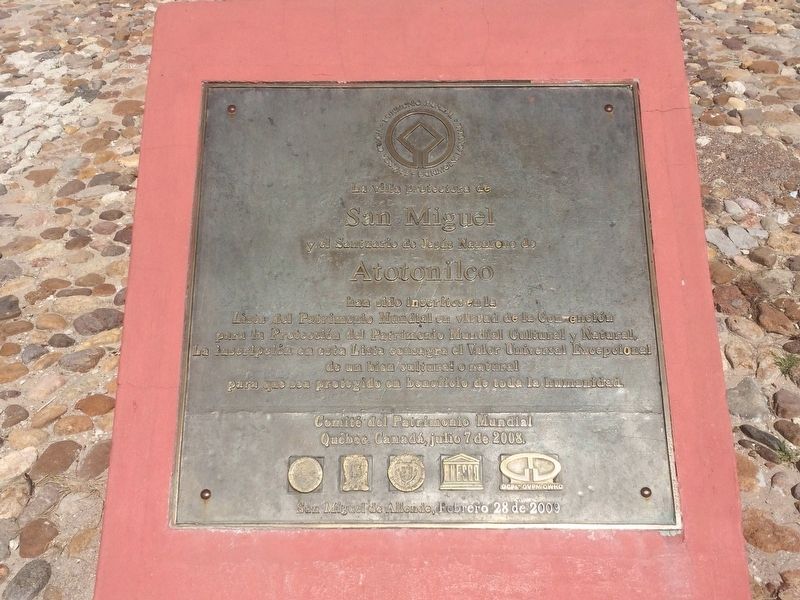
Photographed by J. Makali Bruton, October 1, 2016
1. Sanctuary of Jesus Nazarene of Atotonilco UNESCO World Heritage Site Marker

San Miguel
y el Santuario de Jesús Nazareno de
Atotonilco
han sido inscritos en la
Lista del Patrimonio Mundial en virtud de la Convención
para la Protección del Patrimonio Mundial Cultural y Natural.
La inscripción en esta Lista consagra el Valor Universal Excepcional
de un bien cultural o natural
para que sea protegido en beneficio de toda la humanidad.
Comité del Patrimonio Mundial
Québec, Canadá, julio 7 de 2008.
San Miguel de Allende, Febrero 28 de 2009
and the Sanctuary of Jesús Nazarene of
Atotonilco
have been inscribed in the
List of World Heritage Sites under the Convention for the Protection of the World’s Cultural and Natural Heritage.
The inscription in this List consecrates the site as one having cultural or natural characteristics of a Universal Exceptional Value that should be protected for the benefit of all humanity.
World Heritage Committee
Québec, Canada, July 7, 2008.
San Miguel de Allende, February 28, 2009
Erected 2009 by UNESCO World Heritage Committee.
Topics and series. This historical marker is listed in these topic
this page online
Location. 21° 0.289′ N, 100° 47.667′ W. Marker is in Atotonilco, Guanajuato, in San Miguel de Allende. It is on Calle Principal, on the right when traveling north. Touch for map. Marker is in this post office area: Atotonilco GTO 37893, Mexico. Touch for directions.

Regionally, this marker is in Central Mexico and in the Bajío. Globally, it is in North America, on the Ring of Fire, and in the Western Hemisphere. Historically, it finds itself in what was once New Spain, a Spanish colony, and the Aztec Empire.
Other nearby markers. At least 8 other markers are within 11 kilometers of this marker, measured as the crow flies: The Parish of Atotonilco and Miguel Hidalgo (within shouting distance of this marker); The Banner of Atotonilco (within shouting distance of this marker); The Marriage of Ignacio Allende and Maria de las Fuentes (within shouting distance of this marker); Félix Luna Romero (approx. 10.9 kilometers
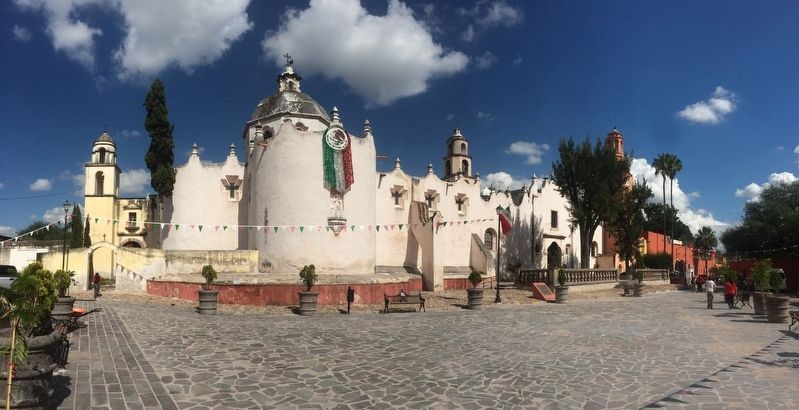
Photographed by J. Makali Bruton, October 1, 2016
2. Sanctuary of Jesus Nazarene of Atotonilco UNESCO World Heritage Site Marker
Another marker is no longer nearby. Barrio de San Juan de Dios (was approx. 11 kilometers away but has been confirmed missing).
Also see . . . Protective town of San Miguel and the Sanctuary of Jesús Nazareno de Atotonilco. "The fortified town, first established in the 16th century to protect the Royal Route inland, reached its apogee in the 18th century when many of its outstanding religious and civic buildings were built in the style of the Mexican Baroque. Some of these buildings are masterpieces of the style that evolved in the transition from Baroque to neoclassical. Situated 14 km from the town, the Jesuit sanctuary, also dating from the 18th century, is one of the finest examples of Baroque art and architecture in the New Spain. It consists of a large church, and several smaller chapels, all decorated with oil paintings by Rodriguez Juárez and mural paintings by Miguel Antonio Martínez de Pocasangre. Because of its location, San Miguel de Allende acted as a melting pot where Spaniards, Creoles and Amerindians exchanged cultural influences while the Sanctuary of Jesús Nazareno de Atotonilco constitutes an exceptional example of the exchange between European and Latin American cultures. Its architecture and interior decoration testify to the influence of Saint Ignacio de Loyola’s doctrine.
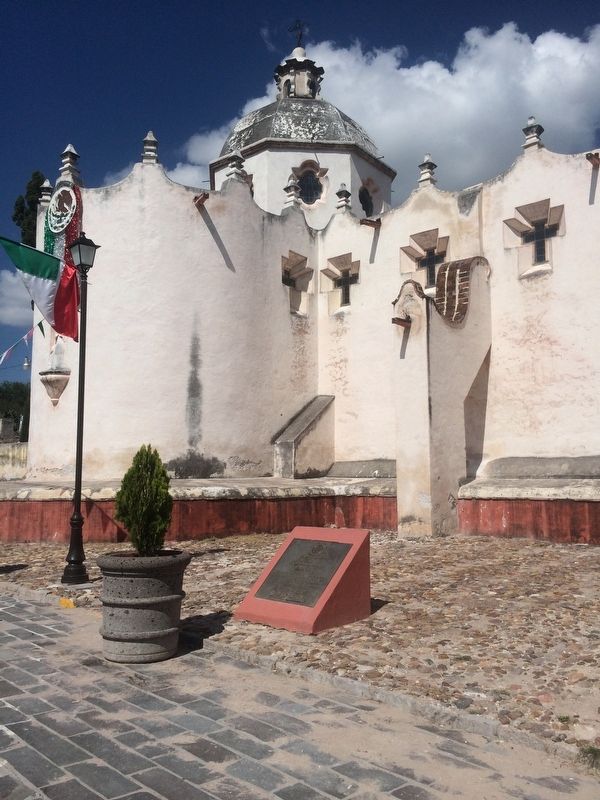
Photographed by J. Makali Bruton, October 1, 2016
3. Sanctuary of Jesus Nazarene of Atotonilco UNESCO World Heritage Site Marker
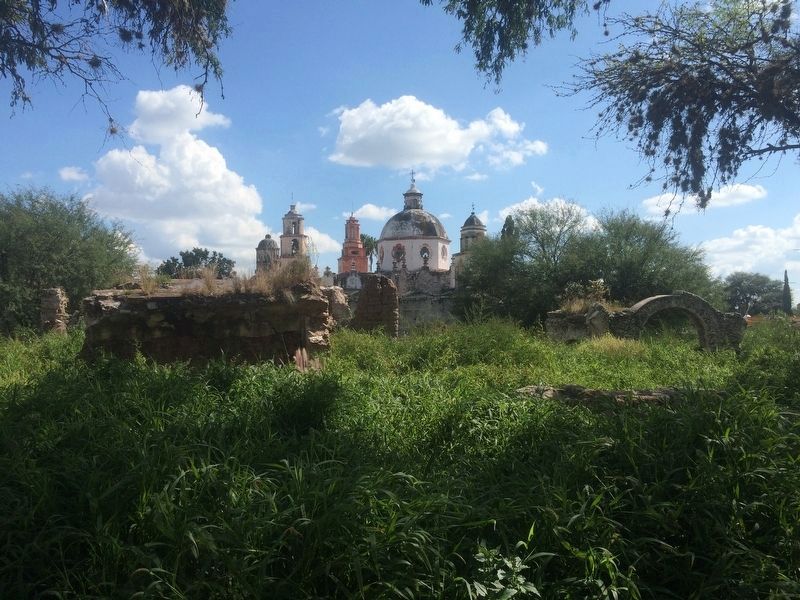
Photographed by J. Makali Bruton, October 1, 2016
4. Sanctuary of Jesus Nazarene of Atotonilco
In this view of some of the associated ruins at the site, the Sanctuary is seen towards the west.
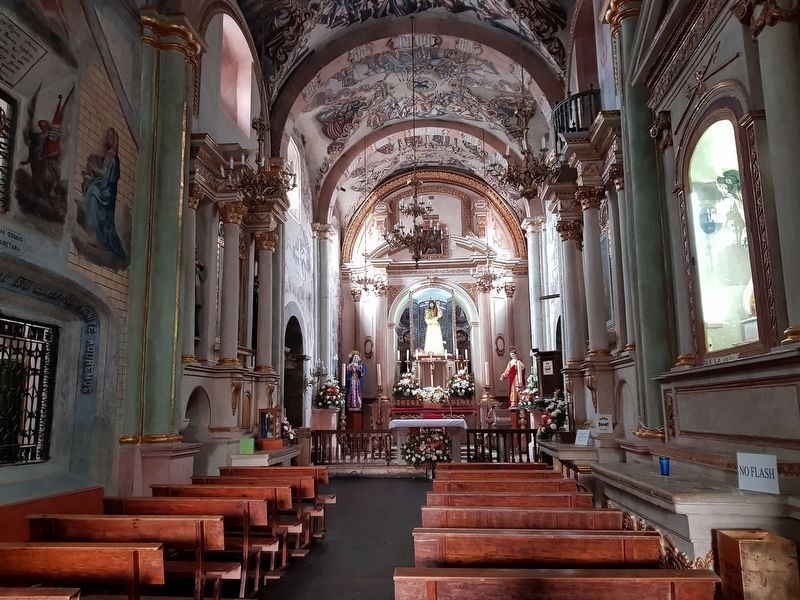
Photographed by J. Makali Bruton, February 10, 2018
5. Interior of the Sanctuary of Jesus Nazarene of Atotonilco
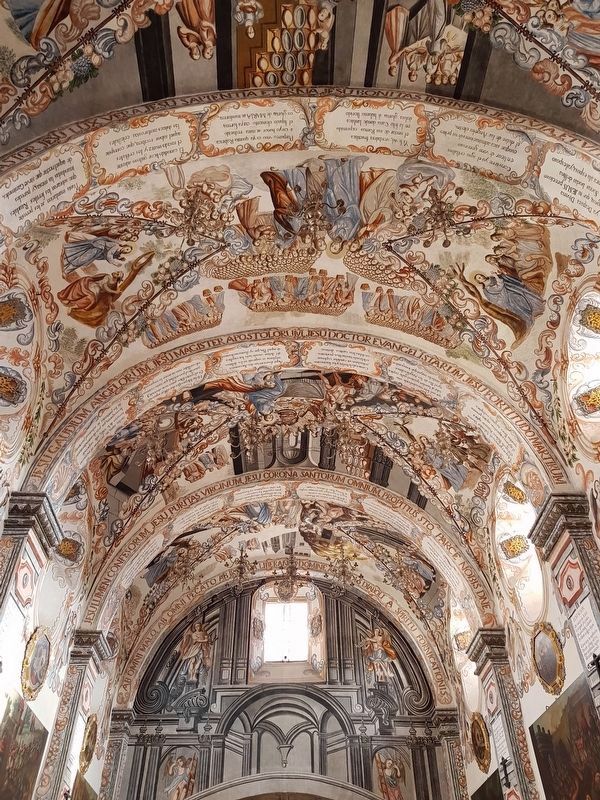
Photographed by J. Makali Bruton, February 10, 2018
6. Interior of the Sanctuary of Jesus Nazarene of Atotonilco
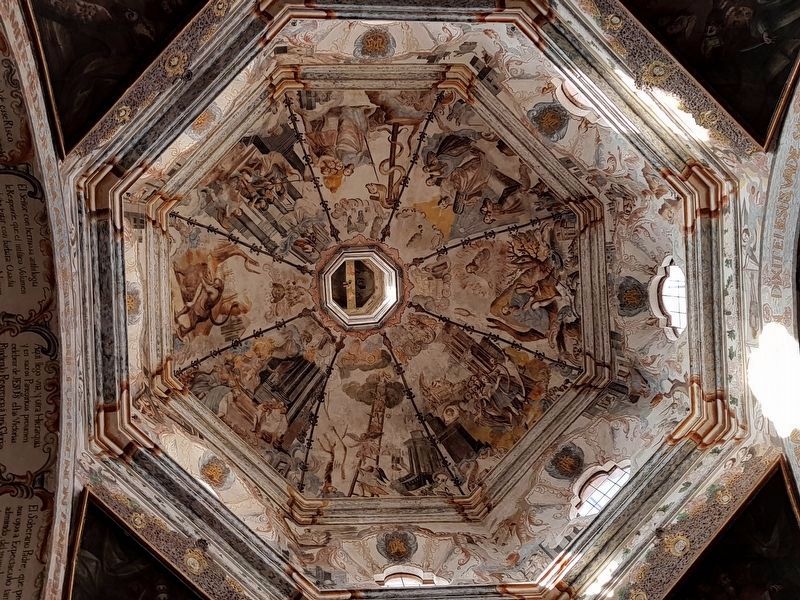
Photographed by J. Makali Bruton, February 10, 2018
7. An interior dome at the Sanctuary of Jesus Nazarene of Atotonilco
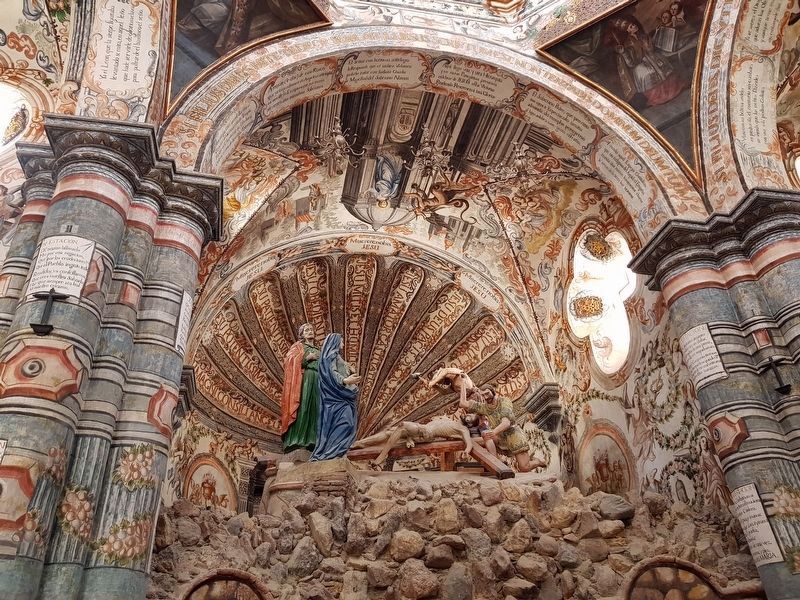
Photographed by J. Makali Bruton, February 10, 2018
8. Interior of the Sanctuary of Jesus Nazarene of Atotonilco
Credits. This page was last revised on September 1, 2020. It was originally submitted on November 28, 2016, by J. Makali Bruton of Washington, District of Columbia. This page has been viewed 633 times since then and 29 times this year. Photos: 1, 2, 3, 4. submitted on November 28, 2016, by J. Makali Bruton of Washington, District of Columbia. 5, 6, 7, 8. submitted on February 25, 2018, by J. Makali Bruton of Washington, District of Columbia.
