Volkach in Kitzingen, Bavaria, Germany — Central Europe
Pfarrkirche St. Bartholomäus
⎯⎯⎯
St. Bartholomew's Parish Church
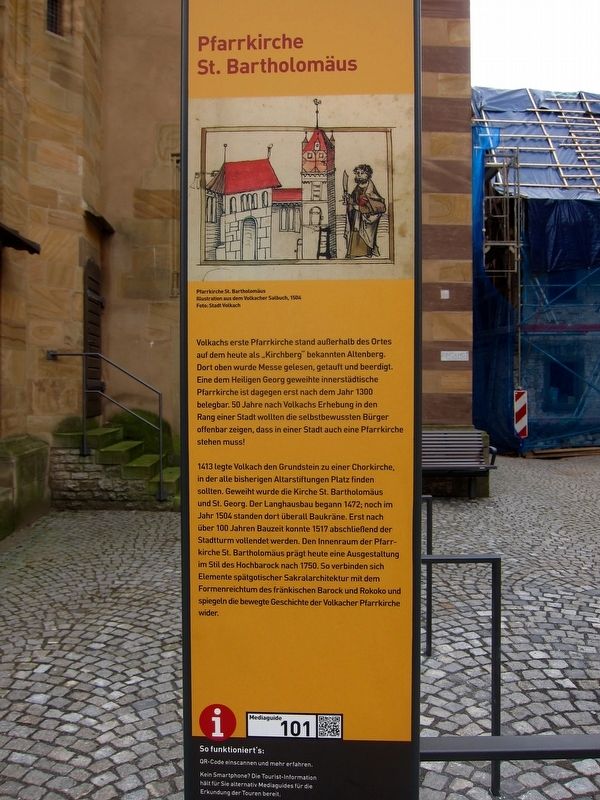
Photographed by Andrew Ruppenstein, November 21, 2016
1. Pfarrkirche St. Bartholomäus / St. Bartholomew's Parish Church Marker
1413 legte Volkach den Grundstein zu einer Chorkirche, in der alle bisherigen Altarstiftungen Platz finden sollten. Geweiht wurde die Kirche St. Bartholomäus und St. Georg. Der Langhausbau begann 1472; noch im Jahr 1504 standen dort überall Baukräne. Erst nach über 100 Jahren Bauzeit konnte 1517 abschließend der Stadtturm vollendet werden. Den Innenraum der Pfarrkirche St. Bartholomäus prägt heute eine Ausgestaltung im Stil des Hochbarock nach 1750. So verbinden sich Elemente spätgotischer Sakralarchitektur mit dem Formenreichtum des fränkischen Barock und Rokoko und spiegeln die bewegte Geschichte der Volkacher Pfarrkirche wider.
[English translation:]
Volkach's first parish church was located
this page online
In 1413, the cornerstone for the choir of the church was laid, already existing pieces were installed, and the Church of St. Bartholomew and St. George was consecrated. Construction of the nave began in 1472, but even as late as the year 1504 there were still cranes everywhere. It was only after more than 100 years of construction that the bell tower was completed in 1517. The current interior of St. Bartholomew is characterized by a High Baroque style design, post-1750. Thus elements of Late Gothic sacral architecture are combined with the rich forms of the Franconian Baroque and Rococo styles, reflecting the changing history of Volkach's parish church.
Erected by Stadt Volkach.
Topics. This historical marker is listed in these topic lists: Architecture
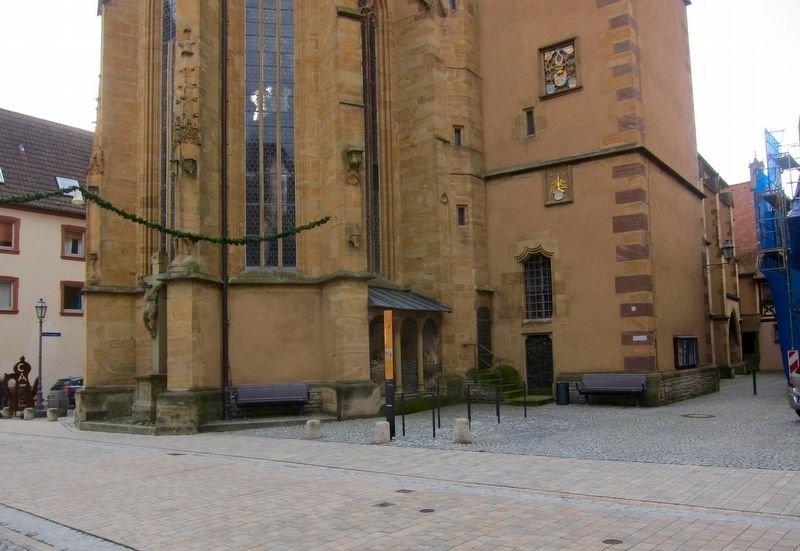
Photographed by Andrew Ruppenstein, November 21, 2016
2. Pfarrkirche St. Bartholomäus / St. Bartholomew's Parish Church and Marker - Wide View
Location. 49° 51.917′ N, 10° 13.583′ E. Marker is in Volkach, Bayern (Bavaria), in Kitzingen. It is at the intersection of Kirchgasse and Hauptstrasse on Kirchgasse. Touch for map. Marker is at or near this postal address: Kirchgasse 2, Volkach BY 97332, Germany. Touch for directions.

Regionally, this marker is in German Franconia. Globally, it is in Europe, the European Union, Atlantic Europe, Central Europe, the Schengen Area, Western Europe, and the Western World. Historically, it finds itself in what was once the Holy Roman Empire and also the former West Germany.
Other nearby markers. At least 8 other markers are within 3 kilometers of this marker, measured as the crow flies: Volkach (about 90 meters away, measured in a direct line); Schelfenhaus / Schelf House (about 120 meters away); Von Rechtswegen über das Menschenblut zu richten / A Legal Process Driven by Human Blood (about 150 meters away); Bei einem Backofen / At the Baker's Oven (about 150 meters away); Peter Ochs, Metzler / Peter Ochs, the Butcher (about 150 meters away);
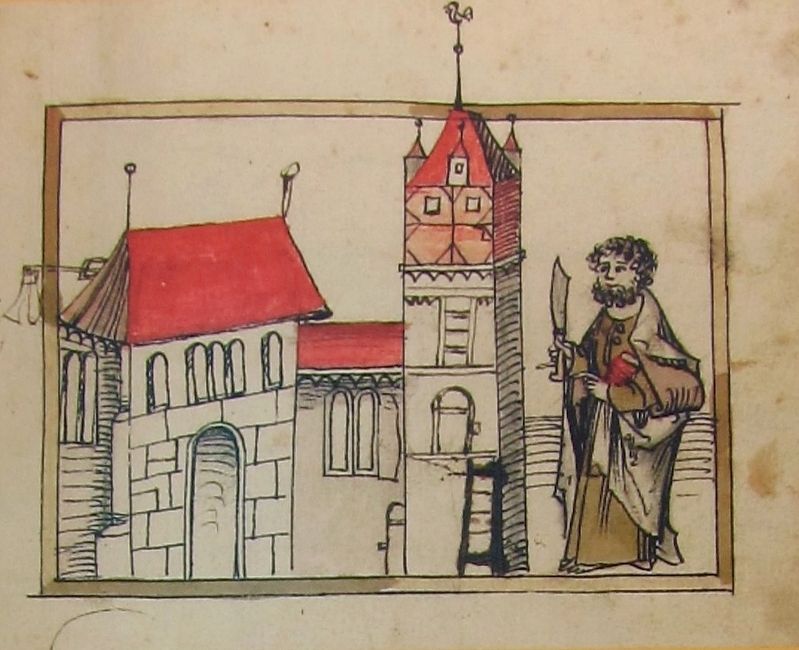
Illustration from the Volkacher Salbuch, written by Niklas Brobst, Folio 213r, circa 1500
3. Pfarrkirche St. Bartholomäus / St. Bartholomew's Parish Church Marker - Inset Illustration
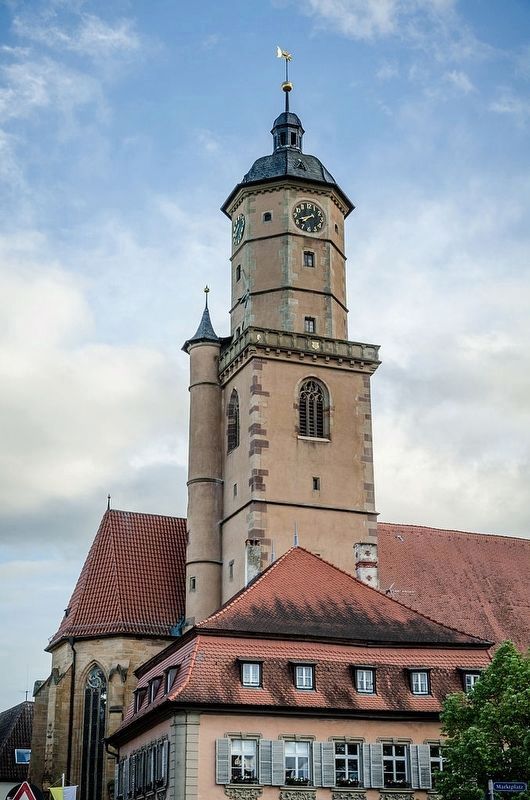
Photographed by Tilman2007 (via Wikimedia Commons CC License 3.0)
4. Stadtpfarrkirche St. Bartholomäus und St. Georg
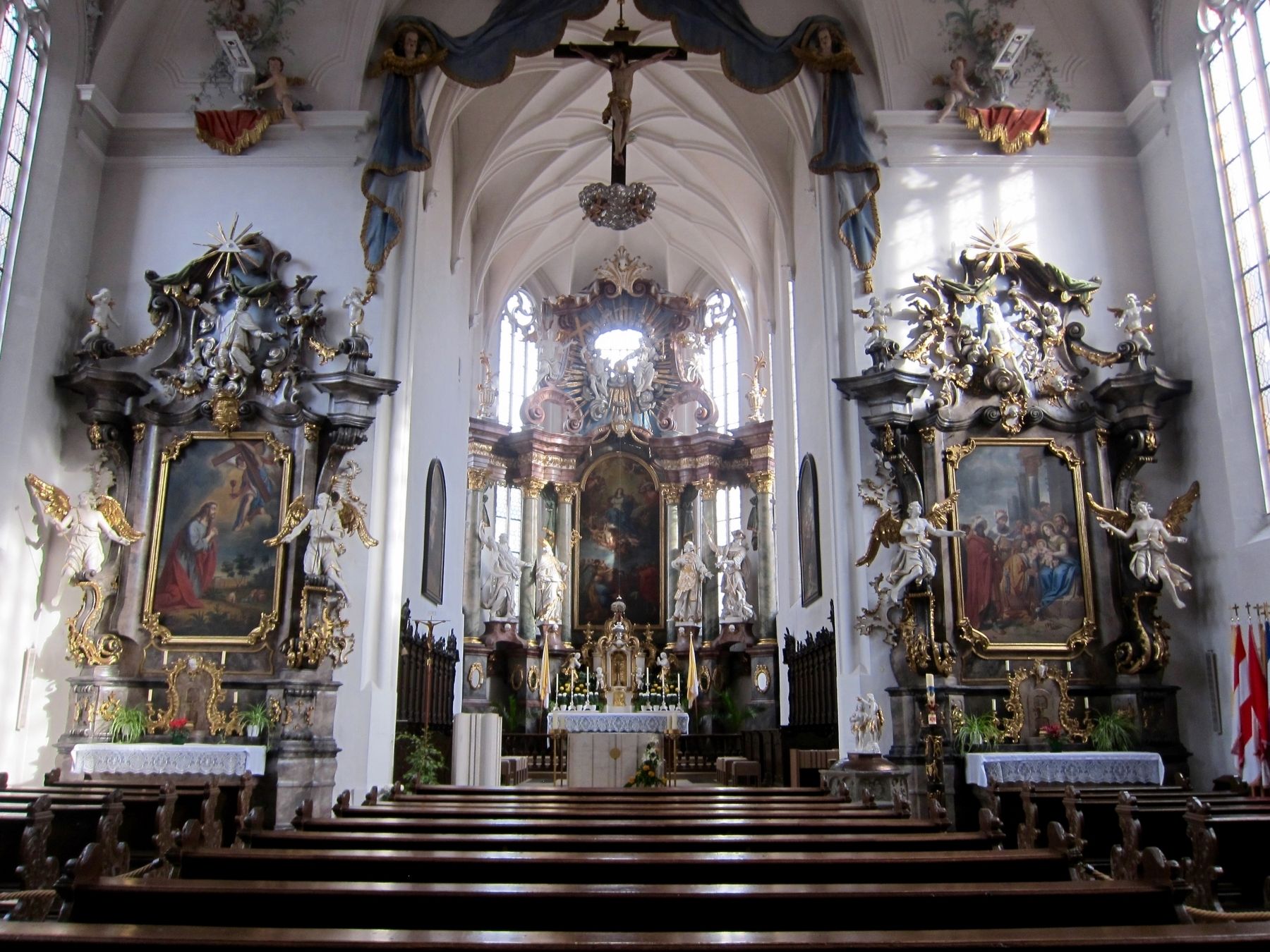
Photographed by Andrew Ruppenstein, November 21, 2016
5. St. Bartholomew's - Main Altar
Credits. This page was last revised on January 28, 2022. It was originally submitted on December 23, 2016, by Andrew Ruppenstein of Lamorinda, California. This page has been viewed 454 times since then and 10 times this year. Photos: 1, 2, 3, 4, 5. submitted on December 23, 2016, by Andrew Ruppenstein of Lamorinda, California.
