Holy Trinity in Russell County, Alabama — The American South (East South Central)
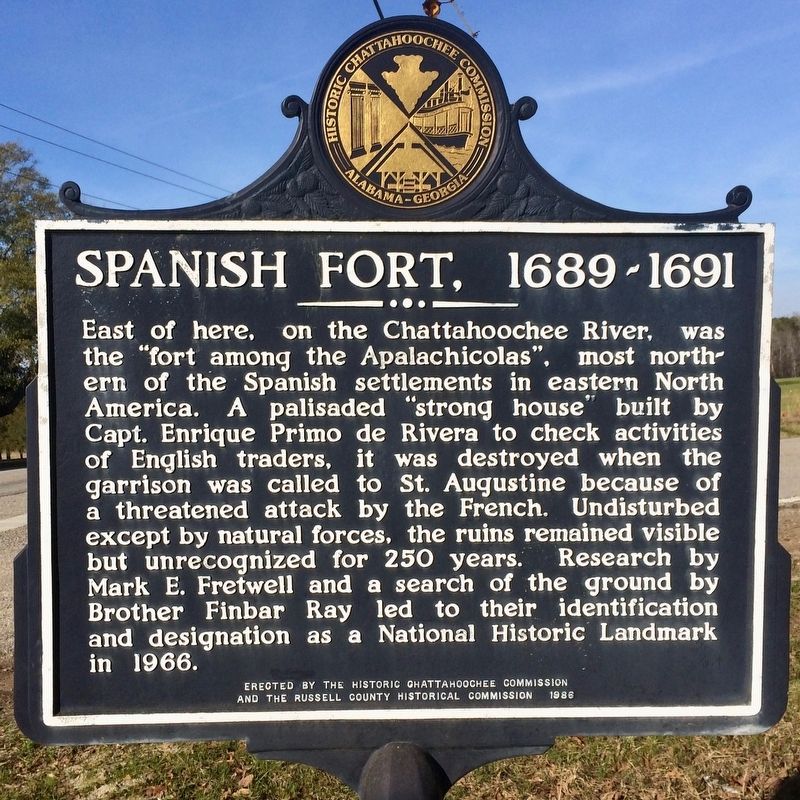
Spanish Fort, 1689-1691
Photographed by Mark Hilton, February 4, 2017
1. Spanish Fort, 1689-1691 Marker
Erected 1986 by the Historic Chattahoochee Commission and the Russell County Historical Commission.
Topics. This historical marker is listed in these topic lists: Forts and Castles • Landmarks • Settlements & Settlers • Waterways & Vessels. A significant historical year for this entry is 1966.
Location. 32° 13.239′ N, 85° 0.352′ W. Marker is in Holy Trinity, Alabama, in Russell County. It is at the intersection of Alabama Route 165 and Terminal Road (Route 54), on the right when traveling
this page online

Regionally, this marker is in Greater Columbus. It is also in the American South, specifically in the Deep South, and in the Black Belt. Globally, it is in North America, a Gulf of Mexico state, the Western Hemisphere, the Western World, and the Anglosphere. Historically, it finds itself in what was once the territory of the Mississippian Culture, one of the Confederate States of America, and the Antebellum South.
Other nearby markers. At least 8 other markers are within 9 miles of this marker, measured as the crow flies: Bartram's Trail (approx. 4 miles away); Macedonia Missionary Baptist Church / Macedonia School (approx. 4½ miles away); Fryar Field (approx. 4.8 miles away); Fort McCreary – 1836 (approx. 5.4 miles away in Georgia); Indian Trail (approx. 6.1 miles away in Georgia); Battle of Shepherd’s Plantation (approx. 8.2 miles away in Georgia); Archaeology and Daily Life Among the Creeks (approx. 8.6 miles away); Pokkecheta, or the Ball Play (approx. 8.6 miles away).
Public Domain (NPS)
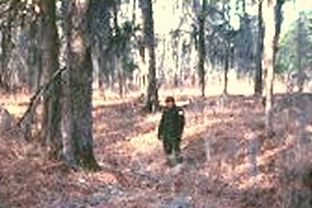
2. Apalachicola Fort Site
A National Historic Landmark site where Spain established a wattle and daub blockhouse here on the Chattahoochee River in 1690 in an attempt to maintain influence among the Lower Creek people. Abandoned after about one year of use and rediscovered in 1956. It is located on privately held farmland, and turned over to the county in 1971. It is not open to the public.
Also see . . . Wikipedia article on the Apalachicola Fort Site. (Submitted on February 4, 2017, by Mark Hilton of Montgomery, Alabama.)
Photographed by Mark Hilton, February 4, 2017
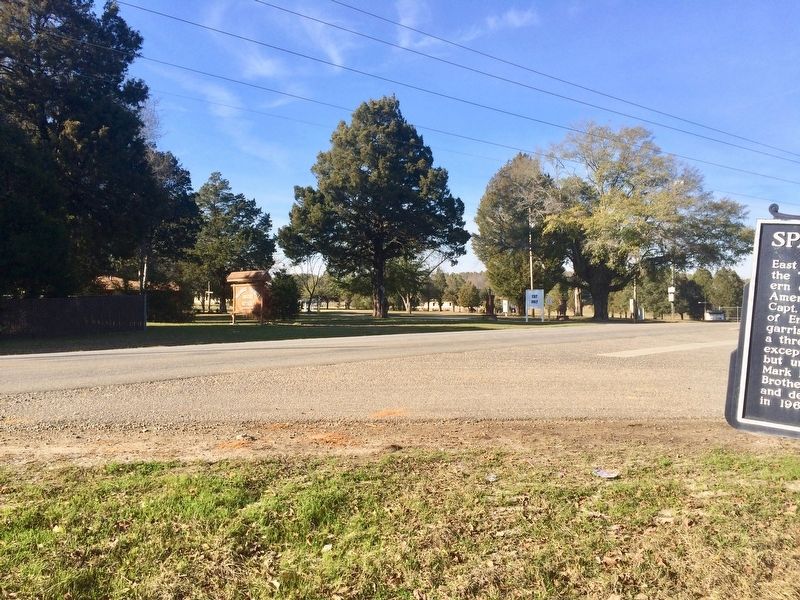
3. View north on Alabama Highway 165 & entrance to the Blessed Trinity Shrine Retreat.
Photographed by Mark Hilton, February 4, 2017
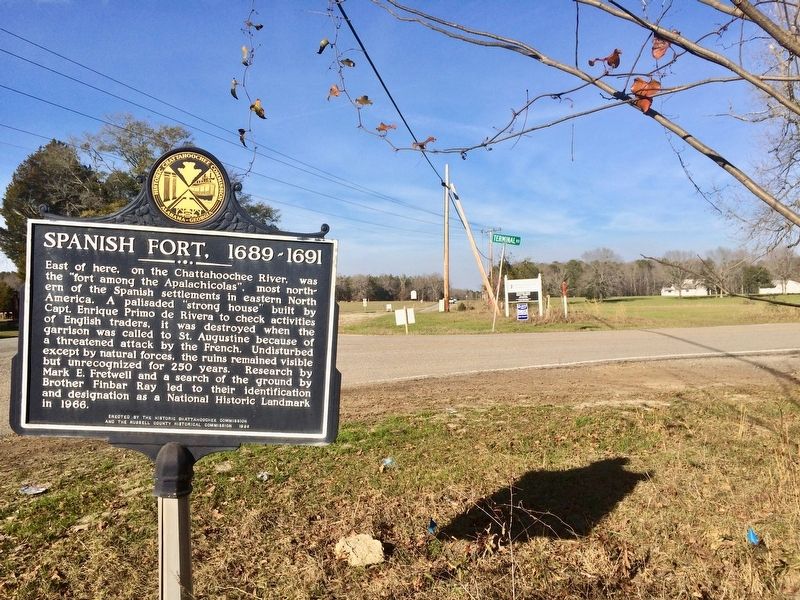
4. View of Terminal Road that leads East from marker.
Credits. This page was last revised on February 18, 2024. It was originally submitted on February 4, 2017, by Mark Hilton of Montgomery, Alabama. This page has been viewed 2,146 times since then and 214 times this year. Photos: 1, 2, 3, 4. submitted on February 4, 2017, by Mark Hilton of Montgomery, Alabama.
