Pembroke in Robeson County, North Carolina — The American South (South Atlantic)
Henry Berry Lowrie
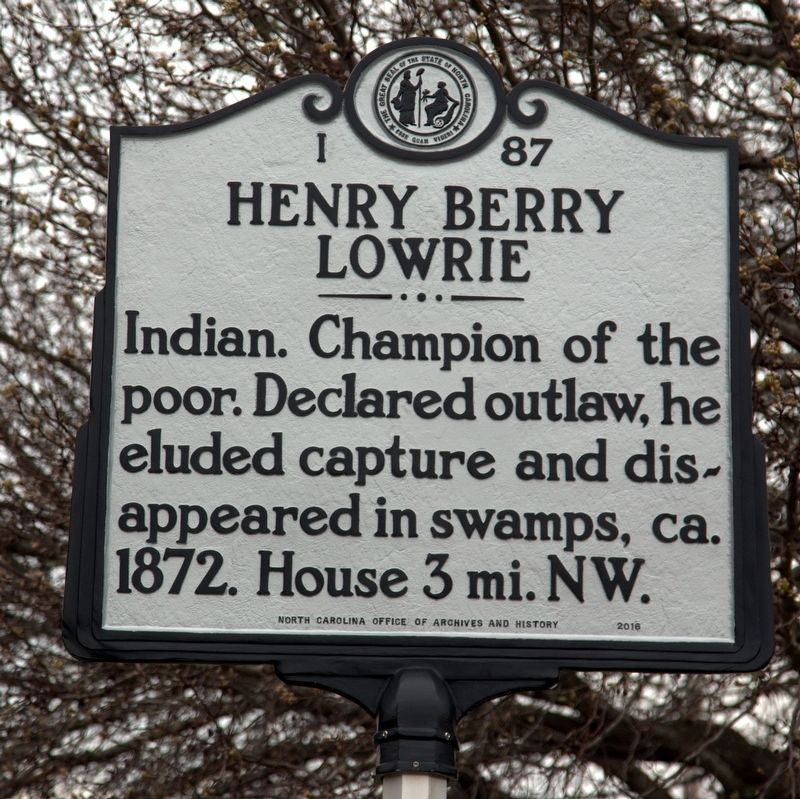
Photographed by J. J. Prats, February 18, 2017
1. Henry Berry Lowrie Marker
Erected 2016 by North Carolina Office of Archives and History. (Marker Number I-87.)
Topics and series. This historical marker is listed in this topic list: Indigenous Peoples and Communities. In addition, it is included in the North Carolina Division of Archives and History series list. A significant historical year for this entry is 1872.
Location. 34° 41.139′ N, 79° 12.284′ W. Marker is in Pembroke, North Carolina, in Robeson County. It is at the intersection of State Highway 711 and University Road, on the right when traveling west on State Highway 711. Touch for map. Marker is in this post office area: Pembroke NC 28372, United States of America. Touch for directions.

Regionally, this marker is in North Carolina’s Coastal Plain. It is also in the American South and specifically in the Upper South. Globally, it is in North America, the Western Hemisphere, the Western World, and the Anglosphere. Historically, it finds itself in what was once the territory of the Mississippian
this page online
Other nearby markers. At least 8 other markers are within 8 miles of this marker, measured as the crow flies: University of N. C. at Pembroke (approx. 0.2 miles away); Honorable Hamilton McMillan (approx. ¼ mile away); Croatan Normal School (approx. 1.1 miles away); Battle of Hayes Pond (approx. 2.7 miles away); Lumbee Tribe (approx. 2.7 miles away); Veterans Memorial (approx. 2.7 miles away); Burnt Swamp Association (approx. 4.3 miles away); Raft Swamp (approx. 8 miles away). Touch for a list and map of all markers in Pembroke.
Also see . . . Wikipedia Entry. “enry Berry Lowrie or Lowry (c. 1845 – Unknown) led a gang in North Carolina during and after the American Civil War. He is sometimes viewed as a Robin Hood type figure, especially by the Lumbee people, who consider him a Native American ancestor and a pioneer in the fight for civil rights and tribal self-determination. Lowrie was described by George Alfred Townsend, a correspondent for the New York Herald in the late 19th century,
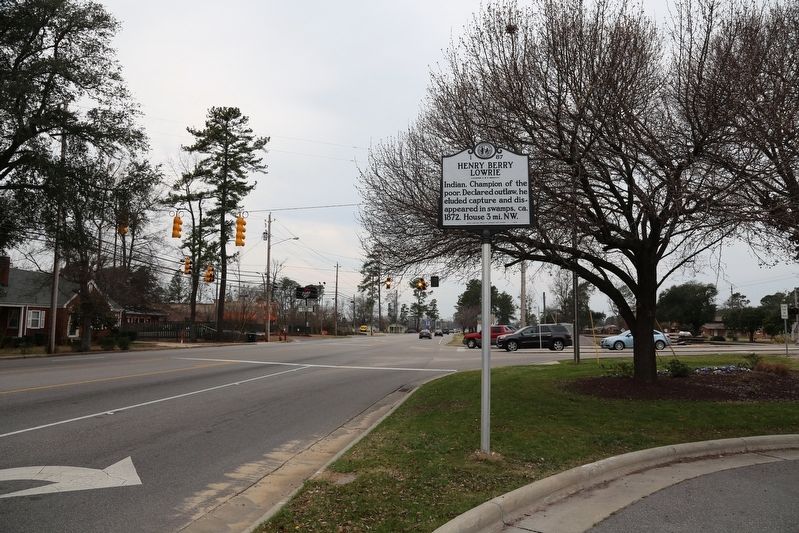
Photographed by J. J. Prats, February 18, 2017
2. Henry Berry Lowrie Marker
Additional keywords. Outlaws and renegades
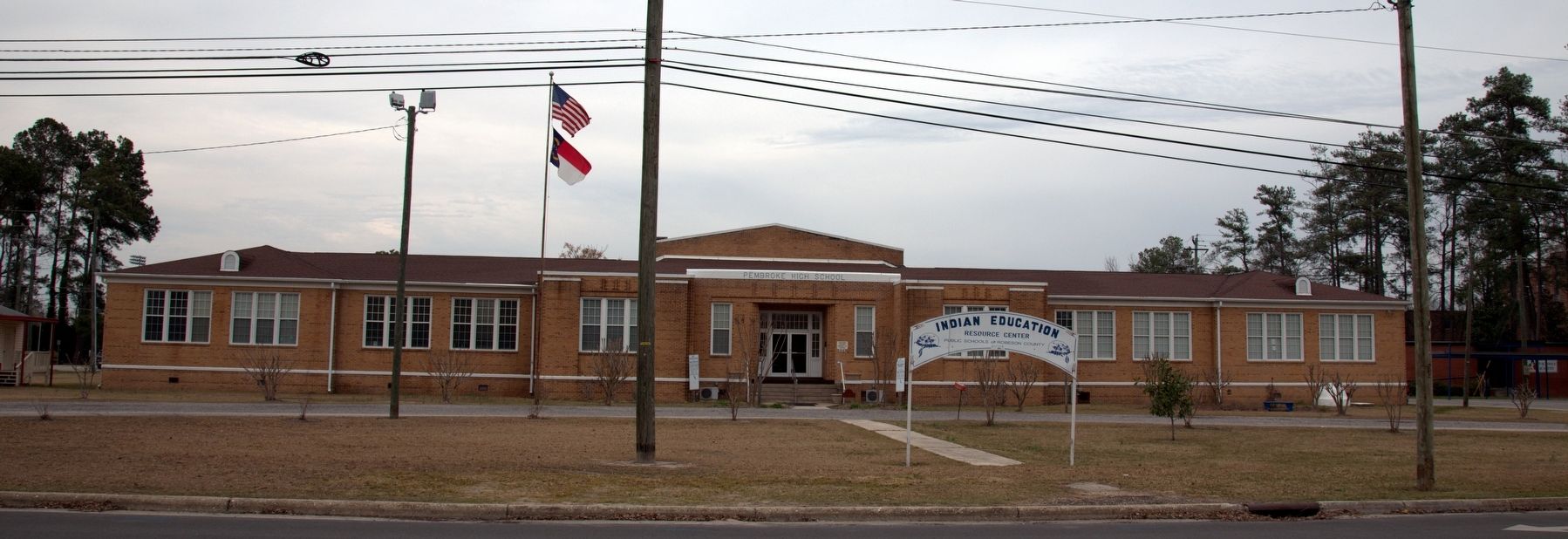
Photographed by J. J. Prats, February 18, 2017
3. Former Pembroke High School, now the Indian Resource Center for Public Schools of Robeson County
This view is from close to the marker. It is at the southwest corner of the University of North Carolina at Pembroke campus.
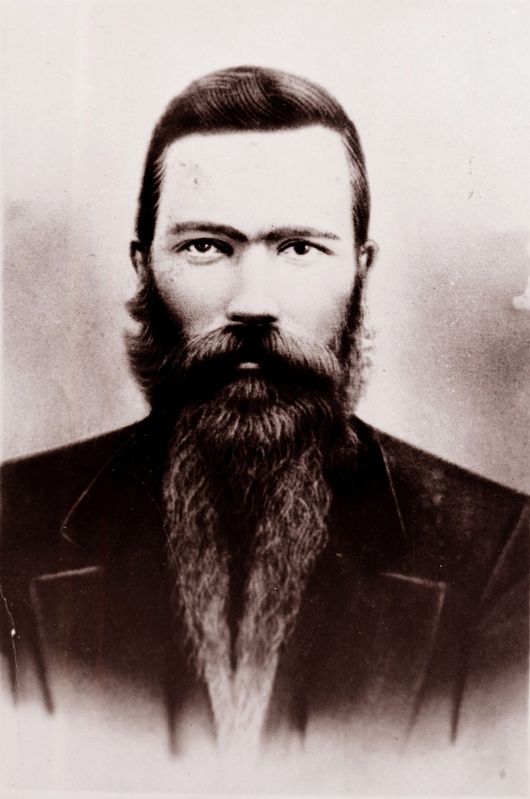
North Carolina State Archives via Wikipedia Commons, circa 1870
4. Henry Berry Lowrie
Credits. This page was last revised on July 2, 2021. It was originally submitted on March 24, 2017, by J. J. Prats of Powell, Ohio. This page has been viewed 948 times since then and 78 times this year. Photos: 1, 2, 3, 4. submitted on March 24, 2017, by J. J. Prats of Powell, Ohio.
