Near Pembroke in Robeson County, North Carolina — The American South (South Atlantic)
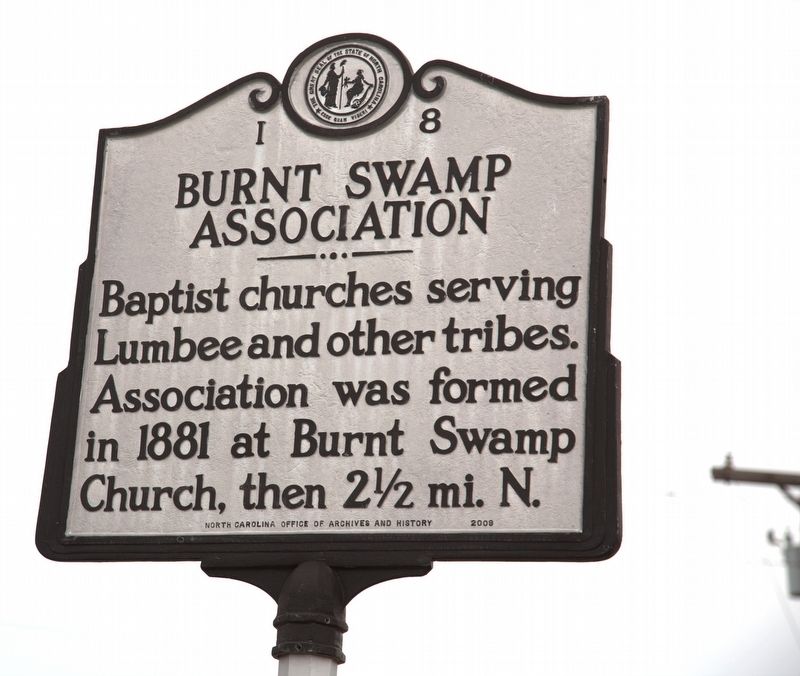
Burnt Swamp Association
Photographed by J. J. Prats, February 18, 2017
1. Burnt Swamp Association Marker
Erected 2009 by North Carolina Office of Archives and History. (Marker Number I-8.)
Topics and series. This historical marker is listed in these topic lists: Indigenous Peoples and Communities • Religion & Religious Structures. In addition, it is included in the North Carolina Division of Archives and History series list. A significant historical year for this entry is 1881.
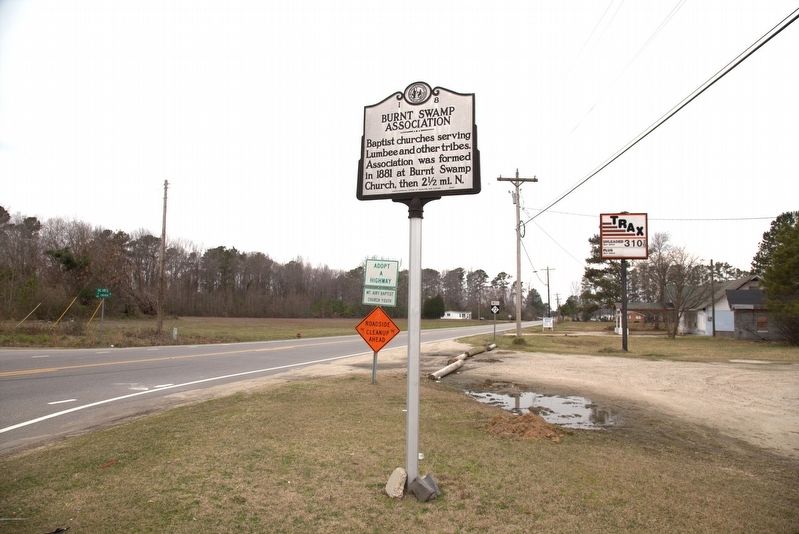
Location. 34° 40.645′ N, 79° 7.775′ W. Marker is near Pembroke, North Carolina, in Robeson County. It is at the intersection of Highway 72 and Chicken Road (Road 1030), on the right when traveling north on Highway 72. Touch for map. Marker is in this post office area: Pembroke NC 28372, United States of America. Touch for directions.

Regionally, this marker is in the Coastal Plain. It is also in the American South and specifically in the Upper South. Globally, it is in North America, the Western Hemisphere, the Western World, and the Anglosphere. Historically, it finds itself in what was once the territory of
this page online
Other nearby markers. At least 8 other markers are within 8 miles of this marker, measured as the crow flies: Veterans Memorial (approx. 2.4 miles away); Lumbee Tribe (approx. 2.4 miles away); Battle of Hayes Pond (approx. 2.4 miles away); Honorable Hamilton McMillan (approx. 4.1 miles away); University of N. C. at Pembroke (approx. 4.2 miles away); Henry Berry Lowrie (approx. 4.3 miles away); Croatan Normal School (approx. 5.4 miles away); Thompson Institute (approx. 7.7 miles away). Touch for a list and map of all markers in Pembroke.
Also see . . . Burnt Swamp Association History. “Accustomed to limited economic and other community resources, Indian churches learned to cope with restricted opportunity. Pastors were scarce and more than one congregation often shared the same pastor. Though the specific beginning of inter-church fellowship is not clearly defined, Indian churches began to meet in joint gatherings likely during the 1870’s. Oral history reports that is the case until
Photographed by J. J. Prats, February 18, 2017
2. Burnt Swamp Association Marker
Photographed by J. J. Prats, February 18, 2017
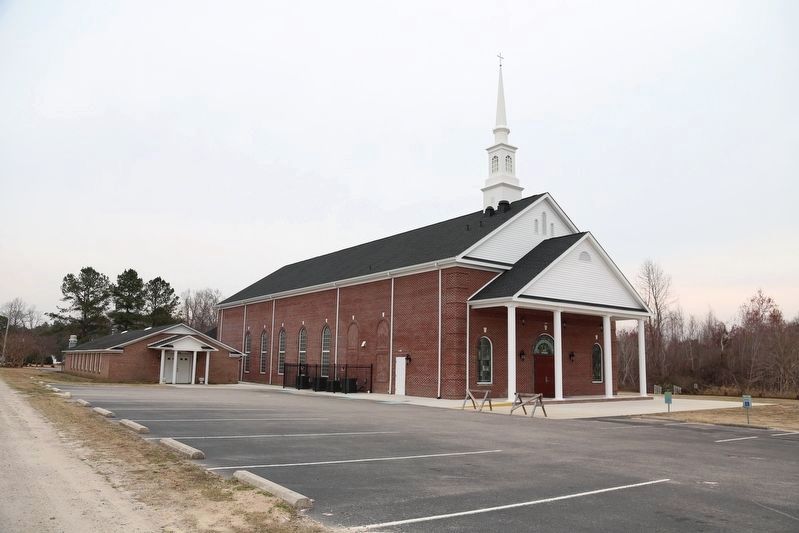
3. Burnt Swamp Church Today
Photographed by J. J. Prats, February 18, 2017
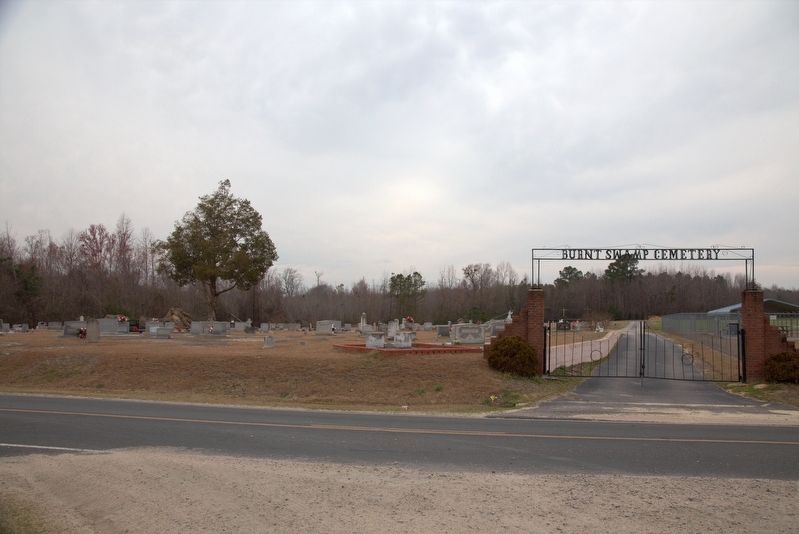
4. Burnt Swamp Cemetery
Credits. This page was last revised on March 25, 2017. It was originally submitted on March 25, 2017, by J. J. Prats of Powell, Ohio. This page has been viewed 722 times since then and 45 times this year. Photos: 1, 2, 3, 4. submitted on March 25, 2017, by J. J. Prats of Powell, Ohio.
