Old City in Philadelphia in Philadelphia County, Pennsylvania — The American Northeast (Mid-Atlantic)
An Gorta Mór - Ireland's Great Hunger
Photographed by William Fischer, Jr., March 22, 2017
1. An Gorta Mór - Ireland's Great Hunger Marker
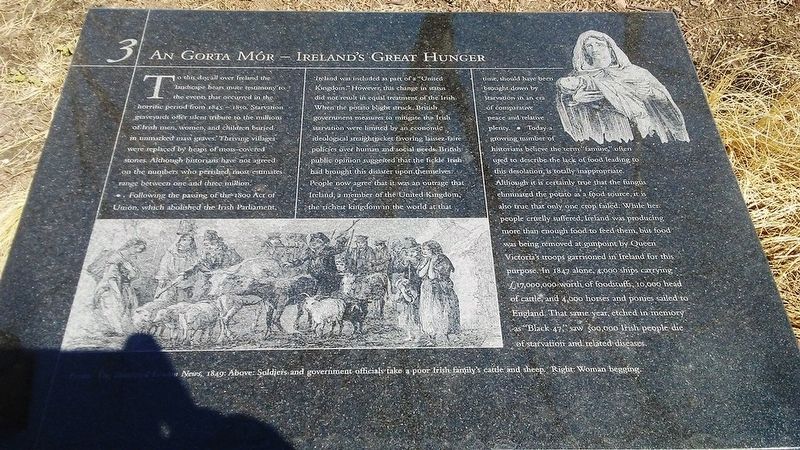
To this day, all over Ireland the landscape bears mute testimony to the events that occurred in the horrific period from 1845-1850. Starvation graveyards offer silent tribute to the millions of Irish men, women, and children buried in unmarked mass graves. Thriving villages were replaced by heaps of moss-covered stones. Although historians have not agreed on the numbers who perished, most estimates range between one and three million.
• Following the passing of the 1800 Act of Union, which abolished the Irish Parliament, Ireland was included as part of a "United Kingdom." However, this change in status did not result in equal treatment of the Irish. When the potato blight struck, British government measures to mitigate the Irish starvation were limited by an economic ideological straightjacket favoring laissez-faire policies over human and social needs. British public opinion suggested that the fickle Irish had brought this disaster upon themselves. People now agree that it was an outrage that Ireland, a member of the United Kingdom, the richest kingdom in the world at that time, should have been brought down by starvation
this page online
• Today a growing number of historians believe the term "famine," often used to describe the lack of food leading to this desolation, is totally inappropriate. Although it is certainly true that the fungus eliminated the potato as a food source, it is also true that only one crop failed. While her people cruelly suffered, Ireland was producing more than enough food to feed them, but food was being removed at gunpoint by Queen Victoria's troops garrisoned in Ireland for this purpose. In 1847 alone, 4,000 ships carrying £17,000,000 worth of foodstuffs, 10,000 head of cattle, and 4,000 horses and ponies sailed to England. That same year, etched in memory as "Black 47," saw 500,000 Irish people die of starvation and related diseases.
[Illustration caption reads]
From The Illustrated London News 1849:
Above:Soldiers and government officials take a poor Irish family's cattle and sheep.
Right: Woman begging
Erected 2003 by Concerned Citizens and Organizations. (Marker Number 3.)
Topics. This historical marker is listed in these topic lists: Agriculture • Disasters •
Photographed by Devry Becker Jones (CC0), November 26, 2025
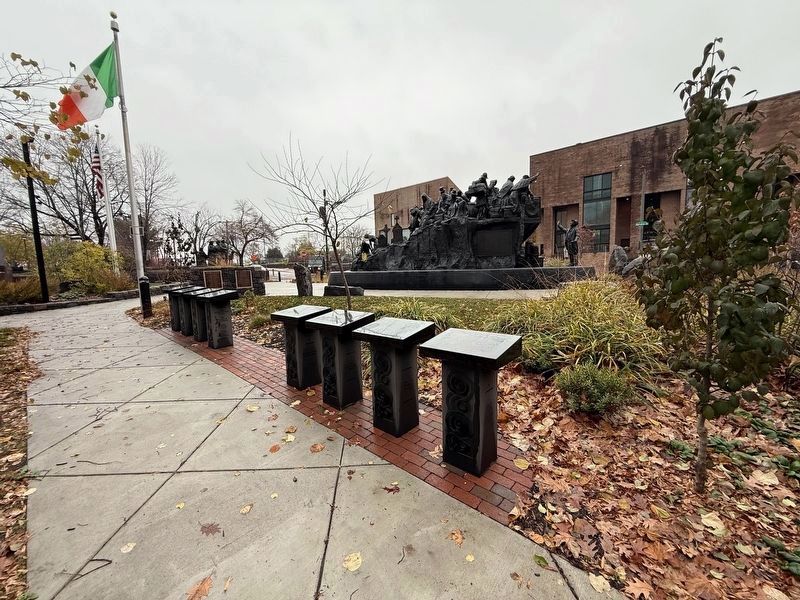
2. Interpretive markers for The Irish Memorial / Leacht Cuimhneacháin na nGael
Location. 39° 56.677′ N, 75° 8.627′ W. Marker is in Philadelphia, Pennsylvania, in Philadelphia County. It is in Old City. It is at the intersection of Chestnut Street and Front Street, on the right when traveling east on Chestnut Street. Touch for map. Marker is at or near this postal address: 100 Chestnut St, Philadelphia PA 19106, United States of America. Touch for directions.

Regionally, this marker is in Southeast Pennsylvania. It is also in the American Northeast and in the Mid-Atlantic. Globally, it is in North America, the Western Hemisphere, the Western World, and the Anglosphere. Historically, it finds itself in what was once the Haudenosaunee (Iroquois) Confederacy, New Netherland, and one of the original Thirteen Colonies.
Other nearby markers. At least 8 other markers are within walking distance of this marker: Starvation (here, next to this marker); The Potato Blight - Its Origin (here, next to this marker); The Lessons of The Great Hunger (here, next to this marker); Arrival and Reception (here, next to this
Photographed by William Fischer, Jr.
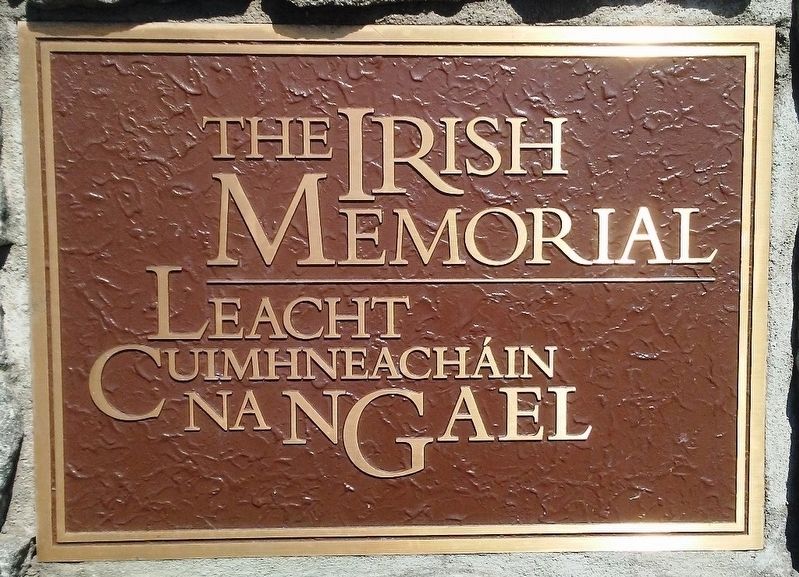
3. The Irish Memorial / Leacht Cuimhneacháin na nGael
More about this marker. Marker is part of The Irish Memorial.
Also see . . .
1. The Irish Memorial [Philadelphia]. (Submitted on March 29, 2017, by William Fischer, Jr. of Reynoldsburg, Ohio.)
2. The Irish Potato Famine, 1847. (Submitted on March 29, 2017, by William Fischer, Jr. of Reynoldsburg, Ohio.)
3. Great Irish Famine Commemoration. (Submitted on March 29, 2017, by William Fischer, Jr. of Reynoldsburg, Ohio.)
4. Irish Famine Archive. (Submitted on March 29, 2017, by William Fischer, Jr. of Reynoldsburg, Ohio.)
Photographed by William Fischer, Jr.
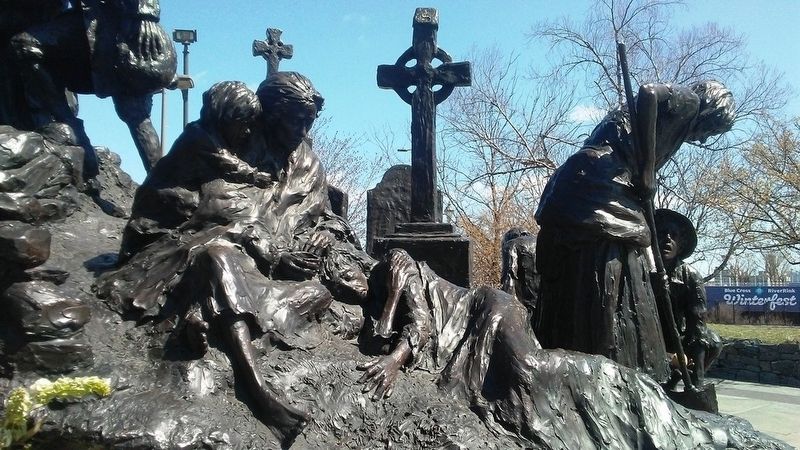
4. Famine Detail on The Irish Memorial Sculpture
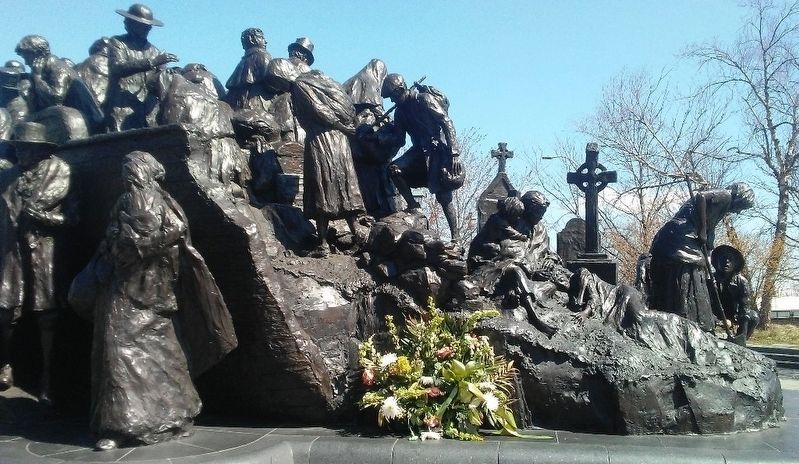
Photographed by William Fischer, Jr.
5. Starvation or Emigration Detail on The Irish Memorial Sculpture
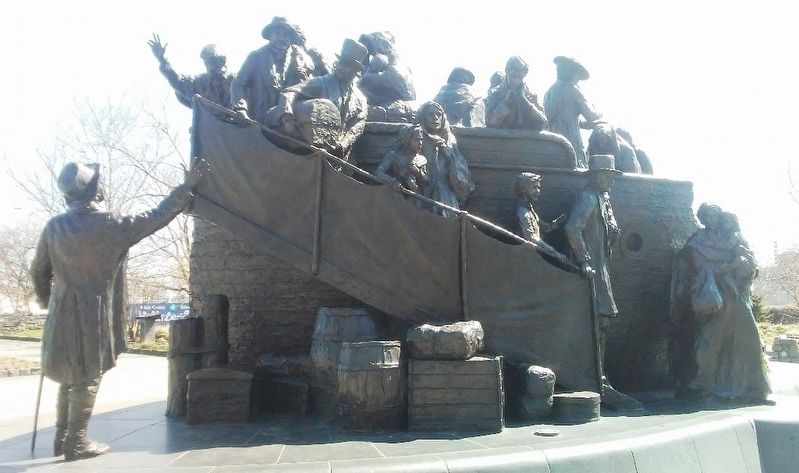
Photographed by William Fischer, Jr.
6. Arrival in a New World Detail on the Irish Memorial
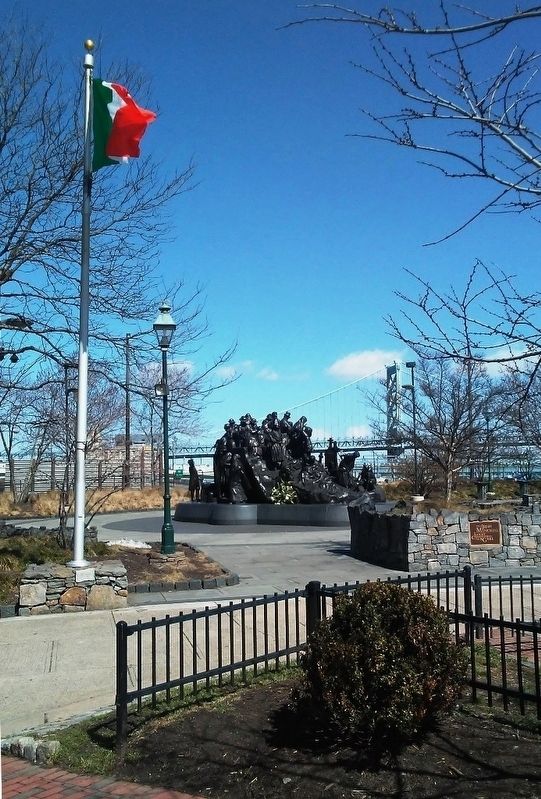
Photographed by William Fischer, Jr.
7. The Irish Memorial / Leacht Cuimhneacháin na nGael
Credits. This page was last revised on November 28, 2025. It was originally submitted on March 29, 2017, by William Fischer, Jr. of Reynoldsburg, Ohio. This page has been viewed 648 times since then and 39 times this year. Photos: 1. submitted on March 29, 2017, by William Fischer, Jr. of Reynoldsburg, Ohio. 2. submitted on November 28, 2025, by Devry Becker Jones of Washington, District of Columbia. 3, 4, 5, 6, 7. submitted on March 28, 2017, by William Fischer, Jr. of Reynoldsburg, Ohio.
