Johns Hopkins Homewood in Baltimore, Maryland — The American Northeast (Mid-Atlantic)
Lee Jackson Monument
Reconciling History
| — | Baltimore's Confederate Monuments | — |
Photographed by Don Morfe, February 26, 2017
1. Lee Jackson Monument Marker
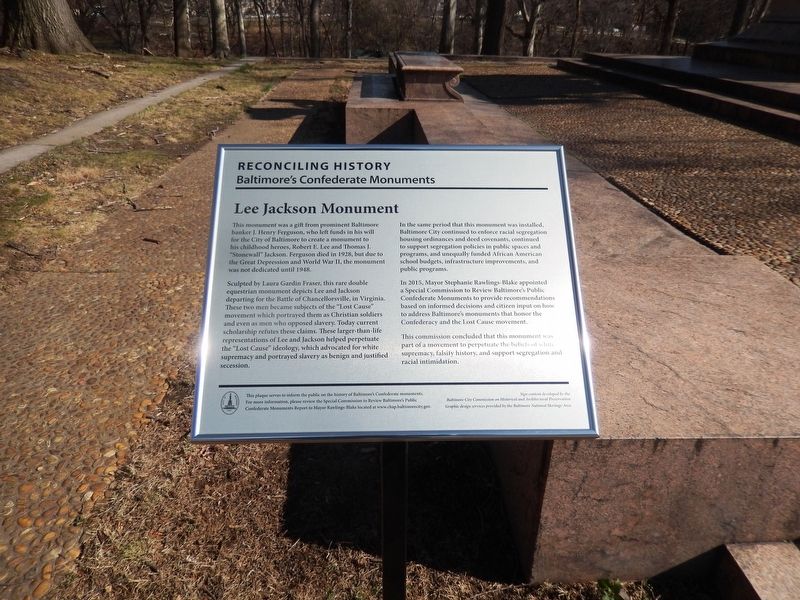
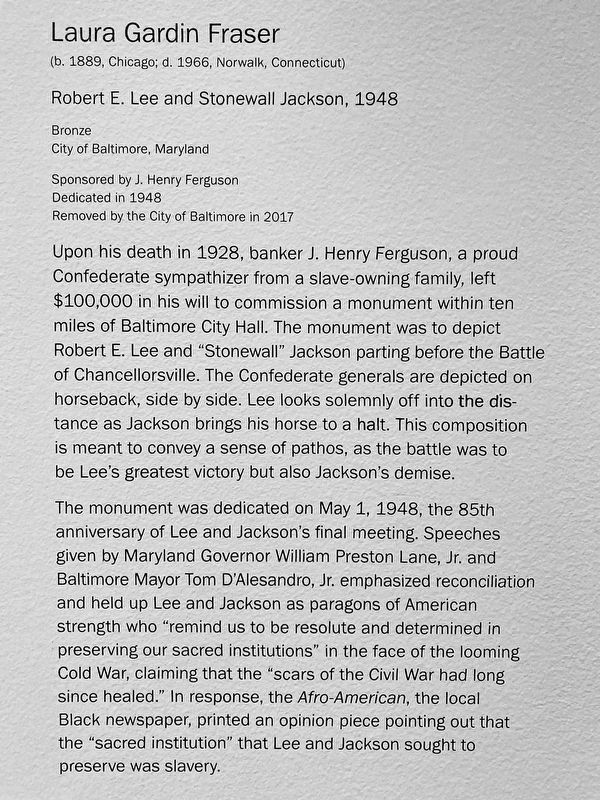
This monument was a gift from prominent Baltimore banker J. Henry Ferguson, who left funds in his will for the City of Baltimore to create a monument to his childhood heroes, Robert E. Lee and Thomas J. “Stonewall” Jackson. Ferguson died in 1928, but due to the Great Depression and World War II, the monument was not dedicated until 1948.
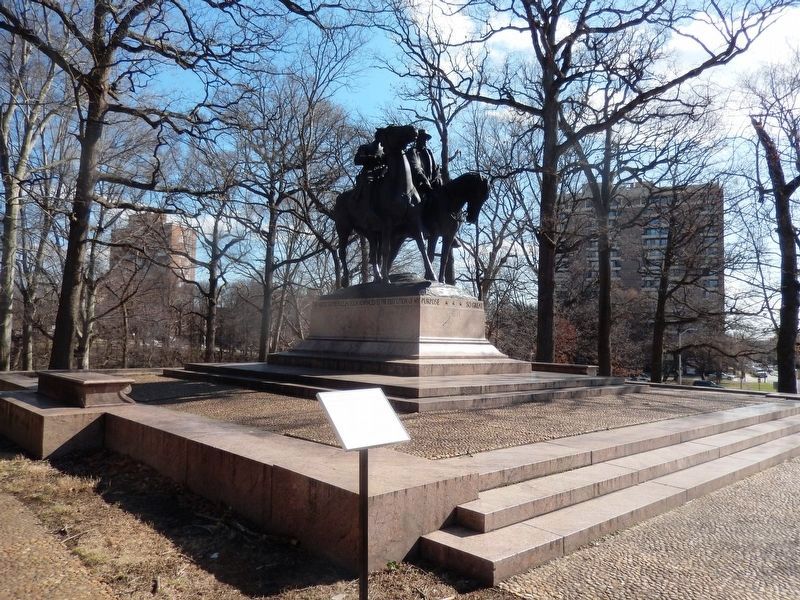
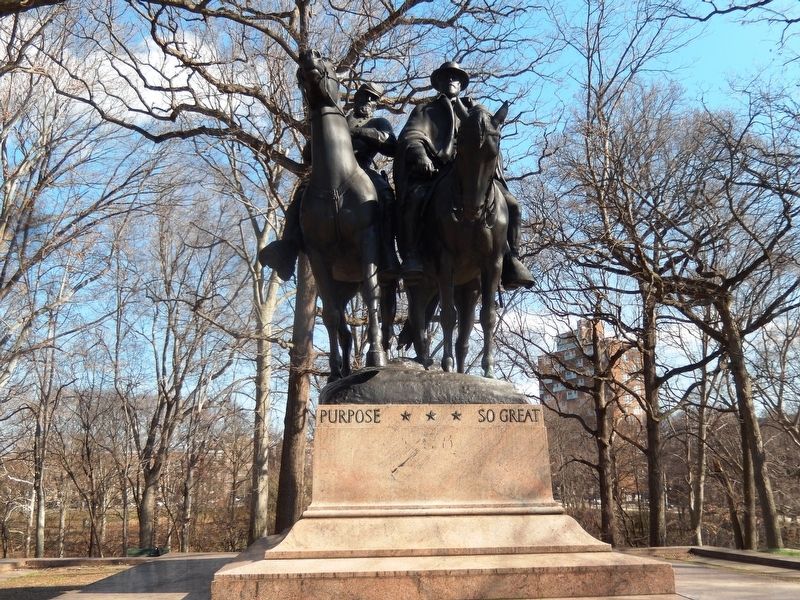
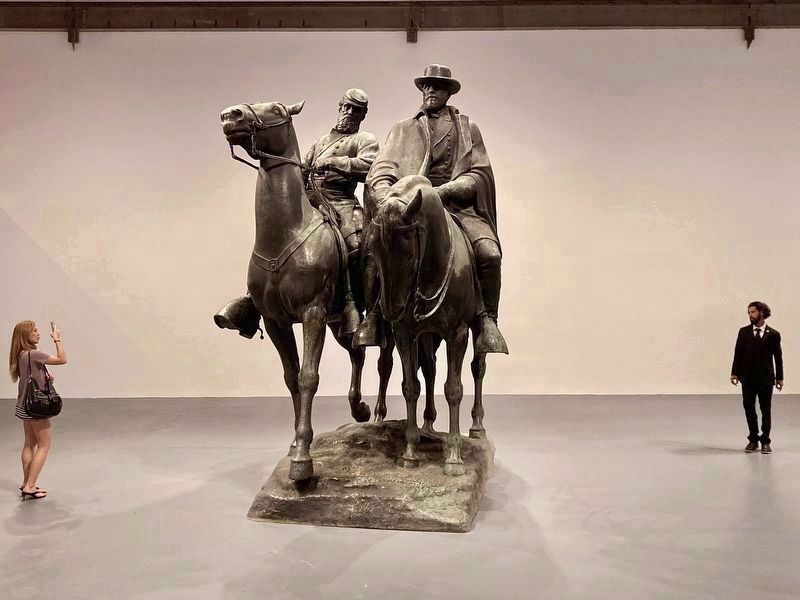
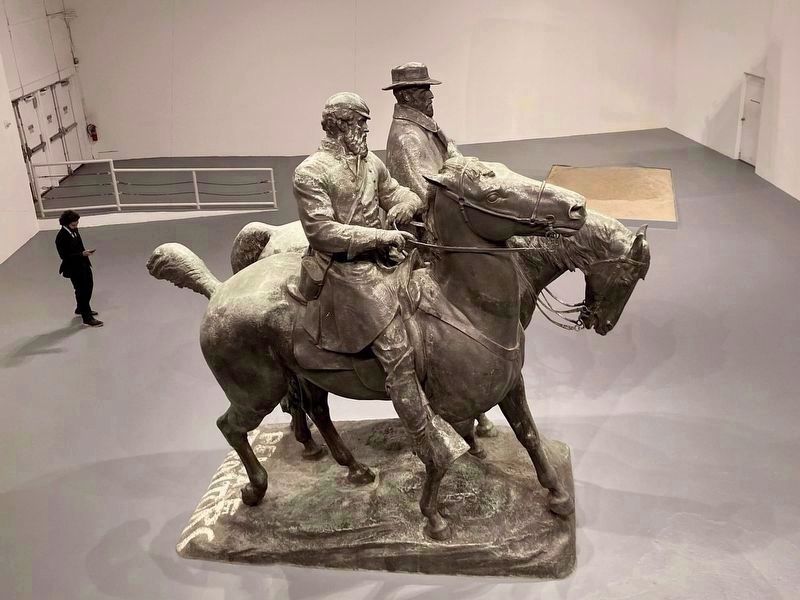
Sculpted by Laura Gardin Fraser, this rare double equestrian monument depicts Lee and Jackson departing for the Battle of Chancellorsville, in Virginia. These two men became subjects of the “Lost Cause” movement which portrayed them as Christian soldiers and even as men who opposed slavery. Today current scholarship refutes these claims. These larger-than-life representations of Lee and Jackson helped perpetuate the “Lost Cause” ideology, which advocated for white supremacy and portrayed slavery as benign and justified secession.
In the same period that this monument was installed, Baltimore City continued to enforce racial segregation housing ordinances and deed covenants, continued to support segregation policies in public spaces and programs,
this page online
In 2015, Mayor Stephanie Rawlings-Blake appointed a Special Commission to Review Baltimore’s Public Confederate Monuments to provide recommendations based on informed decisions and citizen input on how to address Baltimore’s monuments that honor the Confederacy and the Lost Cause Movement. This commission concluded that this monument was part of a propaganda campaign of national pro-Confederate organizations to perpetuate the beliefs of white supremacy, falsify history, and support segregation and racial intimidation.
This plaque serves to inform the public on the history of Baltimore’s Confederate monuments. For more information, please review the Special Commission to Review Baltimore’s Public Confederate Monuments Report to Mayor Rawlings-Blake located at www.chap.baltimorecity.gov.
Sign content developed by the Baltimore City Commission on Historical and Architectural Preservation. Graphic design services provided by the Baltimore National Heritage Area.
Erected by City of Baltimore, Stephanie Rawlings-Blake, Mayor.
Photographed by Don Morfe, February 26, 2017
2. Lee Jackson Monument Marker
The inscriptions around the base of the monument are two quotes attributed to Lee and Jackson. They read: “So great is my confidence in General Lee that I would follow him anywhere” and “Straight as the needle to the pole Jackson advanced to the execution of my purpose”
Topics and series. This historical marker and monument is listed in these topic lists: African Americans • War, US Civil. In addition, it is included in the Maryland, Baltimore City historical markers series list. A significant historical year for this entry is 1928.
Location. This marker has been replaced by another marker nearby. It was located near 39° 19.464′ N, 76° 37.194′ W. Marker was in Baltimore, Maryland. It was in Johns Hopkins Homewood. It was on Art Museum Drive. Touch for map. Marker was in this post office area: Baltimore MD 21218, United States of America. Touch for directions.

Regionally, this marker and monument was in Central Maryland. It was also in the American Mid-Atlantic, in the Chesapeake Bay Region, and on the Eastern Seaboard. Globally, it was in the North Atlantic Region, North America, the Western Hemisphere, the Western World, and the Anglosphere. Historically, it found itself in what was once one of the original Thirteen Colonies and also the Antebellum South.
Other nearby markers. At least 8 other markers are within walking distance of this location: Robert E. Lee and Thomas. J. “Stonewall” Jackson Monument
Photographed by Don Morfe, February 26, 2017
3. Lee and Jackson Memorial
Another marker is no longer nearby. Wyman Park Dell at 29th St (was about 400 feet away but has been confirmed missing).
Related marker. Click here for another marker that is related to this marker. This marker has been replaced with the linked marker.
Photographed by Don Morfe, February 26, 2017
4. Lee and Jackson Memorial-base
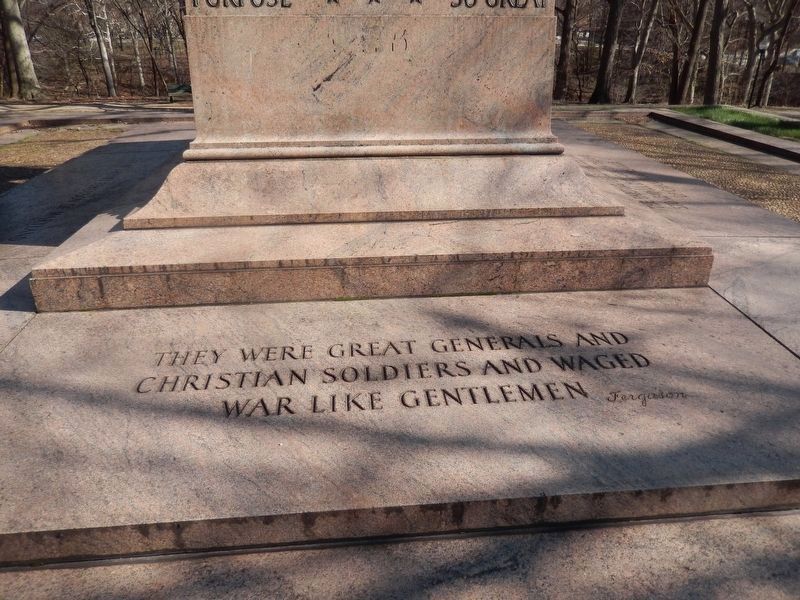
Inscription on the base of the memorial: "They were great generals and Christian soldiers and waged war like gentlemen." - Ferguson

Photographed by Don Morfe, August 19, 2017
5. Lee Jackson Monument - Base only
The Lee Jackson Monument-(Confederate Soldiers) was removed by the City of Baltimore on August 16, 2017 because it was deemed offensive to the public.
Photographed by Craig Baker, February 7, 2026
6. Lee Jackson Monument
On display in a Los Angeles museum in 2026.
Photographed by Craig Baker, February 7, 2026
7. Lee Jackson Monument
On display in a Los Angeles museum in 2026.
Photographed by Craig Baker, February 7, 2026
8. Museum Exhibit Information
Credits. This page was last revised on February 16, 2026. It was originally submitted on March 5, 2017, by Don Morfe of Baltimore, Maryland. This page has been viewed 1,161 times since then and 88 times this year. Last updated on May 1, 2017, by mishelle Etefania of Mexico, Mexico. Photos: 1, 2, 3, 4. submitted on March 5, 2017, by Don Morfe of Baltimore, Maryland. 5. submitted on August 20, 2017, by Don Morfe of Baltimore, Maryland. 6, 7, 8. submitted on February 16, 2026, by Craig Baker of Sylmar, California. • Bill Pfingsten was the editor who published this page.
