Centro Histórico in Ciudad de México, Mexico — The Valley of Mexico (The Central Highlands)
Chapel of the Immaculate Conception of the Waterfall
Photographed by J. Makali Bruton, January 23, 2017
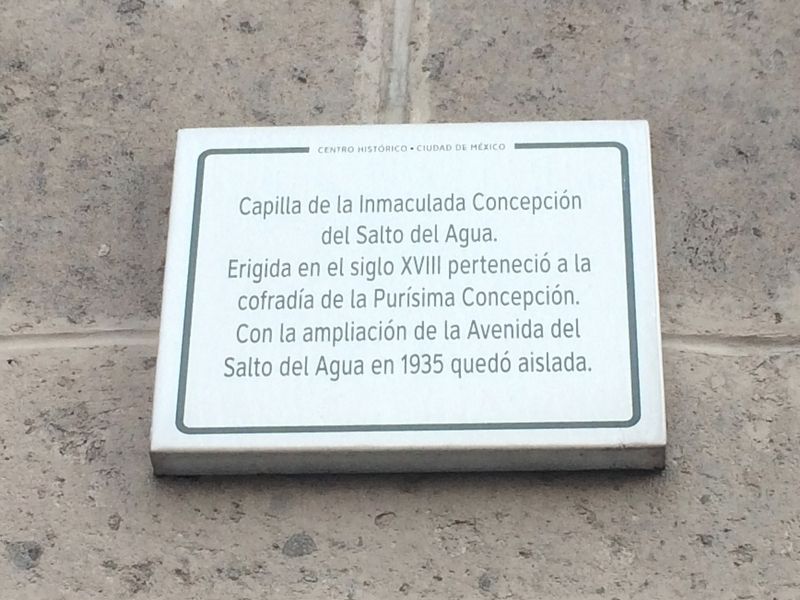
1. Chapel of the Immaculate Conception of the Waterfall Marker

Erigida en el siglo XVIII perteneció a la
cofradía de la Purísima Concepción.
Con la ampliación de la Avenida del
Salto del Agua en 1935 quedó aislada.
Erected in the 18th century, it belonged to the brotherhood of the Most Pure Conception. With the widening of the Avenue of the Waterfall in 1935, the chapel was left isolated from the surrounding area.
Topics. This historical marker is listed in these topic lists: Man-Made Features • Religion & Religious Structures. A significant historical year for this entry is 1935.
Location. 19° 25.601′ N, 99° 8.512′ W. Marker is in Ciudad de México. It is in Centro Histórico. It is at the intersection of Eje Central Lázaro Cárdenas and José María Izazaga, on the right when traveling north on Eje Central Lázaro Cárdenas. Touch for map. Marker is in this post office area: Ciudad de México 06000, Mexico. Touch for directions.

Regionally, this marker is in Central Mexico and specifically in Mexico City Metropolitan Area. Globally, it is in North America,
this page online
Other nearby markers. At least 8 other markers are within walking distance of this marker: Execution of Ferrer (approx. 0.3 kilometers away); Guillermo Prieto (approx. 0.4 kilometers away); The Church and Convent of Regina Coeli (approx. 0.4 kilometers away); Concepción Béistegui Hospital (approx. 0.4 kilometers away); Teatro la Unión (approx. 0.4 kilometers away); José J. Fernández Lizardi (approx. 0.4 kilometers away); San Jerónimo (approx. half a kilometer away); Daniel Cosio Villegas (approx. half a kilometer away). Touch for a list and map of all markers in Ciudad de México.
Another marker is no longer nearby. The Tavern of Juana la Tangos (was about 150 meters away, measured in a direct line but has been confirmed missing).
Regarding Chapel of the Immaculate Conception of the Waterfall. The use of the word "waterfall" as a translation for "salto de agua" is not perfect, as it implies the naturally occurring feature that may be found
Photographed by J. Makali Bruton, January 23, 2017
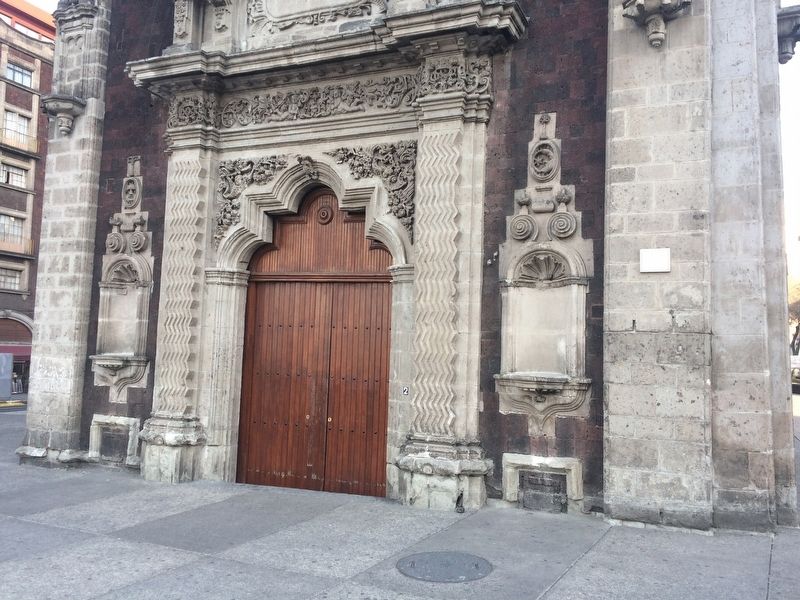
2. Chapel of the Immaculate Conception of the Waterfall Marker
The marker is to the right of the church's entryway.
Photographed by J. Makali Bruton, January 23, 2017
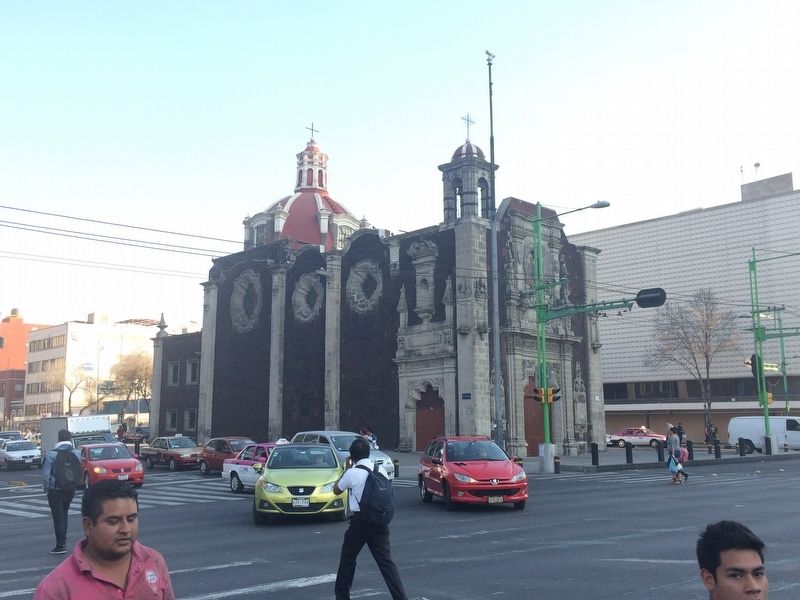
3. Chapel of the Immaculate Conception of the Waterfall Marker
This view of the chapel illustrates its isolated location, basically on a median, due to the construction of nearby roads.
Photographed by J. Makali Bruton, January 23, 2017
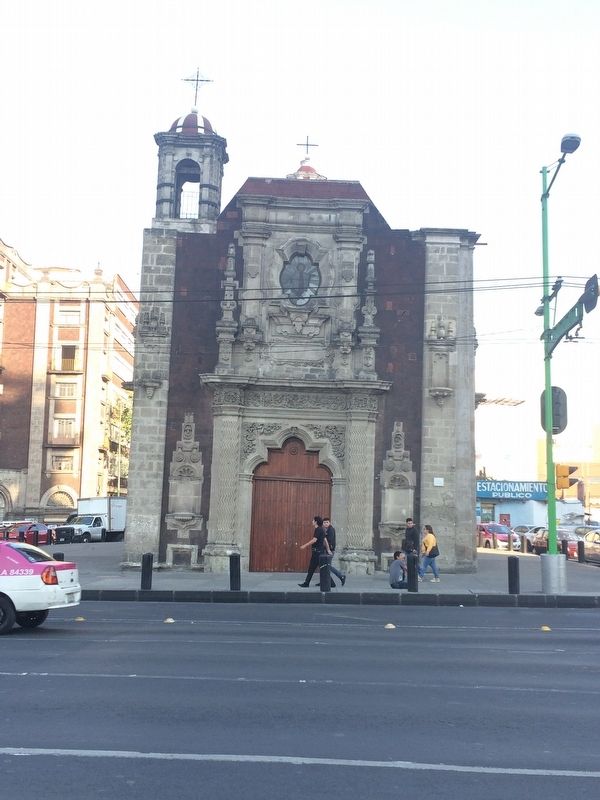
4. Chapel of the Immaculate Conception of the Waterfall Marker
The chapel is very noticeably leaning, like many older buildings in Mexico City due to the uneven settling of the lakebed underneath its foundation.
Photographed by J. Makali Bruton, January 23, 2017
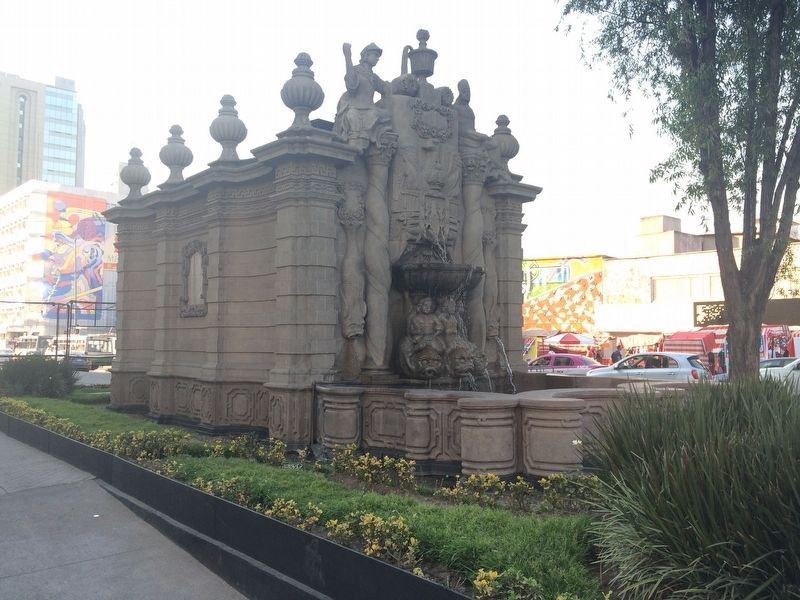
5. The "Salto de Agua" Fountain
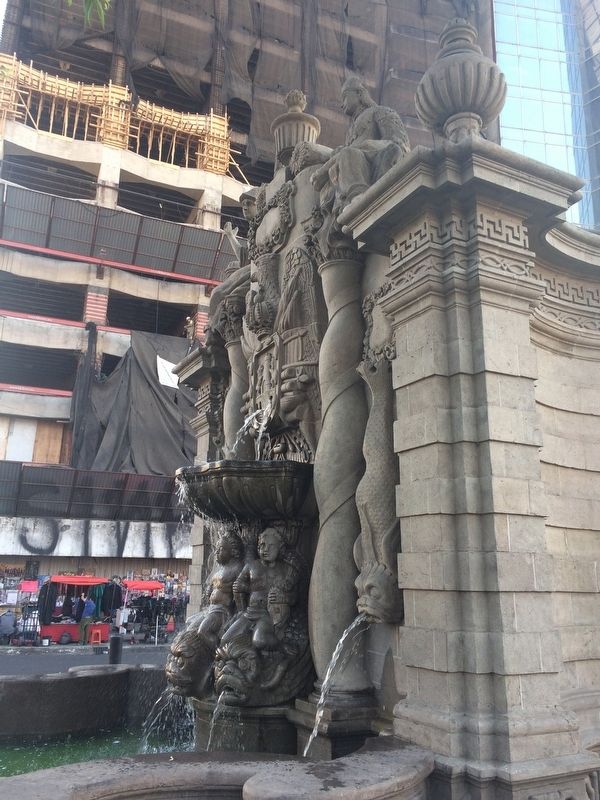
This is a replica of the original fountain, built by sculptor Guillermo Ruiz. The original was constructed by Ignacio Castera in 1779 and is now in the Museo del Virreinato in Tepotzotlán.
Photographed by J. Makali Bruton, January 23, 2017
6. Detail of the "Salto de Agua" Fountain
Credits. This page was last revised on April 17, 2020. It was originally submitted on May 14, 2017, by J. Makali Bruton of Washington, District of Columbia. This page has been viewed 372 times since then and 19 times this year. Photos: 1, 2, 3, 4, 5, 6. submitted on May 14, 2017, by J. Makali Bruton of Washington, District of Columbia.
