Russells Point in Logan County, Ohio — The American Midwest (Great Lakes)
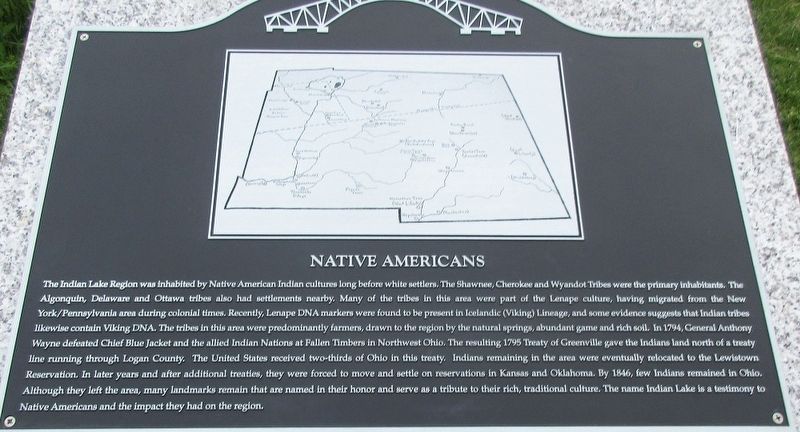
Native Americans
The History of Indian Lake
Photographed by Rev. Ronald Irick, June 5, 2017
1. Native Americans Marker
this page online
Erected 2017 by The Indian Lake Historical Society.
Topics. This historical marker is listed in these topic lists: Anthropology & Archaeology • Indigenous Peoples and Communities.
Location. 40° 28.38′ N, 83° 53.694′ W. Marker is in Russells Point, Ohio, in Logan County. It is on West Main Street (Ohio Route 366), on the right when traveling west. Touch for map. Marker is at or near this postal address: 100 West Main St, Russells Point OH 43348, United States of America. Touch for directions.

Regionally, this marker is in the Till Plains. It is also in the American Midwest and in the Corn Belt. Globally, it is in North America, the Western Hemisphere, the Western World, and the Anglosphere. Historically, it finds itself in what was once the Viceroyalty of New France,
Photographed by Rev. Ronald Irick, June 5, 2017
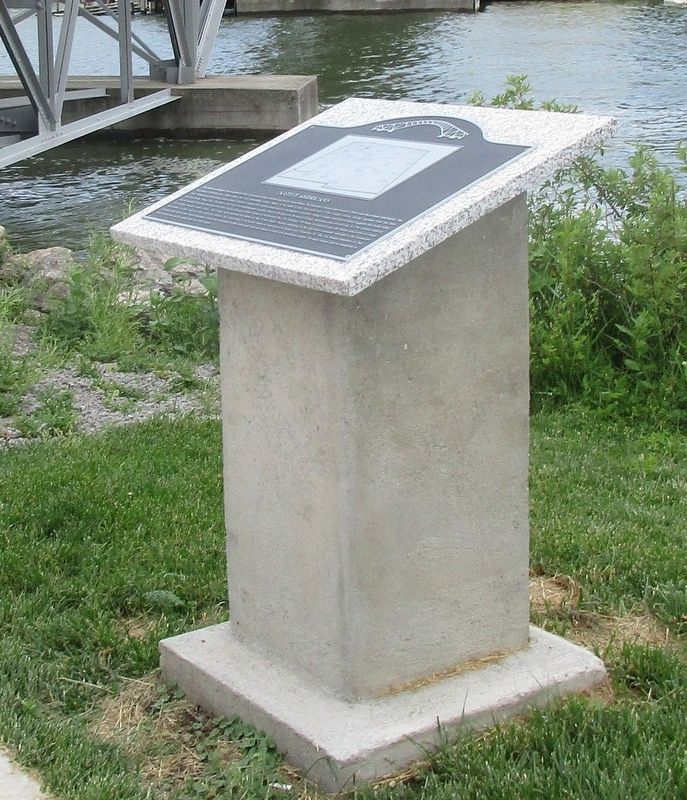
2. Native Americans Marker
Other nearby markers. At least 8 other markers are within walking distance of this marker: Our Lady of Fatima (here, next to this marker); 1913 Flood (within shouting distance of this marker); Islands and Beaches (within shouting distance of this marker); The Villages (within shouting distance of this marker); Boats of Indian Lake (within shouting distance of this marker); Sandy Beach Bridge (within shouting distance of this marker); When the Music Died (within shouting distance of this marker); Sandy Beach and the Big Band Era (within shouting distance of this marker). Touch for a list and map of all markers in Russells Point.
Another marker is no longer nearby. Sandy Beach Park (was within shouting distance of this marker but has been confirmed missing).
Photographed by Rev. Ronald Irick, June 5, 2017
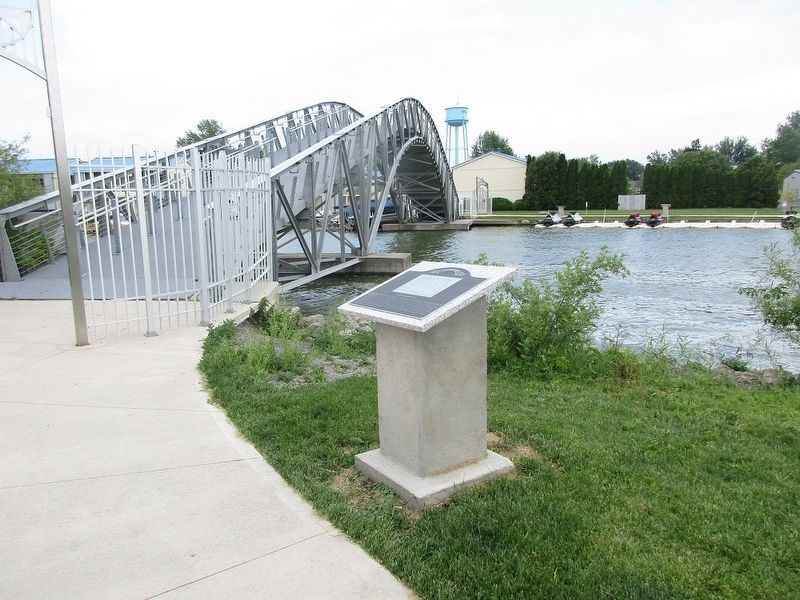
3. Native Americans Marker
pedestal at the west end of the bridge
Photographed by Rev. Ronald Irick, June 5, 2017
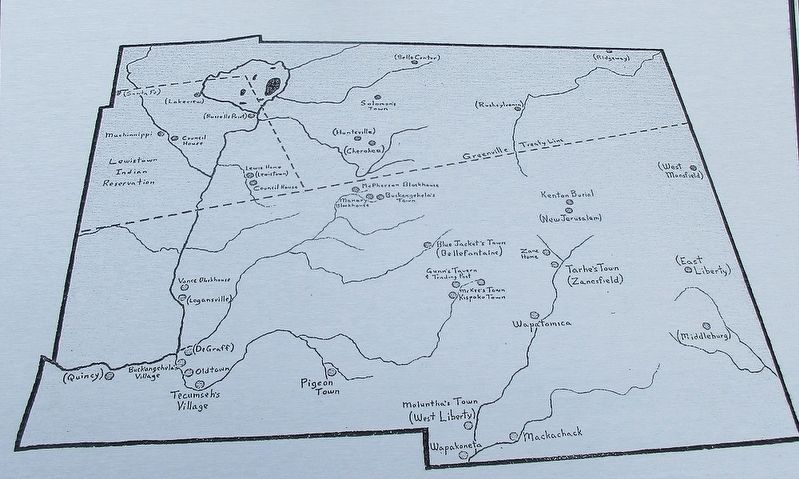
4. Native Americans Marker
detail of map on marker
Credits. This page was last revised on June 9, 2017. It was originally submitted on June 8, 2017, by Rev. Ronald Irick of West Liberty, Ohio. This page has been viewed 1,397 times since then and 87 times this year. Photos: 1, 2, 3, 4. submitted on June 8, 2017, by Rev. Ronald Irick of West Liberty, Ohio. • Bill Pfingsten was the editor who published this page.
