Sandy Spring in Montgomery County, Maryland — The American Northeast (Mid-Atlantic)
Quakers Practicing their Faith in Montgomery County
1861-1865
Photographed by Allen C. Browne, June 9, 2017
1. Quakers Practicing their Faith in Montgomery County Marker
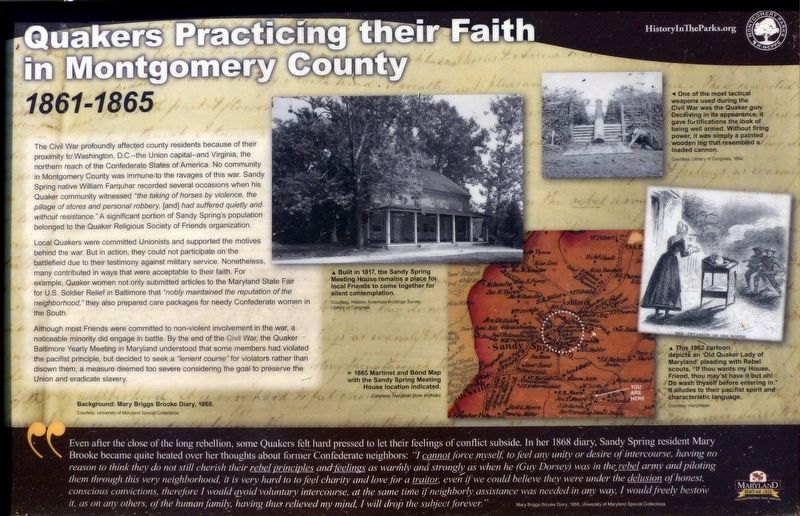
The Civil War profoundly affected county residents because of their proximity to Washington, D.C. —the Union Capital— and Virginia, the northern reach of the Confederate States of America. No community in Montgomery County was immune to the ravages of this war. Sandy Spring native William Farquhar recorded several occasions when his Quaker community witnessed “the taking of horses by violence, the pillage of stores and personal robbery, [and] had suffered quietly and without resistance.” A significant portion of Sandy Spring's population belonged to the Quaker Religious Society of Friends organization.
Local Quakers were committed Unionists and supported the motives behind the war. But in action, they could not participate on the battlefield due to their testimony against military service. Nonetheless, many contributed in ways that were acceptable to their faith. For example,
this page online
Although most Friends were committed to non-violent involvement in the war, a noticeable minority did engage in battle. By the end of the Civil War, the Quaker Baltimore Yearly Meeting in Maryland understood that some members had violated the pacifist principle, but decided to seek a “lenient course” for violators rather than disown them, a measure deemed too severe considering the goal to preserve the Union and eradicate slavery.
“ Even after the close of the long rebellion, some Quakers felt hard pressed to let their feelings of conflict subside. In her 1868 diary, Sandy Spring resident Mary Brooke became quite heated over her thoughts about former
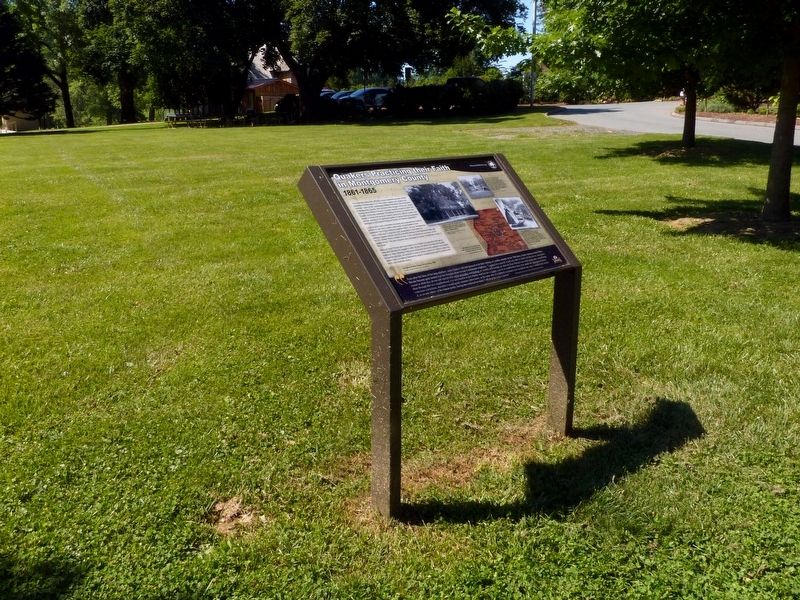
Photographed by Allen C. Browne, June 9, 2017
2. Quakers Practicing their Faith in Montgomery County Marker
Topics and series. This historical marker is listed in these topic lists: Religion & Religious Structures • War, US Civil. In addition, it is included
John O. Bostrup (Library of Congress, HABS), August 5, 1936
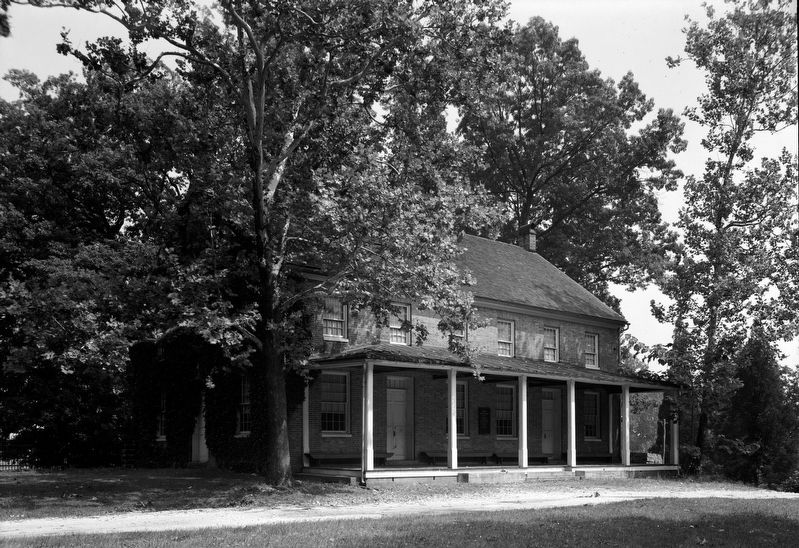
3. Sand Spring Meeting House
Built in 1817, the Sandy Spring Meeting House remains a place for local Friends to come together for silent contemplation.
Location. 39° 7.734′ N, 77° 1.55′ W. Marker is in Sandy Spring, Maryland, in Montgomery County. It can be reached from Norwood Road. At Woodlawn Manor Park. Touch for map. Marker is at or near this postal address: 16501 Norwood Road, Sandy Spring MD 20860, United States of America. Touch for directions.

Regionally, this marker is in the Washington Metropolitan Area. It is also in the American Mid-Atlantic. Globally, it is in North America, the Western Hemisphere, the Western World, and the Anglosphere. Historically, it finds itself in what was once one of the original Thirteen Colonies and also the Antebellum South.
Other nearby markers. At least 8 other markers are within 2 miles of this marker, measured as the crow flies: Welcome to the Woodlawn Stone Barn Visitor Center
Library of Congress
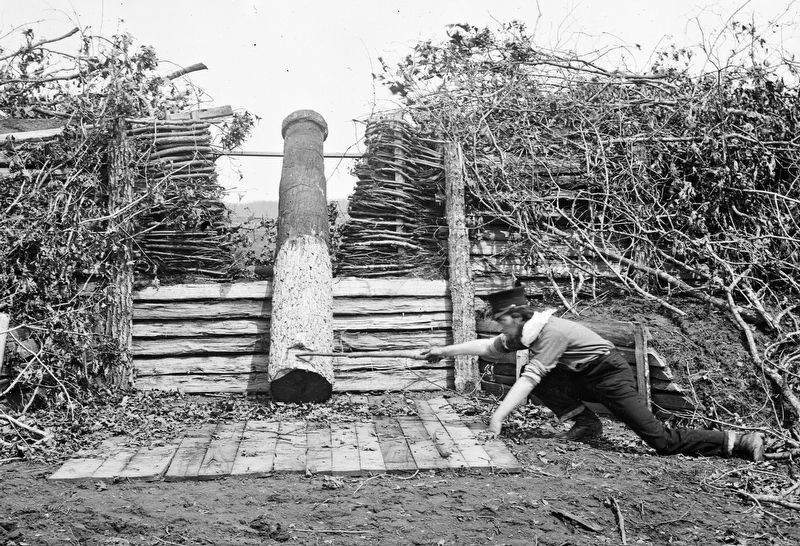
4. Quaker Guns
One of the most tactical weapons used during the Civil War was the Quaker gun. Deceiving in its appearance, it gave fortifications the look of being well armed. Without firing power, it was simply a painted wooden log that resembled a loaded cannon.
Additional commentary.
1. Quakers are Friends
Two things: The description is very good, but Sandy Spring Monthly Meeting of the Religious Society of Friends is a church, a faith, not merely an "organization". We meet for worship, not merely "silent contemplation". I like to say we may be "historic" but we are not "historical".
If this site is about historic markers, does that limit them to those set by the Government, like
Photographed by Allen C. Browne, June 9, 2017
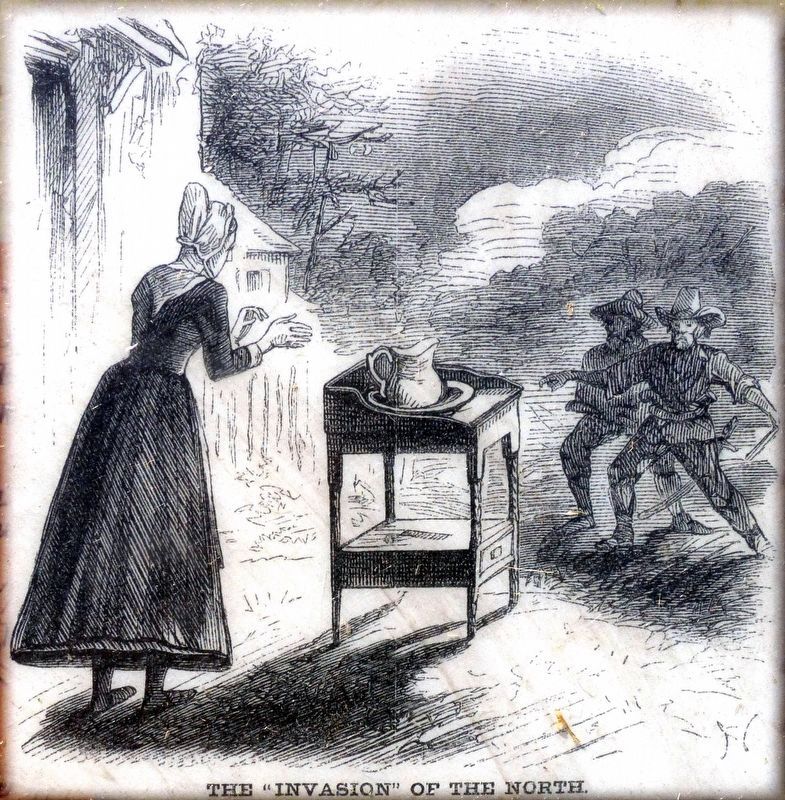
5. The “Invasion” of the North
This 1862 cartoon depicts an ‘Old Quaker Lady of Maryland’ pleading with Rebel scouts, “If thou wants my house, Friend, thou may'st have it but oh! do wash thyself before entering in.” it alludes to their pacifist spirit and characteristic language. Close-up of image on marker
Thank you for all this effort. It is very inspiring.
Editor’s reply: If the marker tells a historical fact beyond just names, titles and dates, and is outdoors and permanent, and it can be seen from the public way, or the photographer has implicit or explicit permission to enter the property, then it can be published in this database. Perhaps you would care to submit them via the Add-A-Marker button above.
— Submitted May 8, 2025, by James Lehman, Jr. of Laytonsville, Maryland.
Photographed by Allen C. Browne, June 9, 2017
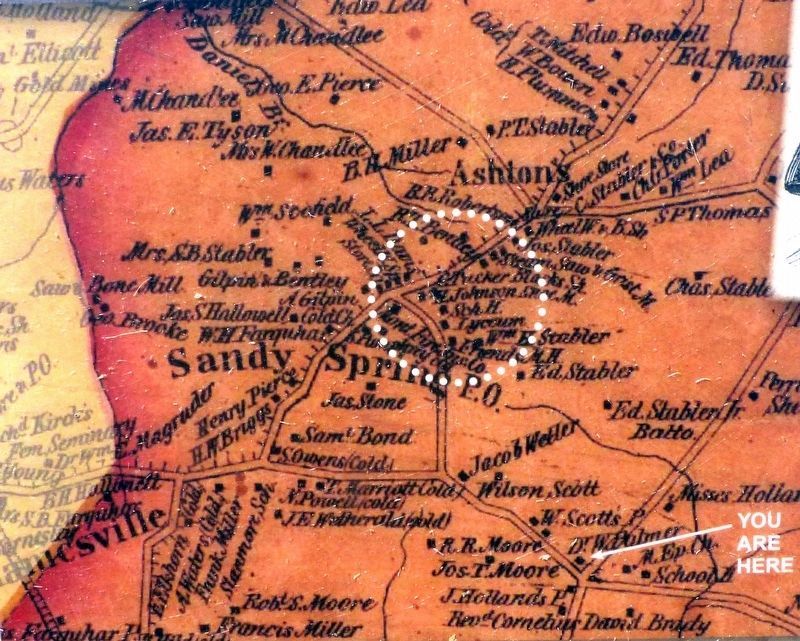
6. Sandy Spring and Woodlawn
1865 Martinet and Bond Map with Sandy Spring Meeting House location indicated.Close-up of map on marker
Photographed by Allen C. Browne, June 9, 2017
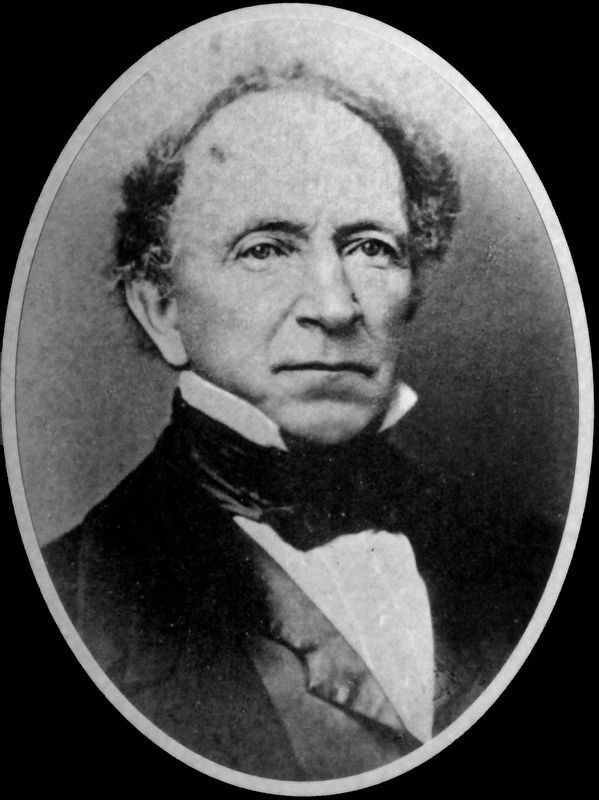
7. Dr. William P. Palmer
Quaker William Palmer, the owner of Woodlawn, was read out of his Quaker Meeting for owning slaves in 1835. Close-up of photo on signage at Woodlawn Manor Cultural Park
Photographed by Allen C. Browne, June 9, 2017
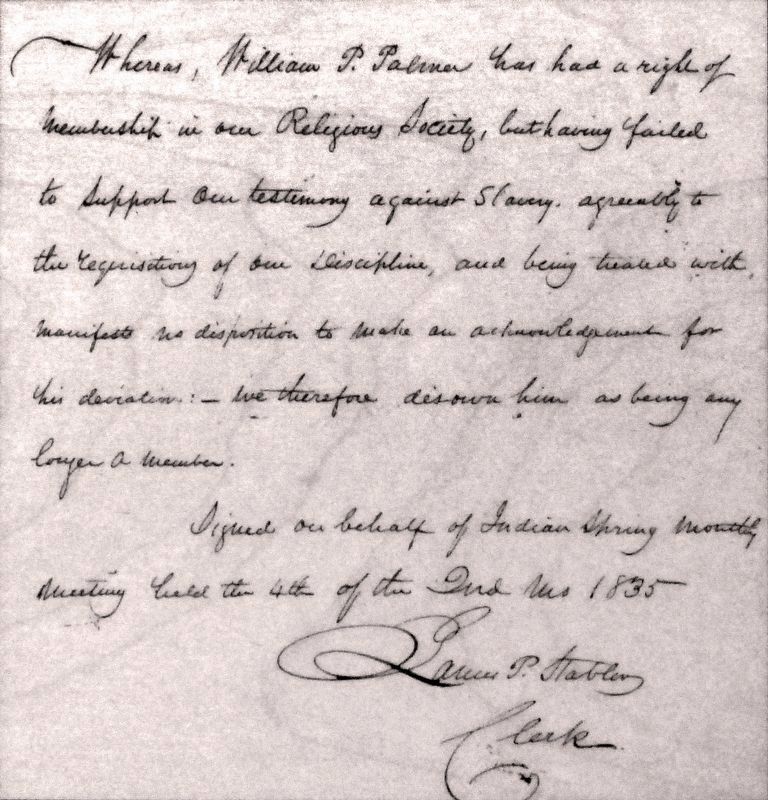
8. Document reading Dr. Palmer out of the Indian Spring Monthly Meeting.
“Whereas William P. Palmer has had a right of membership in our Religious Society, but having failed to Support our Testimony against Slavery,... we therefore disown him as being any longer a member.”Close-up of photo on signage at Woodlawn Manor Cultural Park
Photographed by Allen C. Browne, June 9, 2017
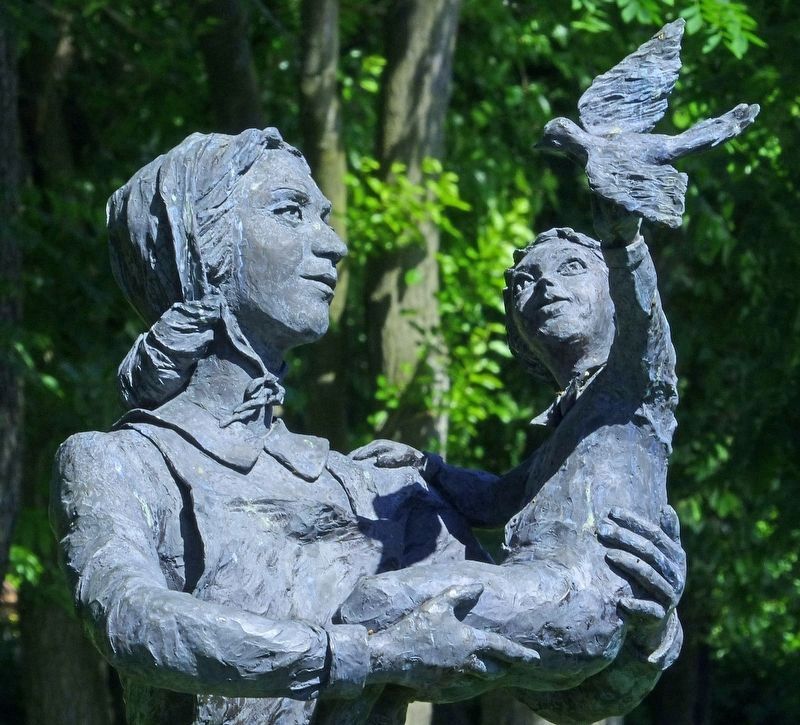
9. “The Inner Light”
Credits. This page was last revised on May 9, 2025. It was originally submitted on June 9, 2017, by Allen C. Browne of Silver Spring, Maryland. This page has been viewed 916 times since then and 75 times this year. Photos: 1, 2, 3, 4, 5, 6. submitted on June 9, 2017, by Allen C. Browne of Silver Spring, Maryland. 7, 8, 9. submitted on June 10, 2017, by Allen C. Browne of Silver Spring, Maryland. • Bill Pfingsten was the editor who published this page.
