Lewistown in Frederick County, Maryland — The American Northeast (Mid-Atlantic)
Lewistown
I Corps’ Muddy March
| — | Gettysburg Campaign | — |
Photographed by Craig Swain, July 1, 2007
1. Lewistown - I Corps' Muddy March Marker
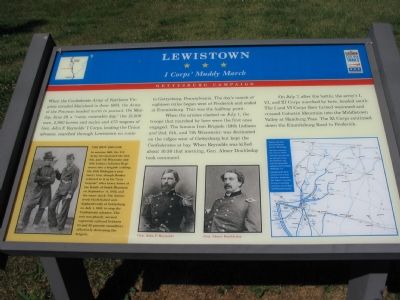
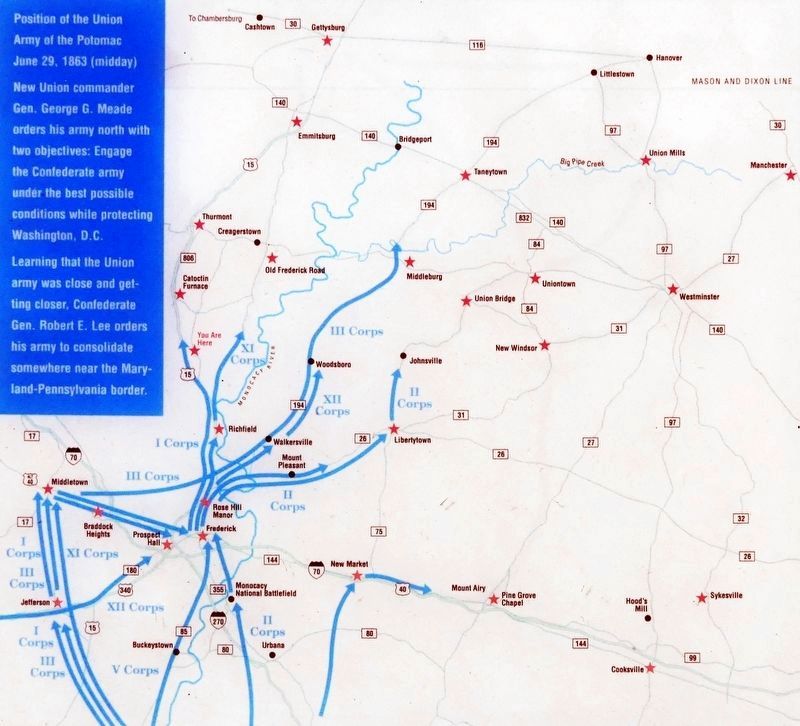
When the Confederate Army of Northern Virginia Invaded Maryland in June 1863, the Army of the Potomac headed north in pursuit. On Monday, June 29, a “rainy, miserable day,” the 15,000 men, 2,900 horses and mules and 475 wagons of Gen. John F. Reynolds’ I Corps, leading the Union advance, marched through Lewistown en route to Gettysburg, Pennsylvania. The day's march of eighteen miles began west of Fredrick and ended at Emmitsburg. This was the halfway point.
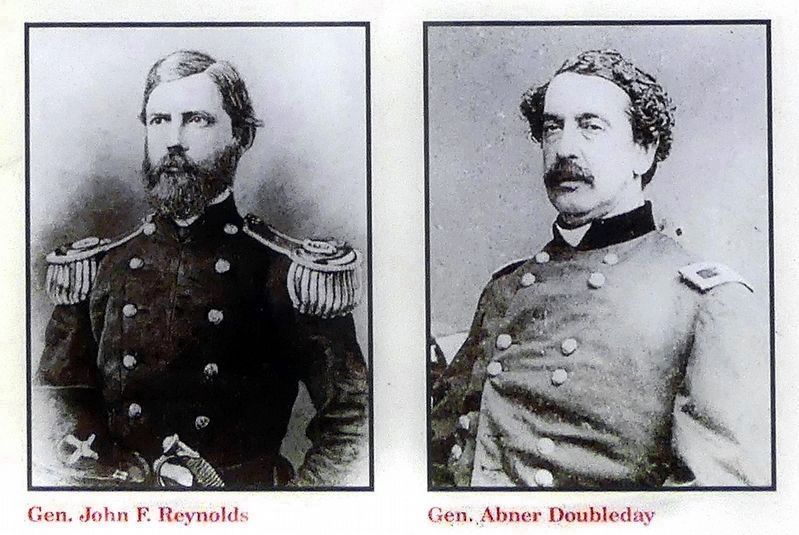
When the armies clashed on July 1, the troops that marched by here were the first ones engaged. The famous Iron Brigade (19th Indiana and 2nd, 6th, and 7th Wisconsin) was decimated on the ridges west of Gettysburg but kept the Confederates at bay. When Reynolds was killed about 10:30 that morning, Gen. Abner Doubleday took command.
On July 7, after the battle, the army’s I, VI, and XI Corps marched by here, headed south. The I and VI Corps then turned westward and crossed Catoctin Mountain into the Middletown Valley at Hamburg Pass. The XI Corps continued down the Emmitsburg Road to Frederick.
(Sidebar) The Iron Brigade
In autumn 1861, the U.S. Army incorporated the 2nd,
this page online
Topics and series. This historical marker is listed in this topic list: War, US Civil. In addition, it is included in the Maryland Civil War Trails series list. A significant historical month for this entry is June 1863.
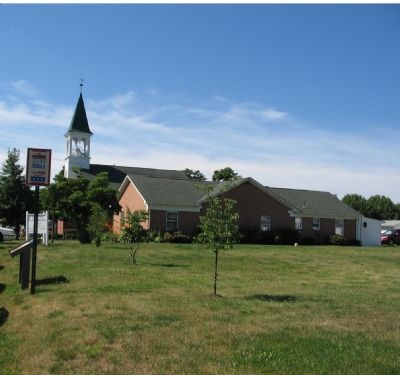
Location. 39° 32.248′ N, 77° 24.939′ W. Marker is in Lewistown, Maryland, in Frederick County. It is on Hessong Bridge Road, on the left when traveling north. On the grounds of the Lewistown United Methodist Church. Touch for map. Marker is at or near this postal address: 11032 Hessong Bridge Rd, Frederick MD 21701, United States of America. Touch for directions.

Regionally, this marker is in the Washington Metropolitan Area
Photographed by Craig Swain, July 1, 2007
2. Location of Marker Adjacent to the Church Parking Area
Other nearby markers. At least 8 other markers are within 3 miles of this marker, measured as the crow flies: Lewistown Trout Hatchery and Bass Ponds (approx. 0.9 miles away); Spring House (approx. 1.6 miles away); Milking Parlor and Creamery (approx. 1.7 miles away); Snook Family Farm (approx. 1.7 miles away); Snook Farm Smokehouse (approx. 1.7 miles away); Snook Family & Farmhouse (approx. 1.7 miles away); Erasure and Rediscovery (approx. 3 miles away); The Return of Names (approx. 3 miles away).
Another marker is no longer nearby. "Isabella" and Casting Shed (was approx. 2.6 miles away but has been confirmed missing).
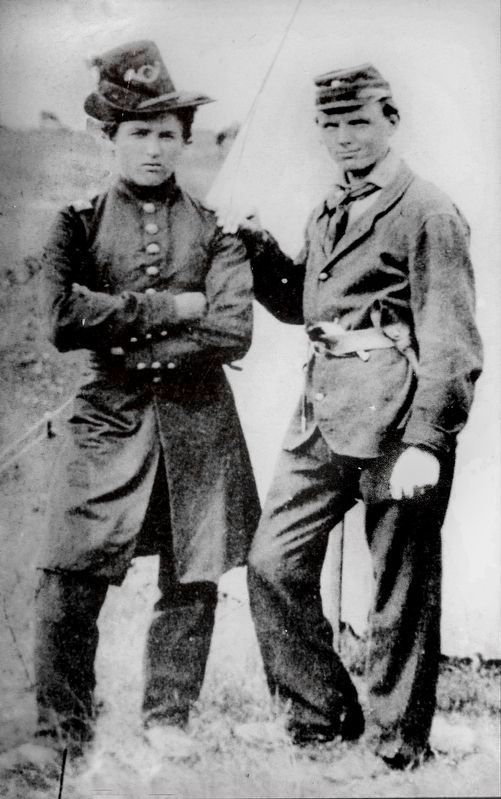
More about this marker. On the lower left in the sidebar is a photo of Iron Brigade soldiers posing in camp. Portraits of Gens Reynolds and Doubleday are in the lower center. A Gettysburg campaign map is in the lower
Photographed by Craig Swain, July 1, 2007
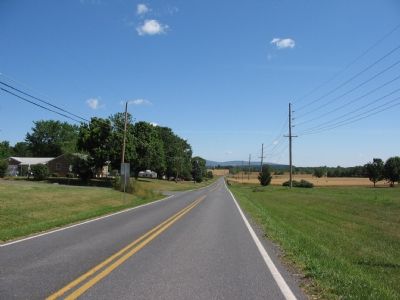
3. Hessong Bridge Road
This valley road north of Lewistown is typical of the terrain the Iron Brigade and their I Corps compatriots marched through.
Related markers. Click here for a list of markers that are related to this marker. To better understand the relationship, study each marker in the order shown.
Also see . . . John F. Reynolds. Wikipedia entry (Submitted on March 2, 2022, by Larry Gertner of New York, New York.)
Photographed by Allen C. Browne, October 21, 2021
4. The Iron Brigade
In autumn 1861, the U.S. Army incorporated the 2nd, 6th, and 7th Wisconsin and 19th Indiana Infantry Regiments into a brigade (adding the 24th Michigan a year later). Gen. Joseph Hooker referred to it as his “iron brigade” after heavy losses at the Battle of South Mountain on September 14, 1862, and the name stuck. The distinctively black-hatted unit deployed early at Gettysburg on July 1, 1863, to stop the Confederate advance. The cost was ghastly (several regiments suffered between 65 and 80 percent casualties), effectively destroying the brigade. Close-up of photo on marker
Photographed by Allen C. Browne, October 21, 2021
5. Generals Reynolds and Doubleday
Photographed by Allen C. Browne, October 21, 2021
6. Position of the Union Army of the Potomac
June 29, 1863 (midday) New Union commander Gen. George G. Meade orders his army north with two objectives: Engage the Confederate army under the best possible conditions while protecting Washington, D.C.
Learning that the Union army was close and getting closer, Confederate Gen. Robert E. Lee orders his army to consolidate somewhere near the Maryland-Pennsylvania border.Close-up of map on marker.
Learning that the Union army was close and getting closer, Confederate Gen. Robert E. Lee orders his army to consolidate somewhere near the Maryland-Pennsylvania border.
Credits. This page was last revised on May 22, 2026. It was originally submitted on July 3, 2007, by Craig Swain of Leesburg, Virginia. This page has been viewed 2,893 times since then and 71 times this year. Last updated on July 9, 2017, by William Glahn of Winchester, Virginia. Photos: 1, 2, 3. submitted on July 3, 2007, by Craig Swain of Leesburg, Virginia. 4, 5, 6. submitted on October 23, 2021, by Allen C. Browne of Silver Spring, Maryland. • Bill Pfingsten was the editor who published this page.
