Stephansdom in Wien, Austria — Central Europe (Eastern Alps)
Henry Dunant and the Red Cross
1828 - 1910
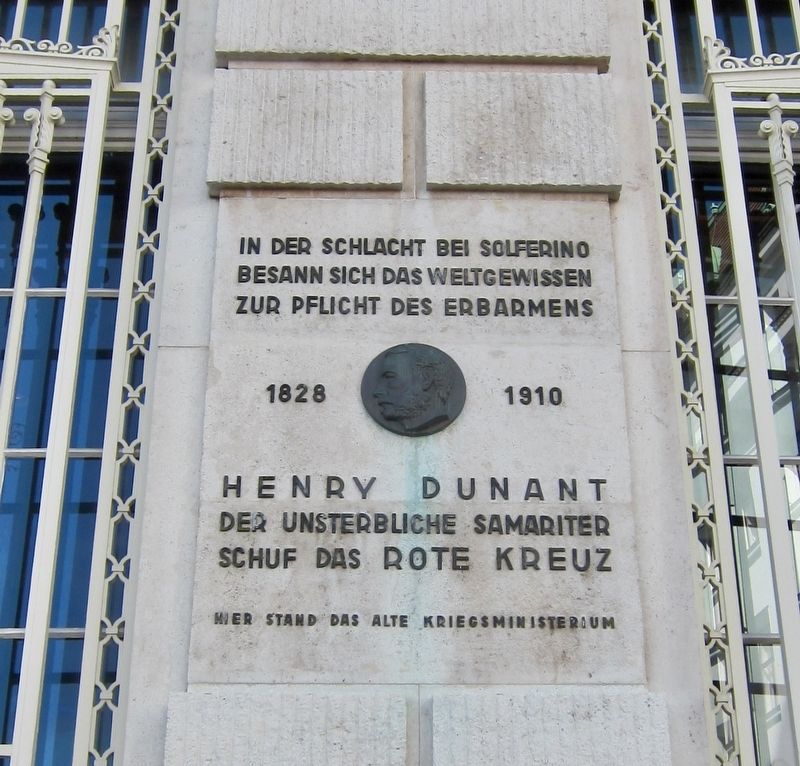
Photographed by Andrew Ruppenstein, June 15, 2017
1. Henry Dunant and the Red Cross Marker

besann sich das Weltgewissen
zur Pflicht des Erbarmens
Henry Durant der unsterbliche Samariter
schuf das Rote Kreuz
Hier stand das alte Kriegsministerium
At the Battle of Solferino the world's conscience was called to the duty of compassion.
Henry Durant, the undying Samaritan, founded the Red Cross.
Here stood the old Ministry of War.
Topics. This historical marker is listed in these topic lists: Charity & Public Work • Wars, Non-US. A significant historical date for this entry is May 8, 1828.
Location. 48° 12.636′ N, 16° 22.072′ E. Marker is in Wien. It is in Stephansdom. It is at the intersection of Am Hof and Bognergasse when traveling north on Am Hof. Touch for map. Marker is at or near this postal address: Am Hof 2, Wien 1010, Austria. Touch for directions.

Regionally, it is in Europe, the European Union, Central Europe, the Schengen Area, Western Europe, and the Western World. Historically, it finds itself in what was once the Roman Empire and specifically also the Holy Roman Empire.
Other nearby markers. At least 8 other
this page online
Another marker is no longer nearby. Emile Jacques-Dalcroze (was about 120 meters away but has been confirmed missing).
Regarding Henry Dunant and the Red Cross. "The Battle of Solferino ... on 24 June 1859 resulted in the victory of the allied French Army under Napoleon III and Sardinian Army under Victor Emmanuel II (together known as the Franco-Sardinian Alliance) against the Austrian Army under Emperor Franz Joseph I. It was the last major battle in world history where all the armies were under the personal
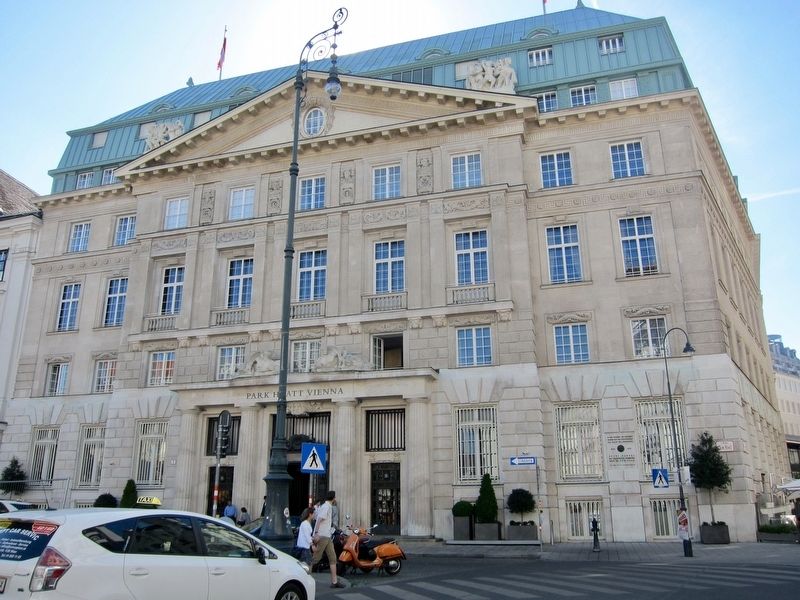
Photographed by Andrew Ruppenstein, June 15, 2017
2. Henry Dunant and the Red Cross Marker - Wide View
The marker is found on right corner of what is now the Park Hyatt Vienna.
Also see . . . Henry Dunant (1828-1910) (International Committee of the Red Cross). (Submitted on September 21, 2017.)
Additional keywords. Nobel
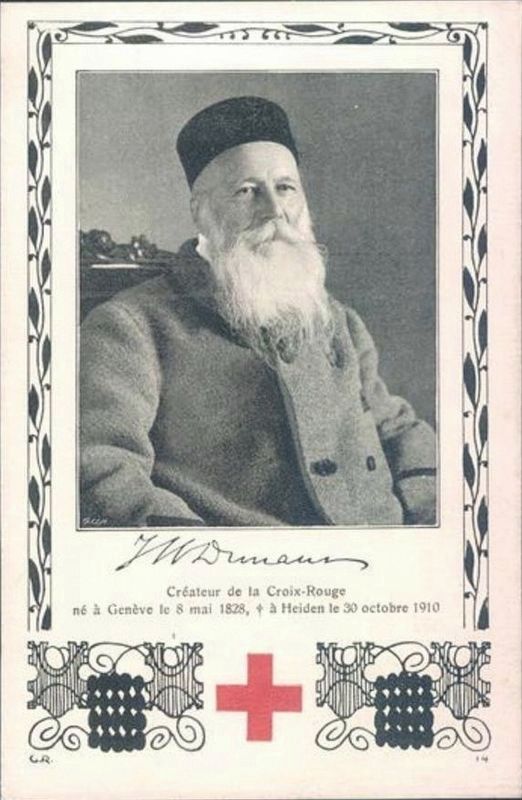
Postcard published by Tombola, circa 1911
3. Henry Dunant and the Red Cross - Commemorative Postcard
The man whose vision led to the creation of the worldwide Red Cross and Red Crescent movement; he went from riches to rags but became joint recipient of the first Nobel peace prize. - The International Committee of the Red Cross
Credits. This page was last revised on February 1, 2022. It was originally submitted on September 21, 2017, by Andrew Ruppenstein of Lamorinda, California. This page has been viewed 837 times since then and 60 times this year. Photos: 1, 2, 3. submitted on September 21, 2017, by Andrew Ruppenstein of Lamorinda, California.
