Enon in Chesterfield County, Virginia — The American South (Mid-Atlantic)
African-Americans in the Confederate War Effort
The Bermuda Hundred Campaign
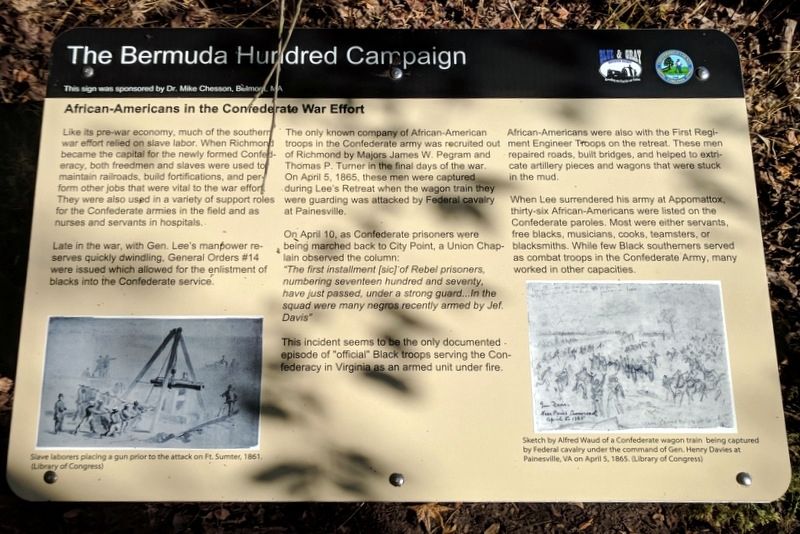
Photographed by Bernard Fisher, October 28, 2017
1. African-Americans in the Confederate War Effort Marker
Late in the war, with Gen. Lee’s manpower reserves quickly dwindling, General Orders #14 were issued which allowed for the enlistment of blacks into the Confederate service.
The only known company of African-American troops in the Confederate army was recruited out of Richmond by Major James W. Pegram and Thomas P. Turner in the final days of the war. On April 5, 1865, these men were captured during Lee’s Retreat when the wagon train they were guarding was attacked by Federal cavalry at Painesville.
On April 10, as Confederate prisoners were being marched back to City Point, a Union Chaplain observed the column:
“The first installment [sic] of Rebel prisoners, numbering seventeen hundred and seventy, have just passed, under strong guard...In the squad were many negros recently armed by Jef. Davis”
The
this page online
African-Americans were also with the First Regiment Engineer Troops on the retreat. These men repaired roads, built bridges, and helped to extricate artillery pieces and wagons that were stuck in the mud
When Lee surrendered his army at Appomattox, thirty-six African-Americans were listed on the Confederate paroles. Most were either servants, free blacks, musicians, cooks, teamsters, or blacksmiths. While few Black southerners served as combat troops in the Confederate Army, many worked in other capacities.
This sign was sponsored by Dr. Mike Chesson, Belmont, MA
Erected 2016 by Chesterfield County and the Blue & Gray Education Society.
Topics. This historical marker is listed in these topic lists: African Americans • War, US Civil. A significant historical date for this entry is April 5, 1865.
Location. 37° 19.082′ N, 77° 20.225′ W. Marker is in Enon, Virginia, in Chesterfield County. It can be reached from the intersection of Enon Church Road (Virginia Route 746) and Point
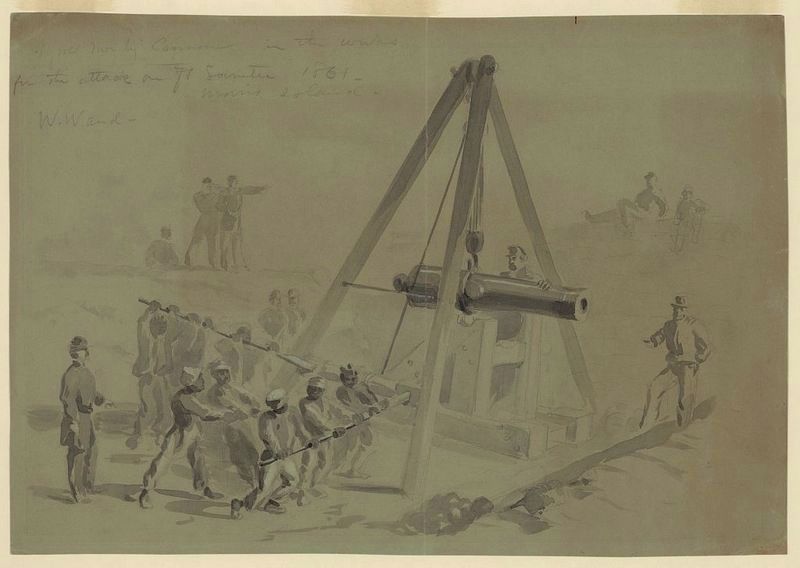
Photographed by William Waud, April 12, 1861
2. Slave laborers placing a gun prior to the attack on Ft. Sumter, 1861.
Negroes mounting Cannon in the works for the attack on Ft. Sumter 1861- Morris Island. Library of Congress LC-DIG-ppmsca-21740

Regionally, this marker is in the Piedmont, in Central Virginia, and in the Richmond Metropolitan Area. It is also in the American South, specifically in the Upper South, and on the Eastern Seaboard. Globally, it is in the North Atlantic Region, North America, the Western Hemisphere, the Western World, and the Anglosphere. Historically, it finds itself in what was once the territory of the Mississippian Culture, one of the original Thirteen Colonies, one of the Confederate States of America, and the Antebellum South.
Other nearby markers. At least 8 other markers are within walking distance of this marker: United States Colored Troops in the Army of the James (here, next to this marker); Point of Rocks Hospital Ward (here, next to this marker); The Siege of Petersburg Begins (within shouting distance of this marker); The First Attacks on Petersburg (about
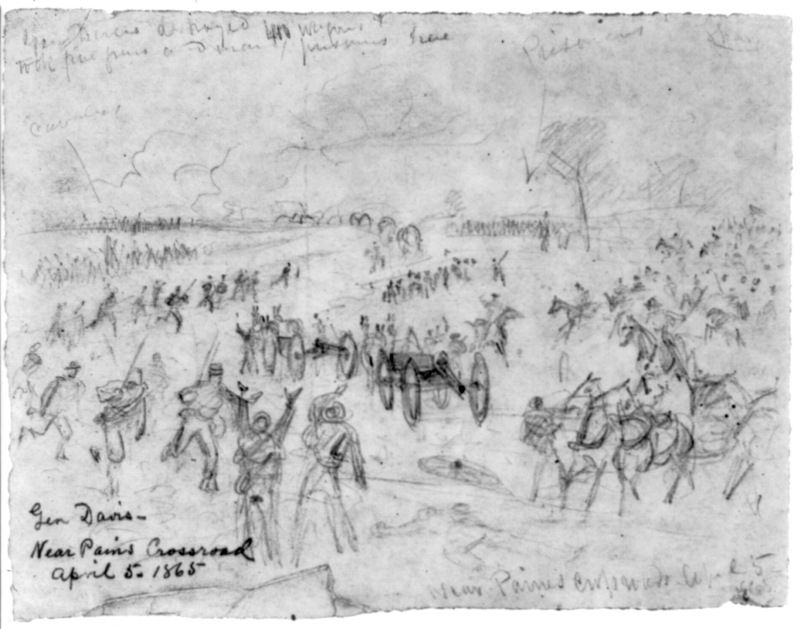
Photographed by Alfred R. Waud, April 5, 1865
3. Confederate wagon train being captured by Federal cavalry under the command of Gen. Henry Davies
Gen. Davis [sic]-Near Paines Crossroad April 5, 1865. Library of Congress LC-USZ62-6894
Also see . . . Bermuda Hundred Sign Campaign. Blue & Gray Education Society (Submitted on October 30, 2017.)
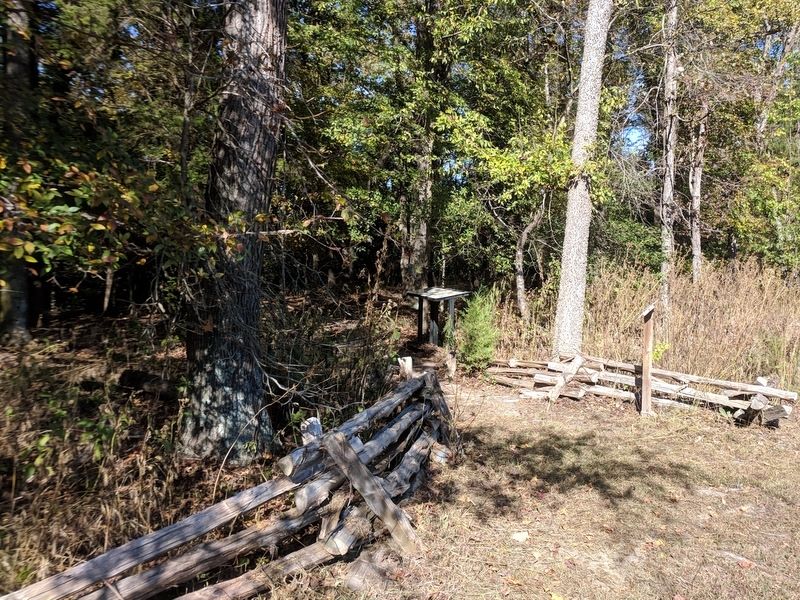
Photographed by Bernard Fisher, October 28, 2017
4. African-Americans in the Confederate War Effort Marker
Credits. This page was last revised on October 30, 2017. It was originally submitted on October 30, 2017, by Bernard Fisher of Richmond, Virginia. This page has been viewed 477 times since then and 32 times this year. Photos: 1. submitted on October 30, 2017, by Bernard Fisher of Richmond, Virginia. 2, 3. submitted on October 30, 2017. 4. submitted on October 30, 2017, by Bernard Fisher of Richmond, Virginia.
