Near Edwards in Hinds County, Mississippi — The American South (East South Central)
Architecture and Renovations
Photographed by Mark Hilton, October 24, 2017
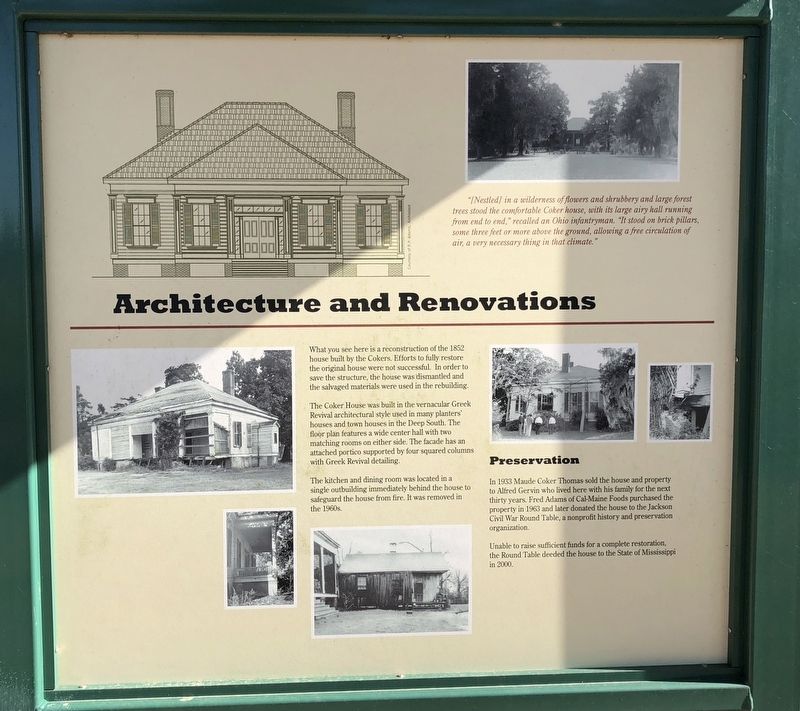
1. Architecture and Renovations Marker
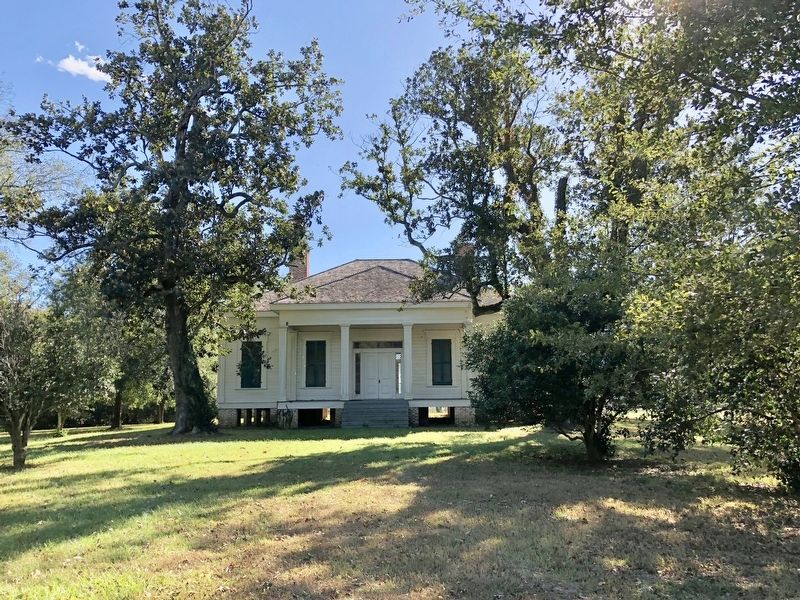
The Coker House was built in the vernacular Greek Revival architectural style used in many planters' houses and town houses in the Deep South. The floor plan features a wide center hall with two matching rooms on either side. The facade has an attached portico supported by four squared columns with Greek Revival detailing.
The kitchen and dining room was located in a single outbuilding immediately behind the house to safeguard the house from fire. It was removed in the 1960s.
Preservation
In 1933 Maude Coker Thomas sold the house and property to Alfred Gervin who lived here with his family for the next thirty years. Fred Adams of Cal-Maine Foods purchased the property in 1963 and later donated the house to the Jackson Civil War Round Table, a nonprofit history and preservation organization.
Unable to raise sufficient funds for a complete
this page online
"[Nestled] in a wilderness of flowers and shrubbery and large forest trees stood the comfortable Coker house, with its large airy hall running from end to end," recalled an Ohio infantryman. "It stood on brick pillars, some three feet or more above the ground, allowing a free circulation of air, a very necessary thing in that climate."
Erected by the Mississippi Department of Archives and History.
Topics. This historical marker is listed in these topic lists: Architecture • Notable Buildings • War, US Civil. A significant historical year for this entry is 1852.
Location. Marker is missing. It was located near 32° 18.245′ N, 90° 33.714′ W. Marker was near Edwards, Mississippi, in Hinds County. It was on Adams Lane near State Route 467, on the left when traveling south. Located just north of Cal-Maine Foods, Inc. Touch for map. Marker was at or near this postal address: Adams Lane, Edwards MS 39066, United States of America. Touch for directions.

Regionally, this marker was in Natchez Trace Corridor and in Greater Jackson. It was
Photographed by Mark Hilton, October 24, 2017
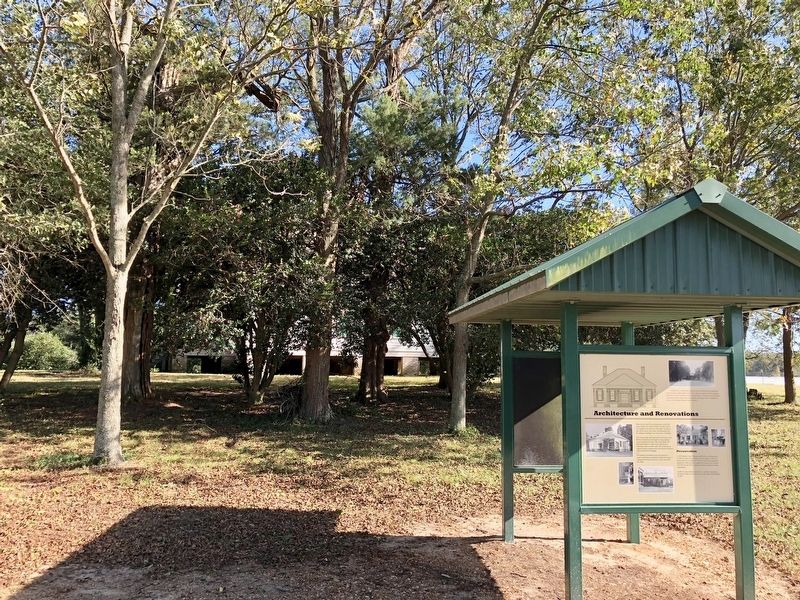
2. View of marker looking towards the Coker House.
Other nearby markers. At least 8 other markers are within 3 miles of this location, measured as the crow flies: The Vicksburg Campaign (here, next to this marker); Indecision! Indecision! Indecision! (here, next to this marker); 1863 Vicksburg Campaign (here, next to this marker); Artillery Duel (within shouting distance of this marker); A Narrow Escape (within shouting distance of this marker); Lloyd Tilghman (approx. 0.3 miles away); The Battle of Champion Hill (approx. 2½ miles away); Champion Hill Battlefield (approx. 2½ miles away). Touch for a list and map of all markers in Edwards.
Other markers no longer nearby. The Coker House and the Battle of Champion Hill (was here, next to this marker but has been confirmed missing); A Refugee Family (was within shouting distance
Photographed by Mark Hilton, October 24, 2017
3. The Coker House
Regarding Architecture and Renovations. Located on Cotton Hill, three miles southeast of Edwards, Mississippi, the Coker House is known for its role in the Civil War. H. B. Coker, a noted citizen and planter, built the one story Greek Revival house about 1852. It is typical of the style of house occupied by wealthy people of this area in antebellum days.
Credits. This page was last revised on January 11, 2025. It was originally submitted on November 16, 2017, by Mark Hilton of Montgomery, Alabama. This page has been viewed 890 times since then and 52 times this year. Photos: 1, 2, 3. submitted on November 16, 2017, by Mark Hilton of Montgomery, Alabama.
