Centro Histórico in Ciudad de México, Mexico — The Valley of Mexico (The Central Highlands)
Factor Antonio de la Cadena
Photographed by J. Makali Bruton, December 4, 2017
1. Factor Antonio de la Cadena Marker

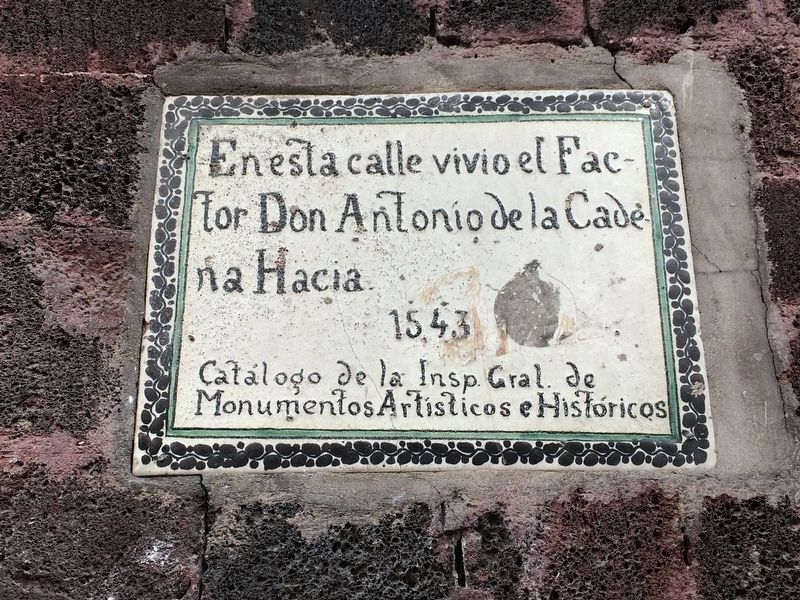
En esta calle vivio el Factor Don Antonio de la Cadena Hacia 1543
Catálogo de la Insp. Gral. de Monumentos Artísticos e Históricos
On this street lived the Factor Antonio de la Cadena around 1543
Catalog of the Inspector General of Artistic and Historic Monuments
Erected by Catálogo de la Inspección General de Monumentos Artísticos e Históricos.
Topics. This historical marker is listed in these topic lists: Colonial Era • Industry & Commerce. A significant historical year for this entry is 1543.
Location. 19° 25.889′ N, 99° 8.259′ W. Marker is in Ciudad de México. It is in Centro Histórico. It is on Calle Venustiano Carranza just west of Calle Isabel la Católica, on the left when traveling west. Touch for map. Marker is at or near this postal address: Calle de Venustiano Carranza 49, Ciudad de México 06000, Mexico. Touch for directions.

Regionally, this marker is in Central Mexico and specifically in Mexico City Metropolitan Area. Globally, it is in North America, specifically in Mesoamerica, on the Ring of Fire, and in the Western Hemisphere. Historically, it finds itself in
this page online
Other nearby markers. At least 8 other markers are within walking distance of this marker: El Gallo de Oro (about 90 meters away, measured in a direct line); House of José y Francisco Fagoaga y Villaurruña (about 90 meters away); The Ottoman Clock (about 90 meters away); Calle de Motolinia (about 120 meters away); Portal del Coliseo (about 120 meters away); First Cockfighting Plaza (about 120 meters away); Manuel Murgías Bookstore (about 120 meters away); Palace of the Counts of San Mateo Valparaiso (about 120 meters away). Touch for a list and map of all markers in Ciudad de México.
Another marker is no longer nearby. The Golden Rooster Bar (was about 90 meters away but has been confirmed missing).
Regarding Factor Antonio de la Cadena. A 'factor' in colonial-era New Spain was charged with collecting tribute and taxes and generally acting as an agent of the Crown in business dealings.
Photographed by J. Makali Bruton, December 4, 2017
2. Factor Antonio de la Cadena Marker
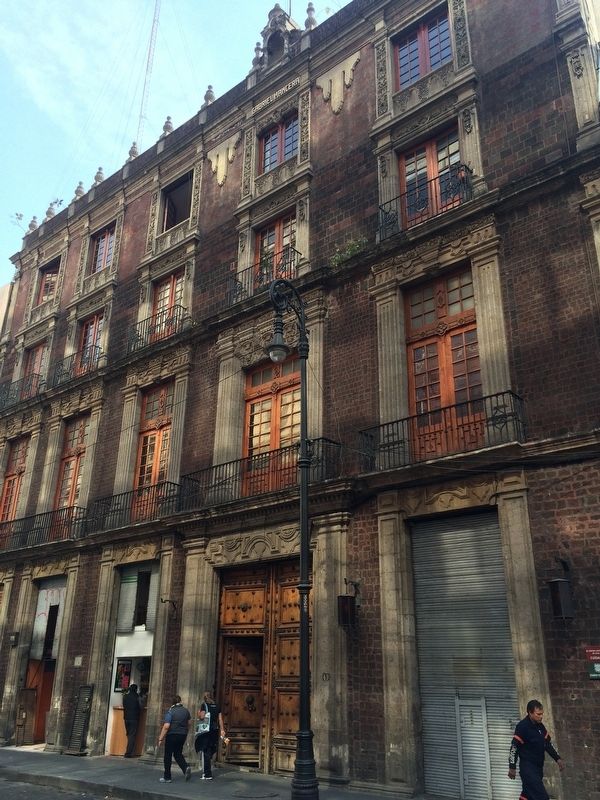
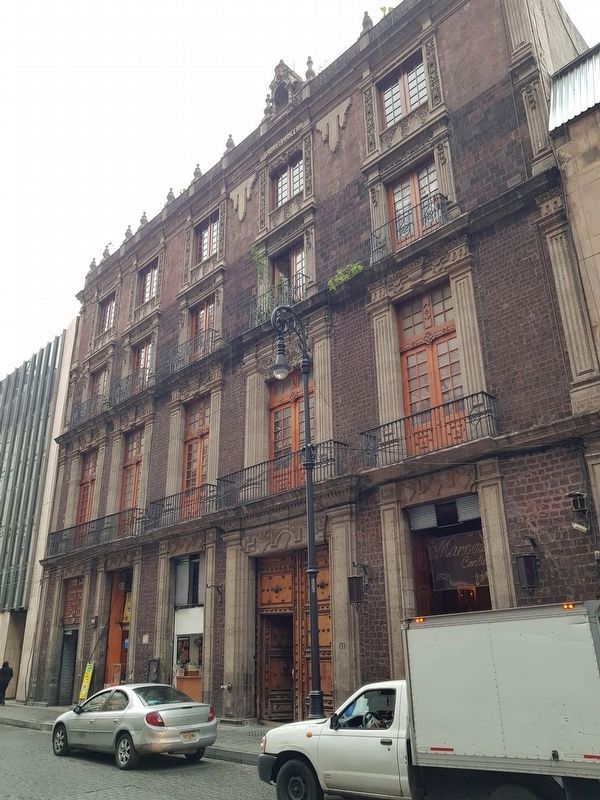
The marker can be seen towards the left on this building at Venustiano Carranza 49. The building is also known as the Gabriel Mancera Building (see the inscription near the top of the building).
Photographed by J. Makali Bruton, October 10, 2018
3. Factor Antonio de la Cadena Marker
Credits. This page was last revised on April 17, 2020. It was originally submitted on December 11, 2017, by J. Makali Bruton of Washington, District of Columbia. This page has been viewed 526 times since then and 53 times this year. Photos: 1, 2. submitted on December 11, 2017, by J. Makali Bruton of Washington, District of Columbia. 3. submitted on October 25, 2018, by J. Makali Bruton of Washington, District of Columbia.
