Mobridge in Walworth County, South Dakota — The American Midwest (Upper Plains)
Lewis & Clark meet the Arikaras
Photographed by Ruth VanSteenwyk, April 30, 2017
1. Lewis & Clark meet the Arikaras Marker
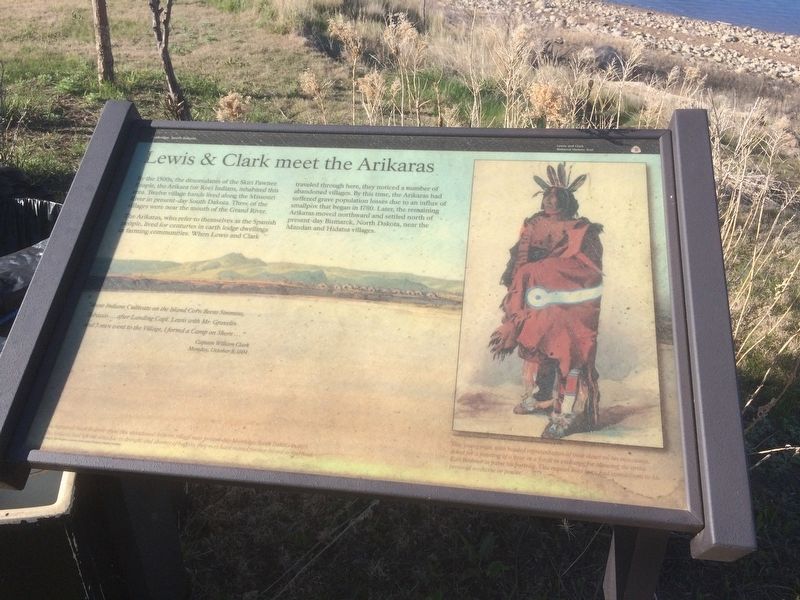
By the 1500s, the descendants of the Skiri Pawnee People, the Arikara (or Ree) Indians, inhabited this area. Twelve village bands lived along the Missouri River in present-day South Dakota. Three of the villages were near the mouth of the Grand River.
The Arikaras, who refer to themselves as the Spanish people, lived for centuries in earth lodge dwellings in farming communities. When Lewis and Clark traveled through here, they noticed a number of abandoned villages. By this time, the Arikaras had suffered grave population losses due to an influx of smallpox that began in 1780. Later, the remaining Arikaras moved northward and settled north of present day Bismarck, North Dakota, near the Mandan and Hidatsa villages.
Journal Entry
"those Indians Cultivate on the Island Corn Beens Simmins, Tobacco …after Landing Capt. Lewis with Mr. Gravelin and 3 men went to the Village, I formed a Camp on Shore…"
Captain William Clark
Monday, October 8, 1804
Picture Caption
(Background) Karl Bodmer drew this abandoned Arikara village near present-day Mobridge, South Dakota in 1833. The Arikara had left the area due to drought
this page online
This young man, with beaded representation of bear claws on his moccasins, asked for a painting of a bear in a forest in exchange for allowing the artist Kari Bodmer to paint his portrait. This request may have had connections to his personal medicine or power.
Erected by National Park Service, U.S. Department of the Interior.
Topics and series. This historical marker is listed in these topic lists: Exploration • Indigenous Peoples and Communities • Settlements & Settlers. In addition, it is included in the Lewis & Clark Expedition series list. A significant historical date for this entry is October 8, 1804.
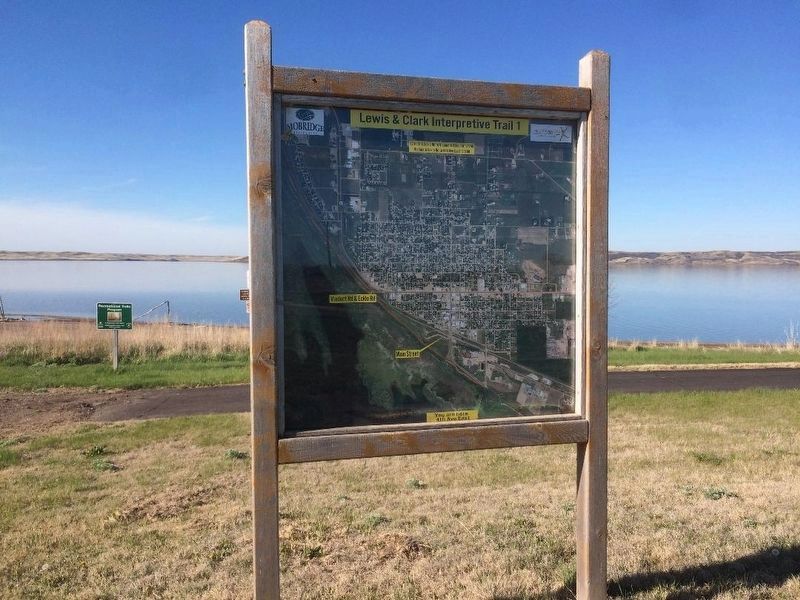
Location. 45° 32.673′ N, 100° 27.318′ W. Marker is in Mobridge, South Dakota, in Walworth County. It is on Lewis & Clark Interpretive Trail 1 0.6 miles 20th Street W. Park at the corner of 20th Street W. and W. Railway Street. Walk down the trail .6 miles to the markers. Touch for map. Marker is in this post office area: Mobridge SD 57601, United States of America. Touch for directions.

Regionally, this marker is on the Cheyenne River Reservation and in
Photographed by Ruth VanSteenwyk, April 30, 2017
2. Lewis & Clark meet the Arikaras Marker
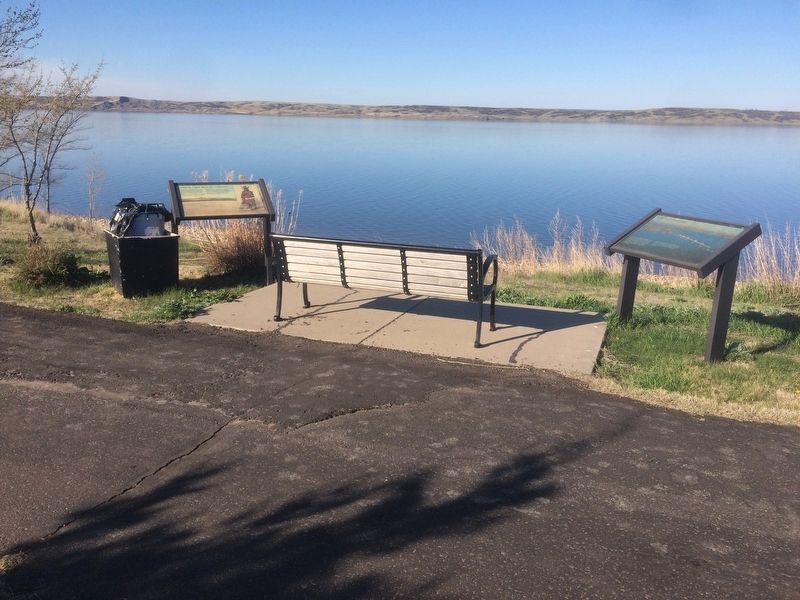
Other nearby markers. At least 8 other markers are within walking distance of this marker: River of Hardship (here, next to this marker); History Beneath the Waters (approx. 0.4 miles away); "MO.Bridge" (approx. 0.4 miles away); "Fool Soldier Band" (approx. half a mile away); Mobridge Bridge (approx. half a mile away); Ensign Nathaniel Pryor (approx. half a mile away); Lewis & Clark (approx. half a mile away); Pierre Choteau (approx. half a mile away). Touch for a list and map of all markers in Mobridge.
Photographed by Ruth VanSteenwyk
3. Lewis & Clark Interpretive Trail 1
Credits. This page was last revised on December 27, 2024. It was originally submitted on January 1, 2018, by Ruth VanSteenwyk of Aberdeen, South Dakota. This page has been viewed 735 times since then and 39 times this year. Photos: 1, 2, 3. submitted on January 1, 2018, by Ruth VanSteenwyk of Aberdeen, South Dakota. • Bill Pfingsten was the editor who published this page.
