
Cahaba in Dallas County, Alabama — The American South (East South Central)
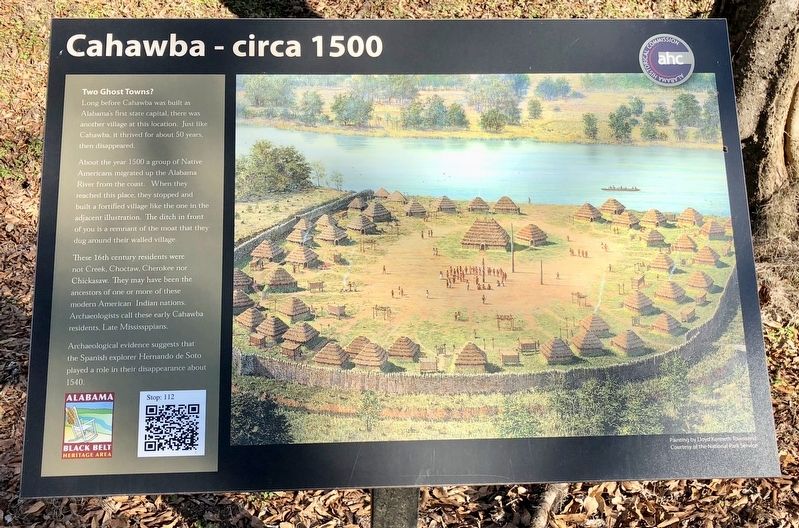
Cahawba - circa 1500
Photographed by Mark Hilton, January 6, 2018
1. Cahawba - circa 1500 Marker
Long before Cahawba was built as Alabama's first state capital, there was another village at this location. Just like Cahawba, it thrived for about 50 years, then disappeared.
About the year 1500 a group of Native Americans migrated up the Alabama River from the coast. When they reached this place, they stopped and built a fortified village like the one in the adjacent illustration. The ditch in front of you is a remnant of the moat that they dug around their walled village.
These 16th century residents were not Creek, Choctaw, Cherokee nor Chickasaw. They may have been the ancestors of one or more of these modern American Indian nations. Archaeologists call these early Cahawba residents, Late Mississippians.
Archaeological evidence suggests that the Spanish explorer Hernando de Soto played a role in their disappearance about 1540.
Erected 2015 by the Alabama Historical Commission.
Topics and series. This historical marker is listed in these topic lists: Indigenous Peoples and Communities • Settlements & Settlers. In addition, it is
this page online
Location. 32° 19.003′ N, 87° 5.806′ W. Marker is in Cahaba, Alabama, in Dallas County. It can be reached from Vine Street south of Capitol Avenue. Located within the Cahawba Archaeological Park (nominal fee required). Touch for map. Marker is in this post office area: Orrville AL 36767, United States of America. Touch for directions.

Regionally, this marker is in the American South, specifically in the Deep South, and in the Black Belt. Globally, it is in North America, a Gulf of Mexico state, the Western Hemisphere, the Western World, and the Anglosphere. Historically, it finds itself in what was once New Spain, the territory of the Mississippian Culture, one of the Confederate States of America, and the Antebellum South.
Other nearby markers. At least 8 other markers are within walking distance of this marker: Footprint of a Church (a few steps from this marker); The Mound at Old Cahawba Archaeological Park (within shouting distance of this marker); Cahaba First State Capital (within shouting distance of this marker);
Photographed by Mark Hilton, January 6, 2018
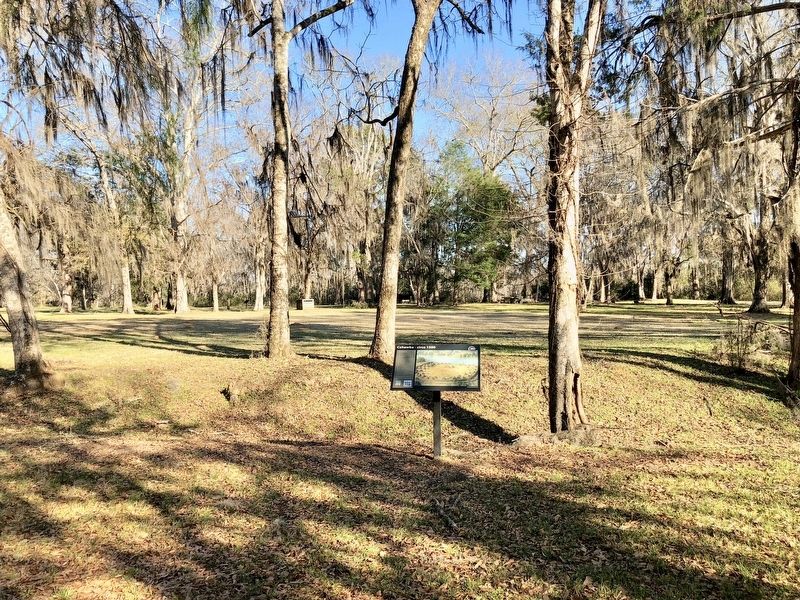
2. Looking east towards the Alabama River - ditch is just beyond marker.
Other markers no longer nearby. St. Luke's Episcopal Church (was within shouting distance of this marker but has been permanently removed); Vine Street (was within shouting distance of this marker but has been permanently removed).
Regarding Cahawba - circa 1500. The remains of a large village occupied by mound builders of the Mississippian Period (100-1550 AD) lie underneath those of Alabama's first capital. In Alabama, Mississippian culture would evolve into the Native American cultures of the Creeks, Choctaws, Chickasaws, and Cherokees. The name Cahawba, or Cahaba, is thought to come from either two Choctaw words meaning "water above" or a Creek word for the native cane that covered the river valleys. It is believed that a Choctaw town of
Photographed by Mark Hilton, January 6, 2018
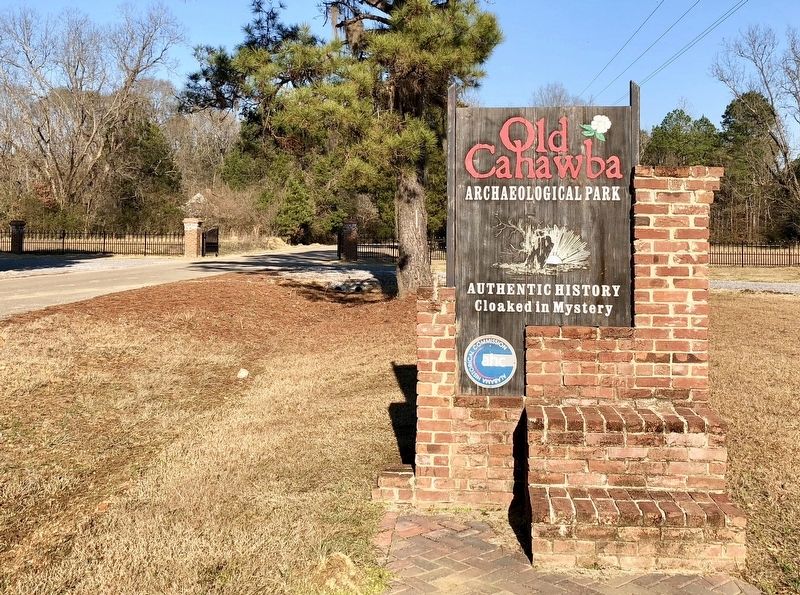
3. Entrance sign to the Cahawba Archaeological Park.
Credits. This page was last revised on January 11, 2018. It was originally submitted on January 9, 2018, by Mark Hilton of Montgomery, Alabama. This page has been viewed 1,172 times since then and 48 times this year. Photos: 1, 2, 3. submitted on January 9, 2018, by Mark Hilton of Montgomery, Alabama.
