Oak Ridge in Anderson County, Tennessee — The American South (East South Central)
The Birth of the City of Oak Ridge, Tennessee
Transformation of Municipal Services
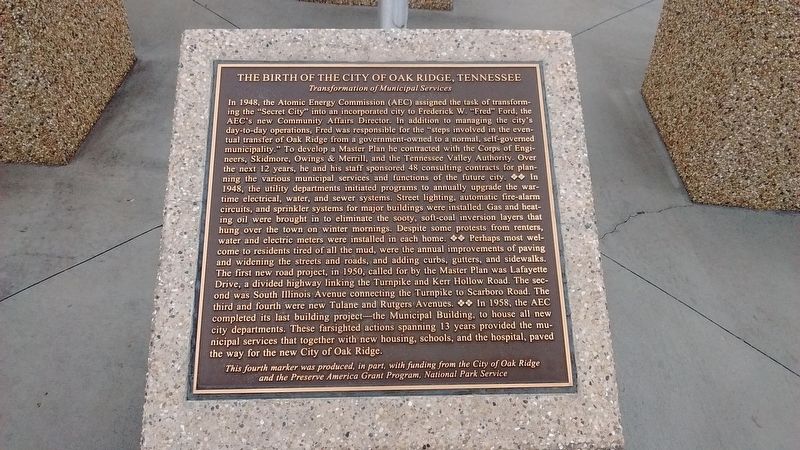
Photographed by Tom Bosse, December 30, 2017
1. The Birth of the City of Oak Ridge, Tennessee Marker
this page online
This fourth marker was produced, in part, with funding from the City of Oak Ridge and the Preserve American Grant Program, National Park Service.
Erected by The City of Oak Ridge and The National Park Service.
Topics. This historical marker is listed in these topic lists: Charity & Public Work • Roads & Vehicles. A significant historical year for this entry is 1948.
Location. 36° 0.741′ N,
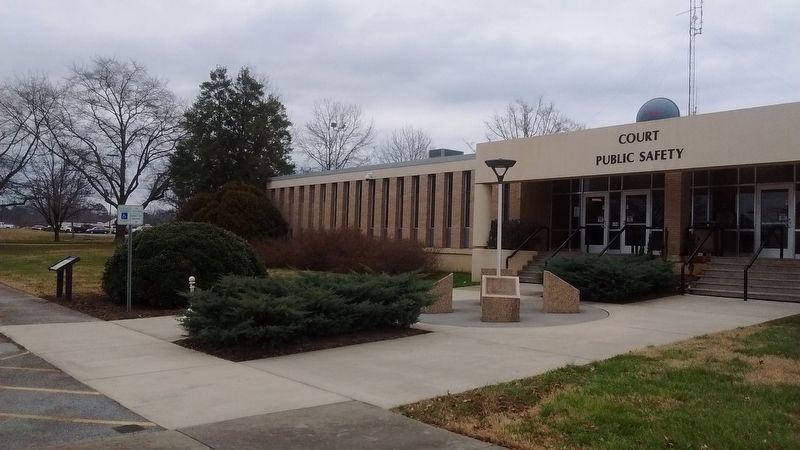
Photographed by Tom Bosse, December 30, 2017
2. The Birth of the City of Oak Ridge, Tennessee Marker

Regionally, this marker is in East Tennessee and in Greater Knoxville. It is also in the American South, specifically in the Upper South, in Appalachia, and specifically in Southern Appalachia. Globally, it is in North America, the Western Hemisphere, the Western World, and the Anglosphere. Historically, it finds itself in what was once the original Cherokee Nation, the territory of the Mississippian Culture, one of the Confederate States of America, and the Antebellum South.
Other nearby markers. At least 8 other markers are within walking distance of this marker: A different marker also named The Birth of the City of Oak Ridge, Tennessee (here, next to this marker); a different marker also named The Birth of the City of Oak Ridge, Tennessee (here, next to this marker); a different marker also named The Birth of the City of Oak Ridge, Tennessee (here, next to this marker); Dedicated to the Memory of Those from Oak Ridge Who Gave Their Lives That Freedom Might Live (here, next to this marker); Violent Clashes (within shouting distance of this marker); 1944 (about 500 feet away, measured in a direct line); K-25 – The Gaseous Diffusion Plant (about 500 feet away); Oak Ridge Hospital (about 500 feet away). Touch for a list and map of all markers in Oak Ridge.
Related markers. Click here for a list of markers that are related to this marker.
Credits. This page was last revised on January 10, 2018. It was originally submitted on January 10, 2018, by Tom Bosse of Jefferson City, Tennessee. This page has been viewed 810 times since then and 35 times this year. Photos: 1, 2. submitted on January 10, 2018, by Tom Bosse of Jefferson City, Tennessee. • Bill Pfingsten was the editor who published this page.
