Near Cascadia in Linn County, Oregon — The American West (Northwest)
America's First Transcontinental Automobile Race
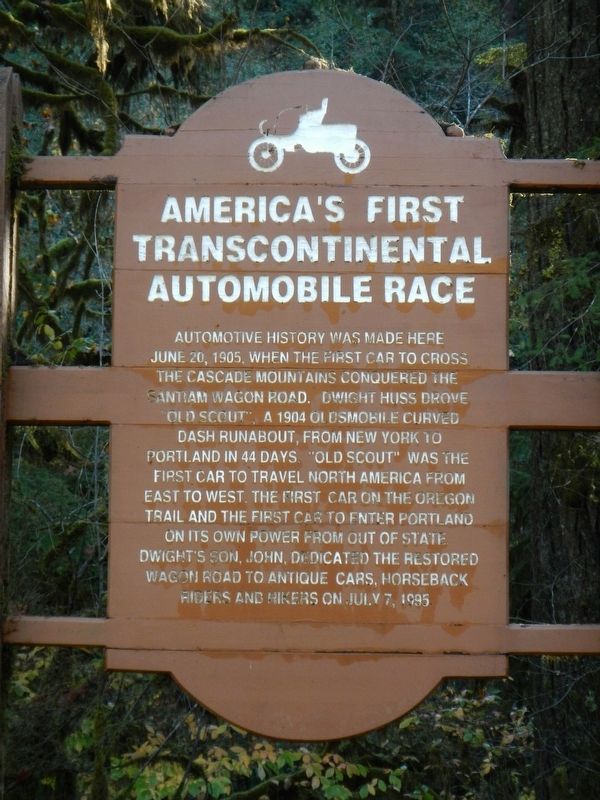
Photographed by Barry Swackhamer, September 26, 2017
1. America's First Transcontinental Automobile Race Marker
Topics. This historical marker is listed in these topic lists: Notable Events • Roads & Vehicles. A significant historical date for this entry is June 20, 1905.
Location. 44° 24.215′ N, 122° 22.79′ W. Marker is near Cascadia, Oregon, in Linn County. It is on Santiam Highway (U.S. 20) near Gorton Road (Santiam Wagon Road) (Route 2032), on the right when traveling east. Touch for map. Marker is in this post office area: Cascadia OR 97329, United States of America. Touch for directions.

Regionally, this marker is in Oregon’s Willamette Valley. It is also on the American Pacific Coast, in the Pacific
this page online
Other nearby markers. At least one other marker is within walking distance of this marker: Santiam Wagon Road (here, next to this marker).
More about this marker. Santiam Wagon Road is on the opposite side of South Santiam River from the marker.
Also see . . . Old Scout and Old Steady -- Just A Car Guy blogspot. Crossing the Cascade Range was the hardest part of a hard trip. The road over Santiam Pass ... had originally been a military road, 'paved with boulders.' Time and time again, they had to pile rocks to allow the cars' small wheels to negotiate giant rocks. Portions of the ascent were simply too steep for the heavily laden little cars. The blocks and tackles came out again.
The descent was terrifying. The brakes on the Runabouts were little better than the ones on covered wagons. Like the pioneers, trees were cut and dragged behind, to add braking power. (Submitted on February 3, 2018, by Barry Swackhamer of Brentwood, California.)
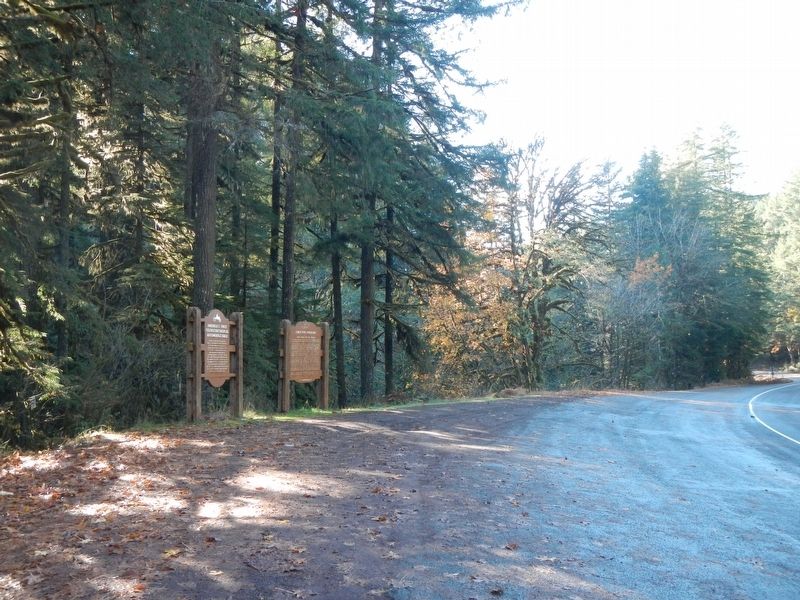
Photographed by Barry Swackhamer, September 26, 2017
2. America's First Transcontinental Automobile Race Marker
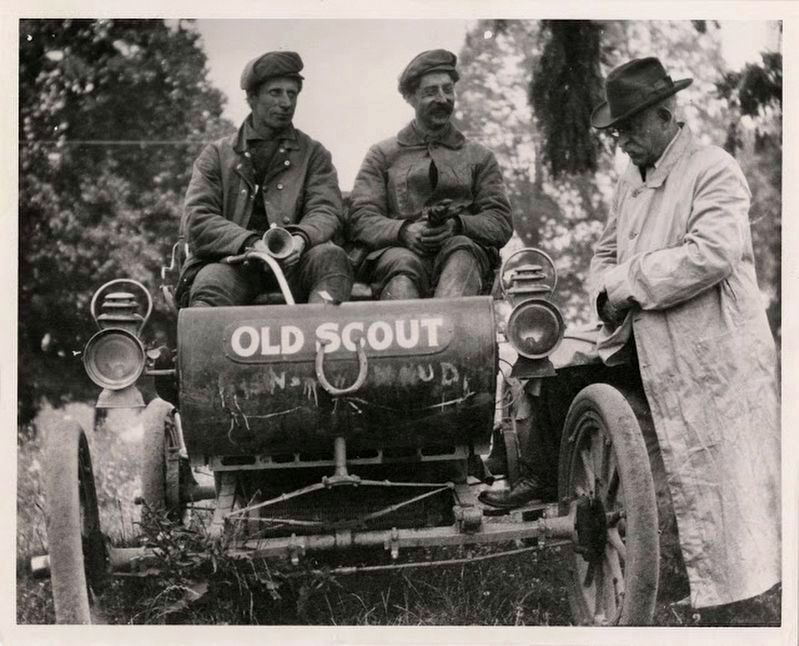
Detroit Public Library
3. "Old Scout," the winning automobile
Credits. This page was last revised on October 19, 2020. It was originally submitted on February 3, 2018, by Barry Swackhamer of Brentwood, California. This page has been viewed 992 times since then and 54 times this year. Photos: 1, 2, 3. submitted on February 3, 2018, by Barry Swackhamer of Brentwood, California.
