Downtown in Baton Rouge in East Baton Rouge Parish, Louisiana — The American South (West South Central)
Arsenal Museum
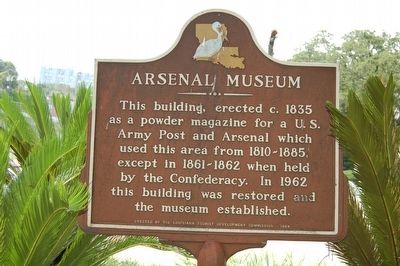
Photographed by Cajun Scrambler, August 14, 2015
1. Arsenal Museum Marker
Erected 1968 by Louisiana Tourist Development commission.
Topics. This historical marker is listed in these topic lists: Education • Military • War, US Civil. A significant historical year for this entry is 1835.
Location. 30° 27.41′ N, 91° 11.157′ W. Marker is in Baton Rouge, Louisiana, in East Baton Rouge Parish. It is in Downtown. It is on State Capitol Drive near North 5th Street, on the right when traveling east. Located in Louisiana Veterans Memorial Park. Touch for map. Marker is in this post office area: Baton Rouge LA 70802, United States of America. Touch for directions.

Regionally, this marker is in Louisiana’s Florida Parishes. It is also in the American South, specifically in the Deep South, and in the Great River Road Region. Globally, it is in North America, a Gulf of Mexico state, the Western Hemisphere, the Western World, and the Anglosphere.
this page online
Other nearby markers. At least 8 other markers are within walking distance of this marker: Louisiana Gold Star Families Memorial (within shouting distance of this marker); Louisiana National Guard Memorial (about 300 feet away, measured in a direct line); Old Arsenal (about 300 feet away); Dedicated To You, A Free Citizen In A Free Land (about 300 feet away); In Honor of George Washington (about 400 feet away); Site of the Weiss House (about 400 feet away); Louisiana State Capitol (about 400 feet away); Louisiana Veterans Memorial Park (about 500 feet away). Touch for a list and map of all markers in Baton Rouge.
Also see . . .
1. U.S. Arsenal Powder Magazine, East Garden, State Capitol Grounds, Baton Rouge. Historic American Buildings Survey record for the arsenal. (Submitted on August 19, 2015.)
2. Old Arsenal Museum - Baton Rouge, Louisiana. (Submitted on February 9, 2018, by Kenneth Ramagost of Louisiana, USA.)
3. Ceremony Renaming Arsenal Park to Louisiana Veterans Memorial Park (video).
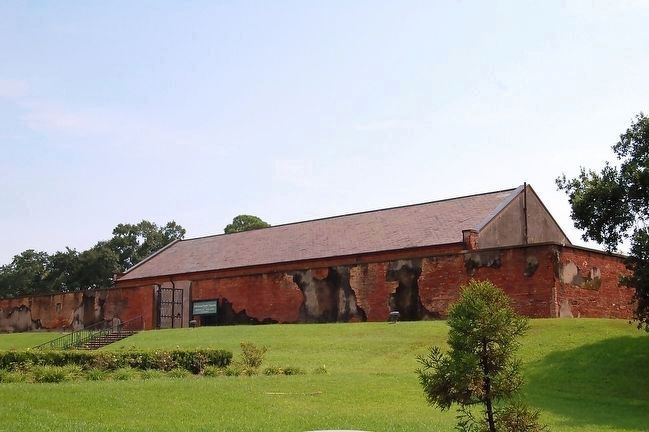
Photographed by Cajun Scrambler, August 14, 2015
2. Arsenal Museum
Significance: The U.S. Arsenal Powder Magazine at Baton Rouge was constructed between 1836 and 1838 by the United States Army Engineer Department at a cost of $29,432. It is one of only two buildings surviving from the Baton Rouge Arsenal and Ordnance Depot which once garrisoned one infantry regiment, one artillery company, and six cavalry troops. The magazine held 3,000 barrels of powder. American military leaders who served at the post include Zebulon Pike, Robert E. Lee, Ulysses Grant, Wade Hampton, George Armstrong Custer, P.G. T. Beauregard, James Longstreet, George McClellan, Nathan B. Forrest and Zachary Taylor, who was living at the post when he was elected President of the United States. This powder magazine, the third of four magazines built at the post, is located within the boundaries of the Louisiana State Capitol National Historic Landmark, in the east garden of the Capitol grounds. Although excluded specifically in the landmark designation, the magazine building was independently listed in the National Register of Historic Places in 1973. The site, overlooking the Mississippi River, had been used for military purposes since 1779 and possibly earlier by the governments of France, England, Spain, West Florida, the United States and the Confederate States. It was the scene of one of the few Revolutionary War battles fought outside the eastern states, the northwest territories or Canada. Other battles fought at this same site include the West Florida Rebellion and the Civil War siege of Baton Rouge. - Historic American Buildings Survey
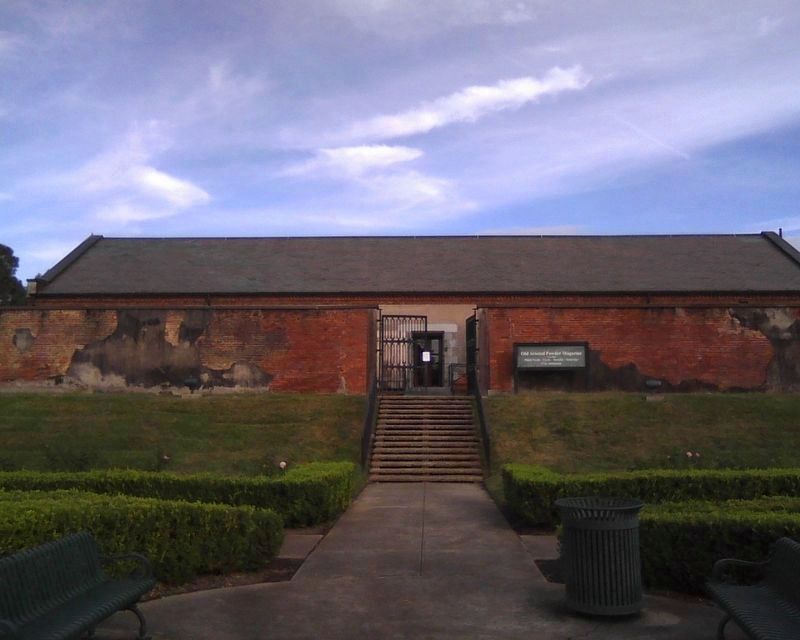
Photographed by Kenneth Ramagost, 2011
3. Arsenal Museum
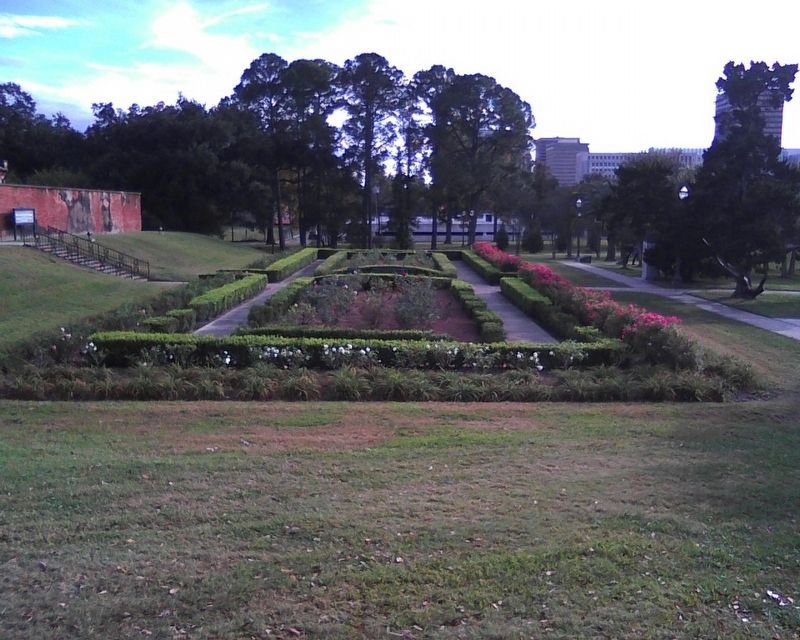
Photographed by Kenneth Ramagost, 2011
4. Arsenal Museum and garden
Credits. This page was last revised on March 2, 2024. It was originally submitted on August 18, 2015. This page has been viewed 1,392 times since then and 79 times this year. Last updated on February 8, 2018. Photos: 1, 2. submitted on August 18, 2015. 3, 4. submitted on January 21, 2018, by Kenneth Ramagost of Louisiana, USA. • Bill Pfingsten was the editor who published this page.
