Walker Homes in Memphis in Shelby County, Tennessee — The American South (East South Central)
Ernest C. Withers House
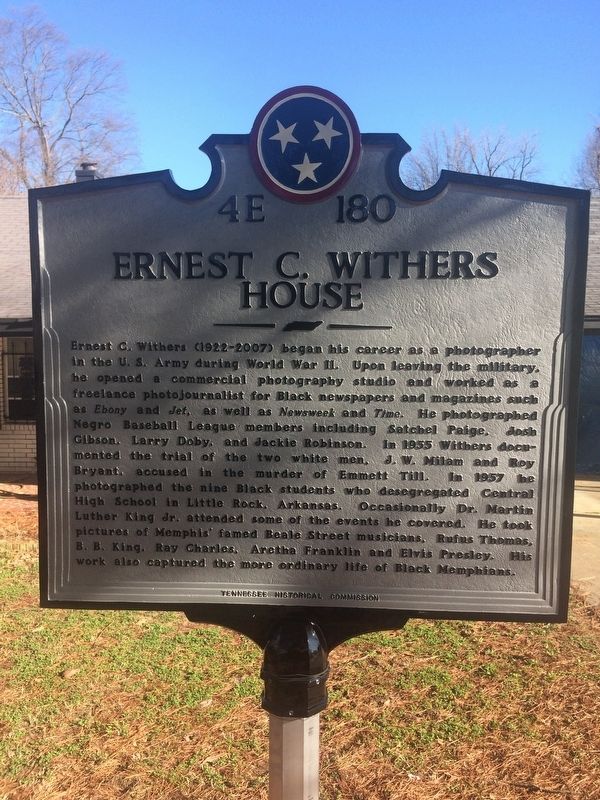
Photographed by Steve Masler, February 27, 2018
1. Ernest C. Withers House Marker
Erected 2018 by Tennessee Historical Commission. (Marker Number 4E 180.)
Topics and series. This historical marker is listed in these topic lists: African Americans • Arts, Letters, Music
this page online
Location. 35° 3.83′ N, 90° 4.797′ W. Marker is in Memphis, Tennessee, in Shelby County. It is in Walker Homes. It is on West Brooks Road 0 miles Ford Road, on the right when traveling west. Touch for map. Marker is at or near this postal address: 480 West Brooks Road, Memphis TN 38109, United States of America. Touch for directions.

Regionally, this marker is in West Tennessee. It is also in the American South, specifically in the Deep South, in the Upper South, in the Mississippi Delta, and in the Great River Road Region. Globally, it is in North America, the Western Hemisphere, the Western World, and the Anglosphere. Historically, it finds itself in what was once the territory of the Mississippian Culture, one of the Confederate States of America, and the Antebellum South.
Other nearby markers. At least 8 other markers are within 3 miles of this marker, measured as the crow flies: Chucalissa Site (approx. 2.8 miles away); Mississippian House Life (approx.
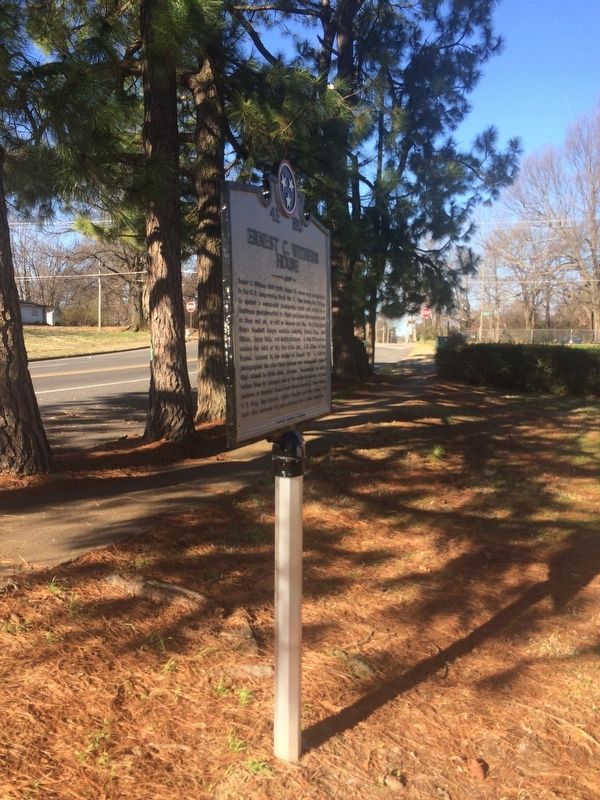
Photographed by Steve Masler, February 27, 2018
2. Ernest C. Withers House Marker

Photographed by Steve Masler, February 27, 2018
3. Ernest C. Withers House Marker
Credits. This page was last revised on February 7, 2023. It was originally submitted on March 2, 2018, by Steve Masler of Memphis, Tennessee. This page has been viewed 1,056 times since then and 26 times this year. Photos: 1, 2, 3. submitted on March 2, 2018, by Steve Masler of Memphis, Tennessee. • Bill Pfingsten was the editor who published this page.
