East Hampton in Suffolk County, New York — The American Northeast (Mid-Atlantic)
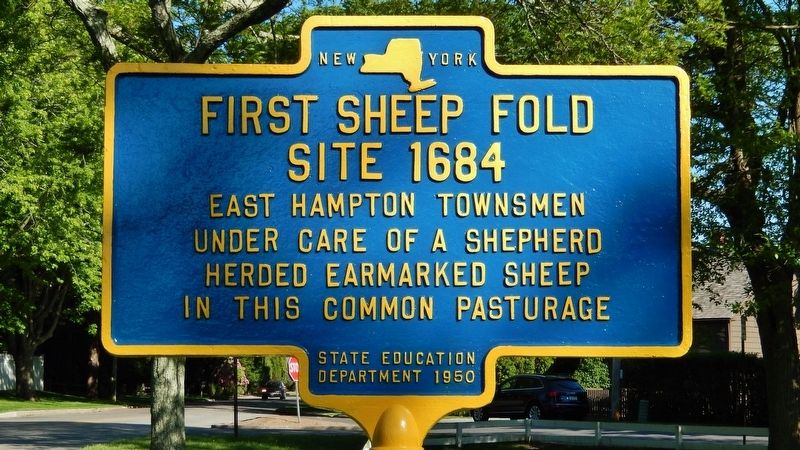
First Sheep Fold Site 1684
Photographed by Cosmos Mariner, June 9, 2017
1. First Sheep Fold Site 1684 Marker
East Hampton townsmen
under care of a shepherd
herded earmarked sheep
in this common pasturage
Erected 1950 by New York State Education Department.
Topics. This historical marker is listed in these topic lists: Agriculture • Settlements & Settlers. A significant historical year for this entry is 1684.
Location. 40° 57.934′ N, 72° 10.86′ W. Marker is in East Hampton, New York, in Suffolk County. It is on Gay Road south of Main Street (New York State Route 25), on the left when traveling south. Marker is located in a small triangular park bounded by Gay Road, Egypt Lane and Main Street. Touch for map. Marker is at or near this postal address: 11 Gay Road, East Hampton NY 11937, United States of America. Touch for directions.

Regionally, this marker is in the New York City Metropolitan Area and on Long Island. It is also in the American Northeast, in the Mid-Atlantic, and on the Eastern Seaboard. Globally, it is in the North Atlantic Region, North America, the Western Hemisphere, the Western World, and the Anglosphere. Historically, it finds itself in what was once New Netherland and also one of
this page online
Other nearby markers. At least 8 other markers are within 6 miles of this marker, measured as the crow flies: May Groot Manson (approx. half a mile away); Clinton Academy (approx. 0.7 miles away); Town Church (approx. 0.7 miles away); Coast Guard Beach (approx. 2.9 miles away); Indian Landmark Buc-Usk-Kil (approx. 3.8 miles away); Town of East Hampton (approx. 4½ miles away); Poxabogue Windmill (approx. 5.4 miles away); Spider Legged Mill (approx. 5.7 miles away). Touch for a list and map of all markers in East Hampton.
Additional commentary.
1.
There has been an ongoing debate about whether the area marked as the First Sheep Fold between Mauntawk Highway, Egypt Lane, and Gay Lane was a sheep pound. There is a fine line between the two meanings. The word fold implies that the area was more of a yard where sheep were placed willingly. According to 17th and 18th-century town records, sheep that belonged to residents in colonial times would sometimes roam the byways and be corralled and impounded. However, in the Town Trustees Minutes, it is mentioned that there was a sheep pasture in the marked area.
— Submitted September 24, 2025, by Holly Okner of New York, New York.
Photographed by Cosmos Mariner, June 9, 2017
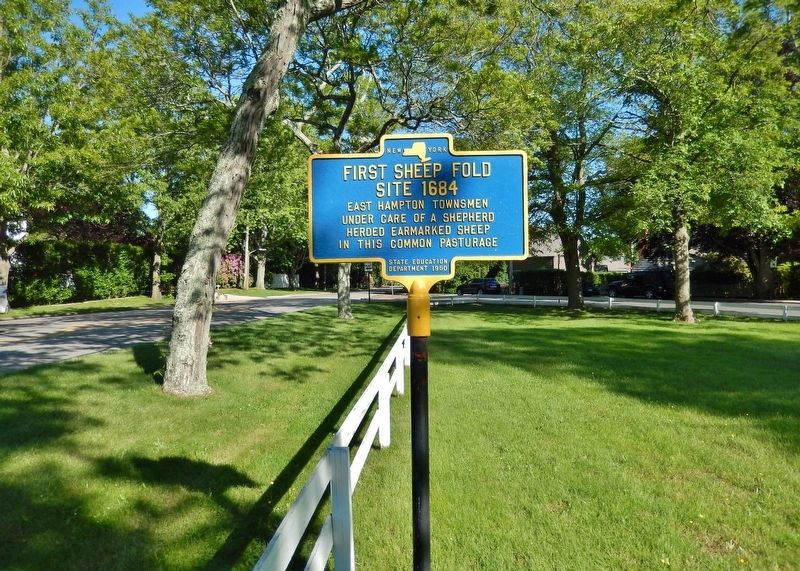
2. First Sheep Fold Site 1684 Marker (wide view; looking south through former pasture)
Photographed by Cosmos Mariner, June 9, 2017
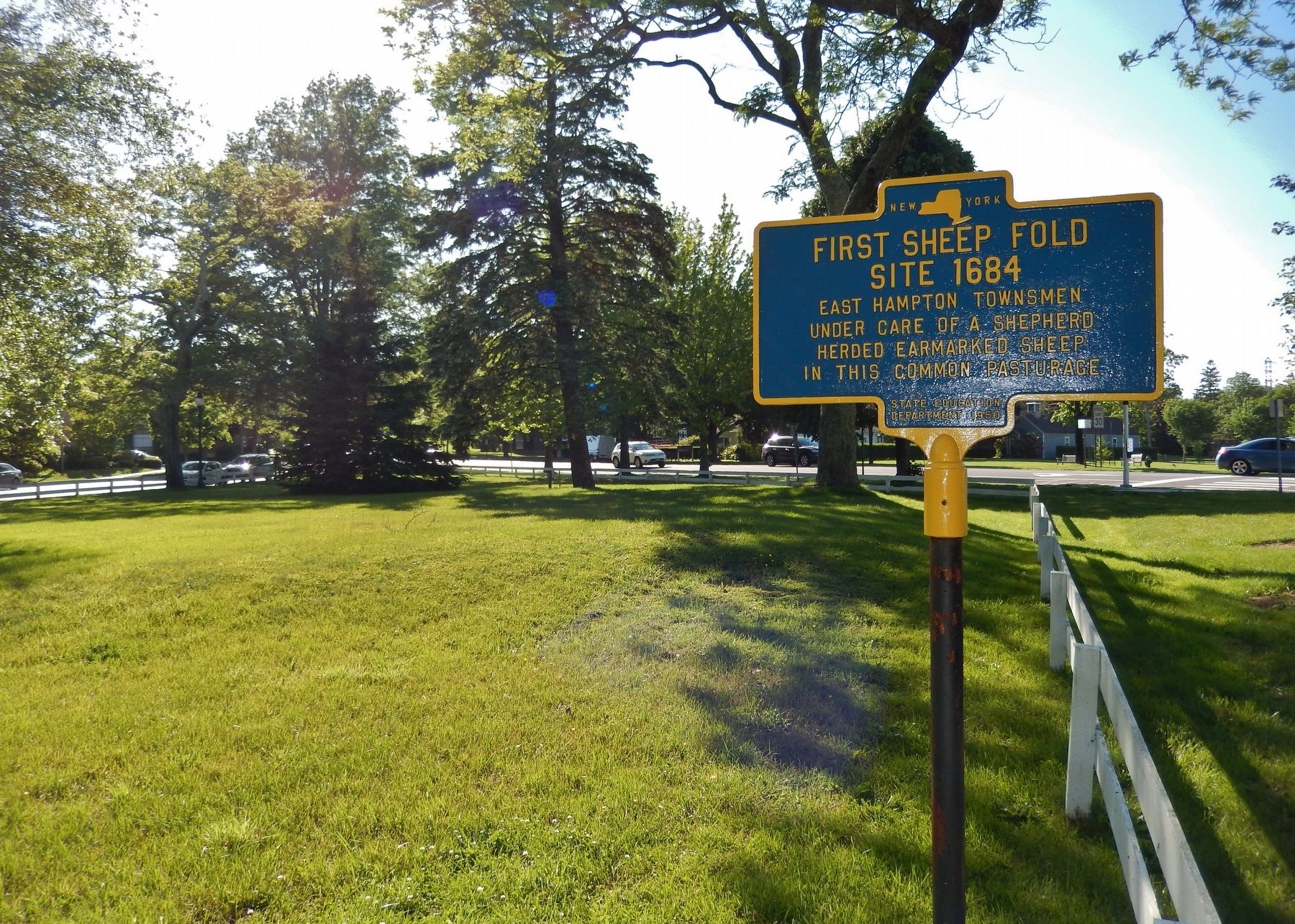
3. First Sheep Fold Site 1684 Marker (wide view; looking north through former pasture)
Credits. This page was last revised on October 19, 2025. It was originally submitted on March 9, 2018, by Cosmos Mariner of Cape Canaveral, Florida. This page has been viewed 552 times since then and 53 times this year. Photos: 1, 2, 3. submitted on March 9, 2018, by Cosmos Mariner of Cape Canaveral, Florida. • Andrew Ruppenstein was the editor who published this page.
