Downtown in Albany in Albany County, New York — The American Northeast (Mid-Atlantic)
Site of First Poor House in the United States
Photographed by Cosmos Mariner, July 12, 2017
1. Site of First Poor House in the United States Marker
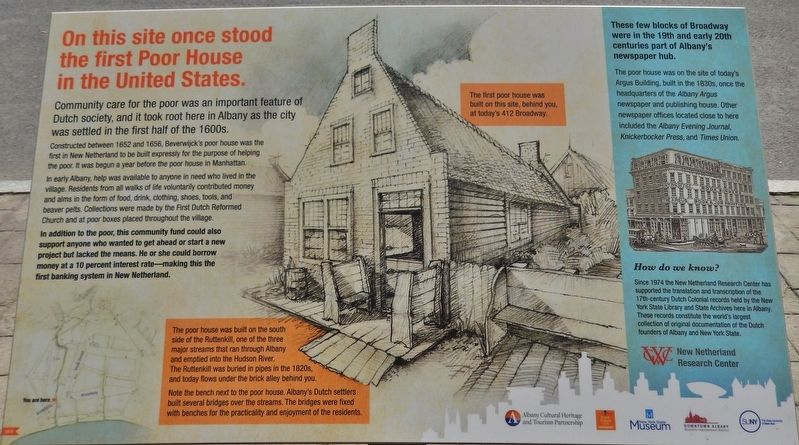
On this site once stood the first Poor House in the United States.
Community care for the poor was an important feature of Dutch society, and it took root here in Albany as the city was settled in the first half of the 1600s.
Constructed between 1652 and 1656, Beverwijck's poor house was the first in New Netherland to be built expressly for the purpose of helping the poor. It was begun a year before the poor house in Manhattan.
In early Albany, help was available to anyone in need who lived in the village. Residents from all walks of life voluntarily contributed money and alms in the form of food, drink, clothing, shoes, tools, and beaver pelts. Collections were made by the First Dutch Reformed Church and at poor boxes placed throughout the village.
In addition to the poor, this community fund could also support anyone who wanted to get ahead or start a new project but lacked the means. He or she could borrow money at a 10 percent interest rate – making this the first banking system in New Netherland.
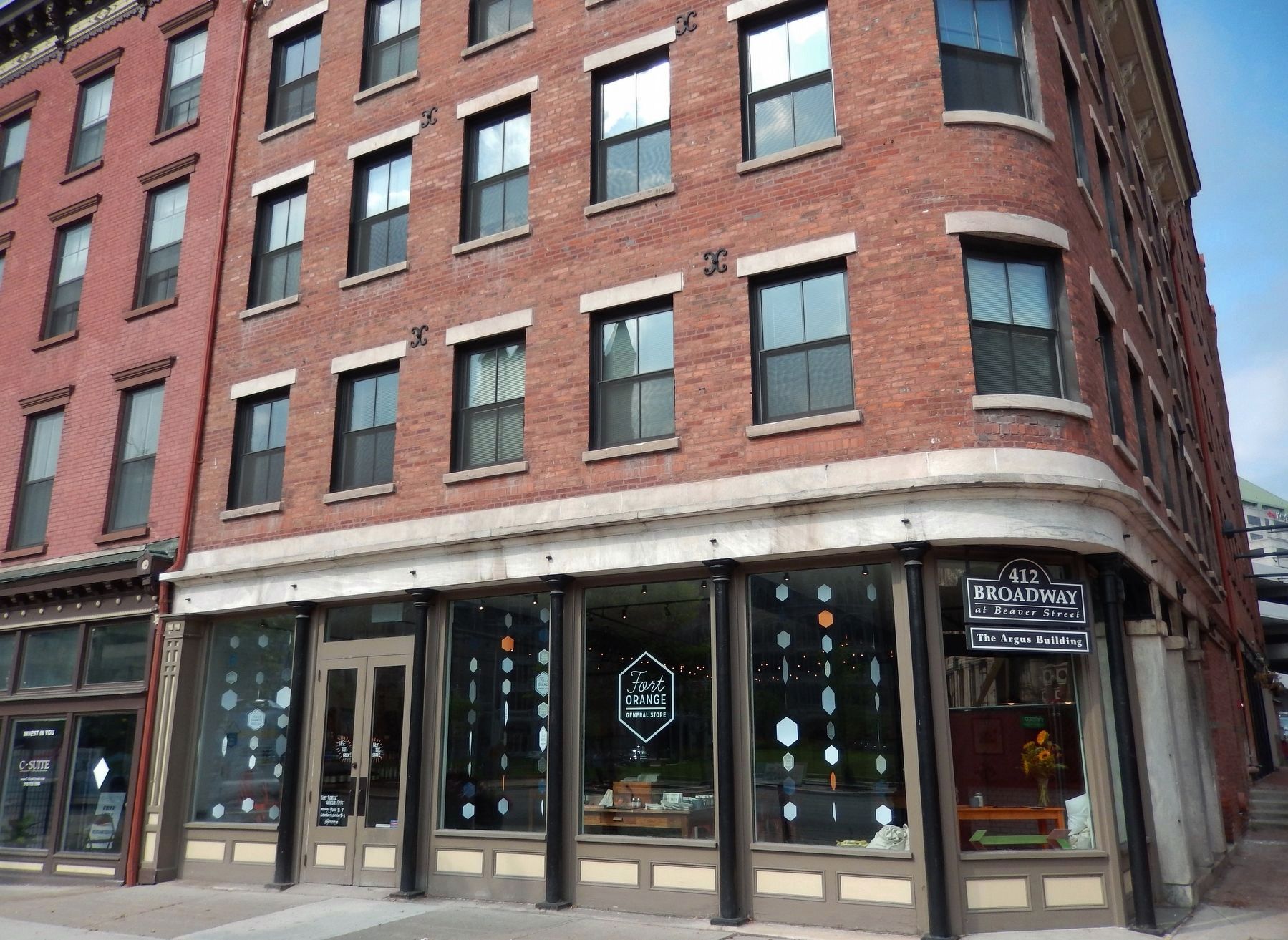
The first poor house was built on this site, behind you, at today's 412 Broadway.
The poor
this page online
Note the bench next to the poor house. Albany's Dutch settlers built several bridges over the streams. The bridges were fixed with benches for the practicality and enjoyment of the residents.
These few blocks of Broadway were in the 19th and early 20th centuries part of Albany's newspaper hub.
The poor house was on the site of today's Argus Building, built in the 1830s, once the headquarters of the Albany Argus newspaper and publishing house. Other newspaper offices located close to here included the Albany Evening Journal, Knickerbocker Press, and Times Union.
How do we know?
Since 1974 the New Netherland Research Center has supported the translation and transcription of the 17th-century Dutch Colonial records held by the New York State Library and State Archives here in Albany. These records constitute the world's largest collection of original documentation of the Dutch founders
Photographed by Cosmos Mariner, July 12, 2017
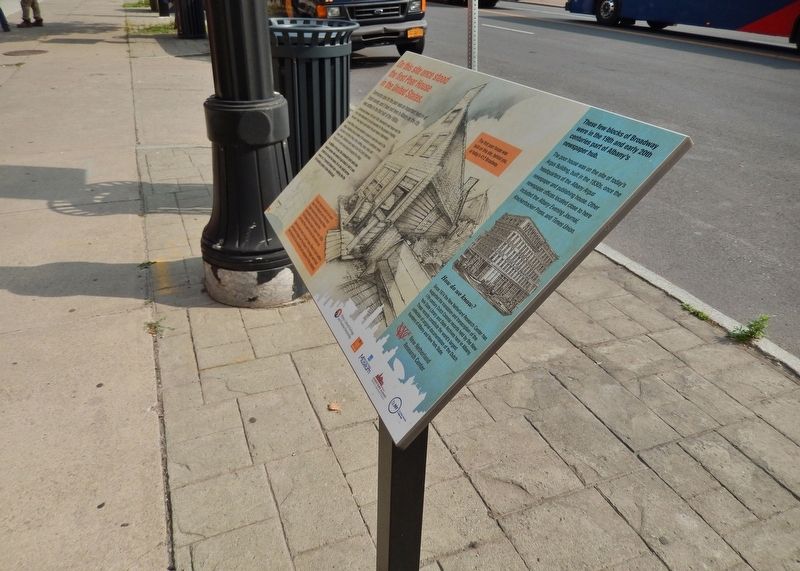
2. Site of First Poor House in the United States Marker (side view)
Erected 2016 by Albany Cultural Heritage and Tourism Partnership, New York State Museum, Downtown Albany and SUNY.
Topics. This historical marker is listed in these topic lists: Charity & Public Work • Colonial Era • Settlements & Settlers.
Location. 42° 38.897′ N, 73° 45.043′ W. Marker is in Albany, New York, in Albany County. It is in Downtown. It is at the intersection of Broadway and Beaver Street, on the right when traveling south on Broadway. Marker is a composite plaque, mounted on a waist-high pole, between the sidewalk and the street. Touch for map. Marker is at or near this postal address: 412 Broadway, Albany NY 12207, United States of America. Touch for directions.

Regionally, this marker is in Upstate New York and in the Capital District. It is also in the American Northeast and in the Mid-Atlantic. Globally, it is in North America, the Western Hemisphere, the Western World, and the Anglosphere. Historically, it finds itself in what was once New Netherland and also one of the original Thirteen Colonies.
Other nearby markers. At
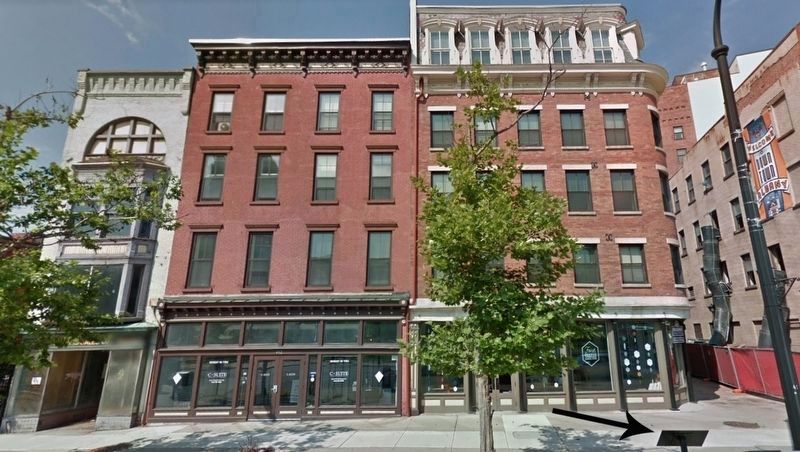
3. Site of First Poor House in the United States Marker (wide view; marker visible bottom right)
Also see . . . Beverwijck. Wikipedia entry (Submitted on July 31, 2021, by Larry Gertner of New York, New York.)
Photographed by Cosmos Mariner, July 12, 2017
4. Argus Building, 412 Broadway (view from the marker)
Credits. This page was last revised on February 16, 2023. It was originally submitted on April 22, 2018, by Cosmos Mariner of Cape Canaveral, Florida. This page has been viewed 1,145 times since then and 73 times this year. Photos: 1, 2, 3, 4. submitted on April 22, 2018, by Cosmos Mariner of Cape Canaveral, Florida. • Andrew Ruppenstein was the editor who published this page.
