Gazcue in Santo Domingo, Distrito Nacional, Dominican Republic — Caribbean Region of the Americas (Hispaniola, Greater Antilles, West Indies)
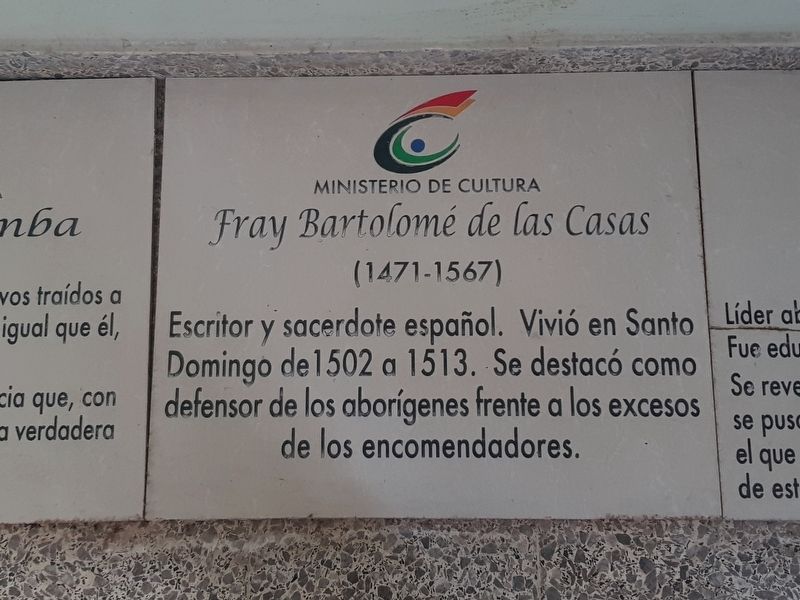
Friar Bartolomé de las Casas
Photographed by J. Makali Bruton, March 11, 2018
1. Friar Bartolomé de las Casas Marker

(1471-1567)
(1471-1567)
Erected by Ministerio de Cultura.
Topics. This historical marker is listed in these topic lists: Charity & Public Work • Civil Rights • Colonial Era • Religion & Religious Structures. A significant historical year for this entry is 1502.
Location. 18° 28.355′ N, 69° 54.488′ W. Marker is in Gazcue, Distrito Nacional, in Santo Domingo. It is on Avenida Pedro Henríquez Ureña just east of Calle Benito Juárez, on the right when traveling east. The marker is currently inside of the Museo del Hombre, on the left of the steps leading up to the second floor. It was previously mounted to the statue of De las Casas directly north of the Museum. Touch for map. Marker is
this page online

Regionally, it is one of the Greater Antilles on the Caribbean Sea, on in the Atlantic Ocean, in North America, and in the Western Hemisphere. Historically, it finds itself in what was once New Spain and also a Spanish colony.
Other nearby markers. At least 8 other markers are within walking distance of this marker: Sebastián Lemba (a few steps from this marker); Enriquillo (a few steps from this marker); Juan Pablo Duarte (a few steps from this marker); Black Jack (a few steps from this marker); Carlos Andújar (within shouting distance of this marker); Rafael González Tirado (within shouting distance of this marker); Hugo Estrella Guzmán (about 120 meters away, measured in a direct line); Pedro Conde Sturla (about 150 meters away). Touch for a list and map of all markers in Gazcue.
Also see . . . Bartolomé de las Casas. Bartolomé de Las Casas, (born 1474 or 1484, Sevilla?, Spain—died July 1566, Madrid), early Spanish historian and Dominican missionary who was the first to expose the oppression of indigenous peoples by Europeans in the Americas and to call for the abolition of slavery there. His several works include Historia de las Indias (first printed in 1875). A prolific writer and in his later years an influential figure of the Spanish court, Las Casas nonetheless failed to stay the progressive enslavement of the indigenous peoples of Latin America.
Photographed by J. Makali Bruton, March 11, 2018
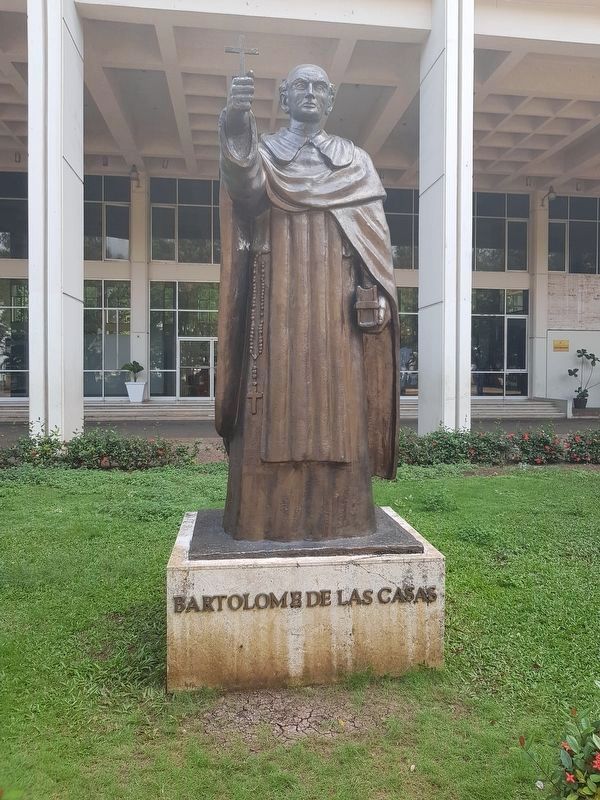
2. Friar Bartolomé de las Casas statue and previous marker location
The marker was previously mounted on the base of this statue of Bartolomé de las Casas.
Photographed by J. Makali Bruton, March 11, 2018
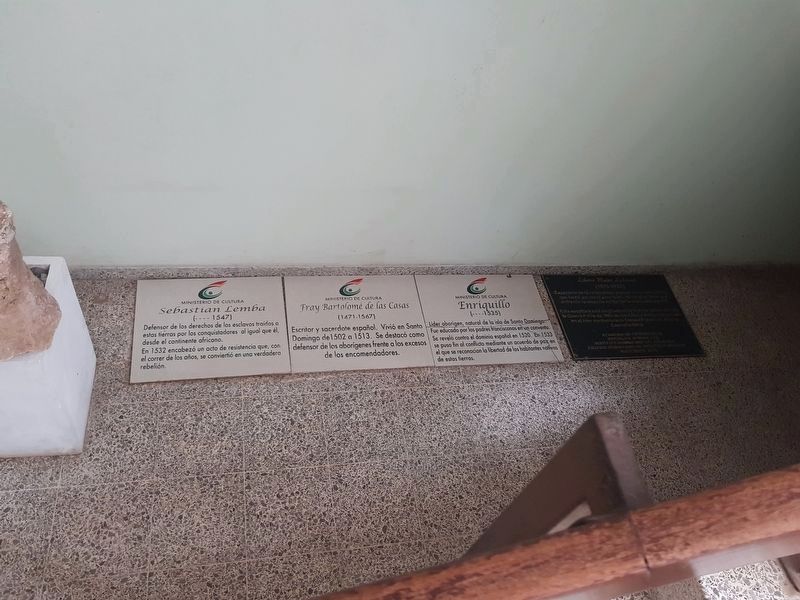
3. Friar Bartolomé de las Casas Marker
Four markers are seen here to the left of the stairs to the second level of the Museum of the Dominican People. All four of these markers were previously displayed outside of the museum.
Credits. This page was last revised on June 3, 2018. It was originally submitted on June 2, 2018, by J. Makali Bruton of Washington, District of Columbia. This page has been viewed 756 times since then and 35 times this year. Photos: 1, 2, 3. submitted on June 2, 2018, by J. Makali Bruton of Washington, District of Columbia.
