Tula de Allende, Hidalgo, Mexico — The Central Highlands (North America)
Tula
Photographed by J. Makali Bruton, June 2, 2018
1. Tula Marker

Tula
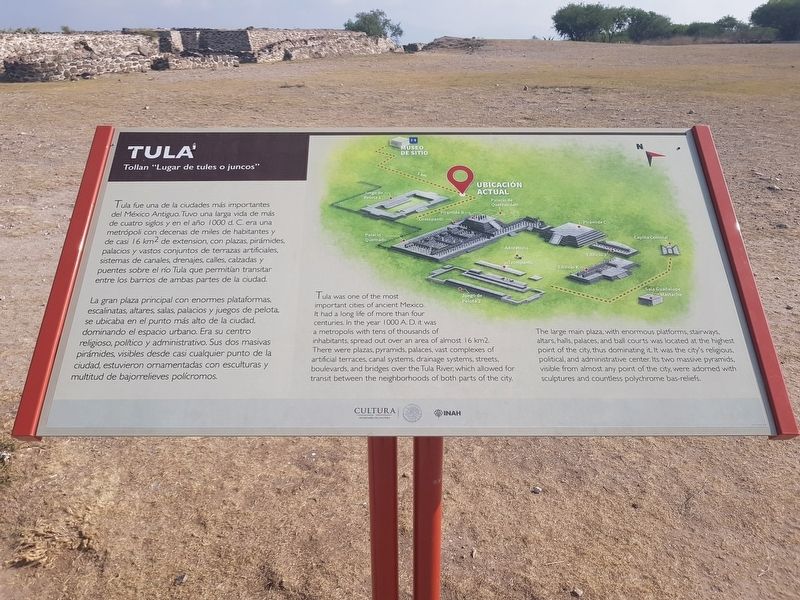
Tollan “Lugar de tules o juncos”
Tula fue una de la ciudades más importantes del México Antiguo. Tuvo una larga vida de más de cuatro siglos y en el año 1000 d. C. era una metrópoli con decenas de miles de habitantes y de casi 16 km2 de extension, con plazas, pirámides, palacios y vastos conjuntos de terrazas artificiales, sistemas de canales, drenajes, calles, calzadas y puentes sobre el río Tula que permitían transitar entre los barrios de ambas partes de la ciudad.
La gran plaza principal con enormes plataformas, escalinatas, altares, salas, palacios y juegos de pelota, se ubicaba en el punto más alto de la ciudad, dominando el espacio urbano. Era su centro religioso, político y administrativo. Sus dos masivas pirámides, visibles desde casi cualquier punto de la ciudad, estuvieron ornamentadas con esculturas y multitud de bajorrelieves polícromos.
Tula
Tollan “Place of cattails or bulrushes”
Tula was one of the most important cities of ancient Mexico. It had a long life of more than four centuries. In the year 1000 A. D. it was a metropolis with tens of thousands of inhabitants,
this page online
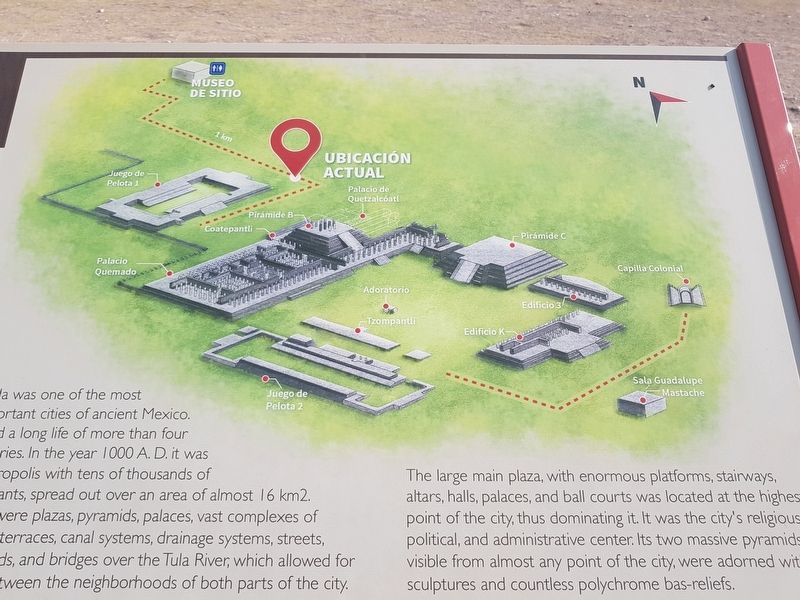
The large main plaza, with enormous platforms, stairways, altars, halls, palaces, and ball courts was located at the highest point of the city, thus dominating it. It was the city's religious, political, and administrative center. Its two massive pyramids, visible from almost any point of the city, were adorned with sculptures and countless polychrome bas-reliefs.
Erected by Secretaría de Cultura y INAH.
Topics. This historical marker is listed in these topic lists: Architecture • Indigenous Peoples and Communities • Man-Made Features.
Location. 20° 3.885′ N, 99° 20.377′ W. Marker is in Tula de Allende, Hidalgo. It can be reached from Tula-Pachuca Carretera (Route 17) just north of Entrada a Zona Arqueológica. The marker is the first marker some 300 meters after passing the visitors center
Photographed by J. Makali Bruton, June 2, 2018
2. Close-up of the site map from the Tula Marker

Regionally, this marker is in Central Mexico, specifically in the Sierra Madre, and in Mexico City Metropolitan Area. Globally, it is in North America, Mesoamerica, and the Western Hemisphere. Historically, it finds itself in what was once New Spain, a Spanish colony, and the Aztec Empire.
Other nearby markers. At least 8 other markers are within walking distance of this marker: Ball Court 1 (within shouting distance of this marker); El Coatepantli (Wall of Snakes) (about 90 meters away, measured in a direct line); The Temple of Pyramid B (about 120 meters away); Pyramid B (about 120 meters away); The Burnt Palace (about 180 meters away); Pyramid C and the Adoratory (about 180 meters away); The Wall of Skulls (about 210 meters away); Ball Court 2 (approx. 0.2 kilometers away). Touch for a list and map of all markers in Tula de Allende.
Photographed by J. Makali Bruton, June 2, 2018
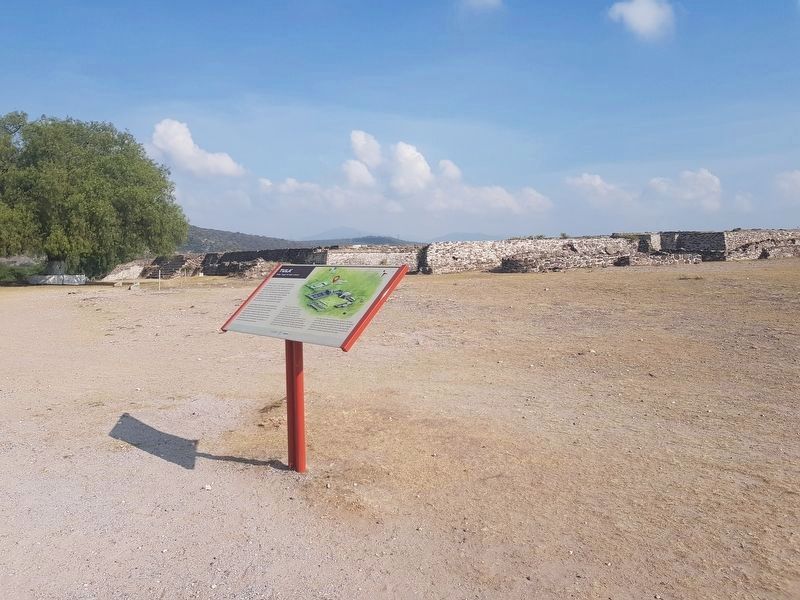
3. Tula Marker
This view towards the northwest also shows Ball Court 1 in the background.
Photographed by J. Makali Bruton, June 2, 2018
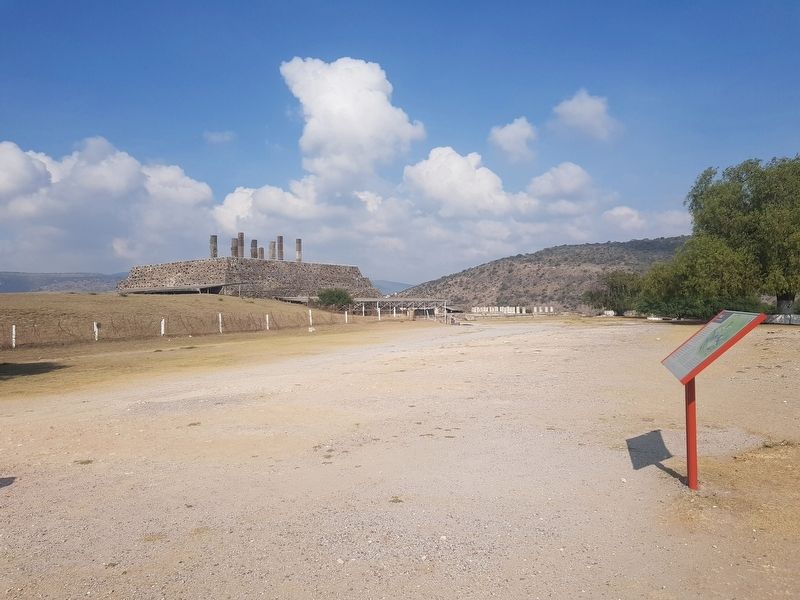
4. Tula Marker
This view towards the southwest also shows Pyramid B and its iconic atlantes.
Photographed by J. Makali Bruton, June 2, 2018
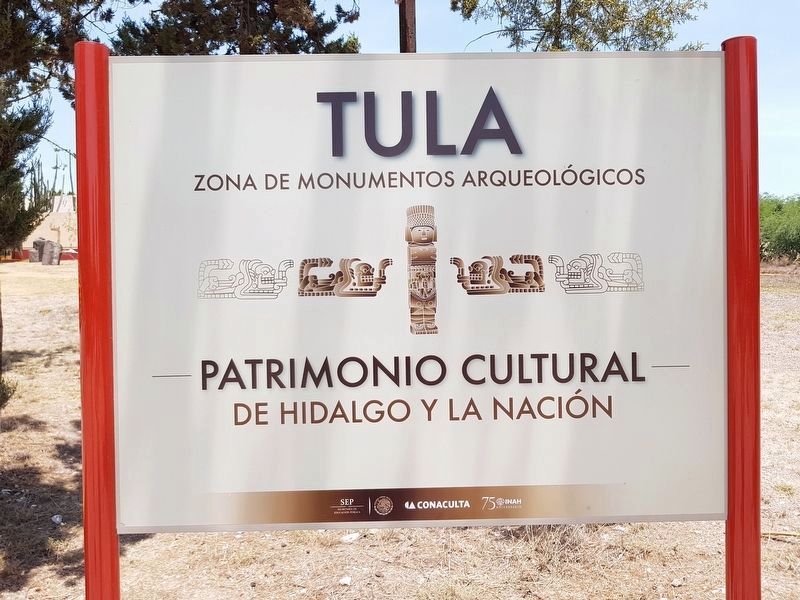
5. Tula Archaeological Site entrance sign
Credits. This page was last revised on June 8, 2018. It was originally submitted on June 3, 2018, by J. Makali Bruton of Washington, District of Columbia. This page has been viewed 325 times since then and 17 times this year. Photos: 1, 2, 3, 4. submitted on June 3, 2018, by J. Makali Bruton of Washington, District of Columbia. 5. submitted on June 8, 2018, by J. Makali Bruton of Washington, District of Columbia.
