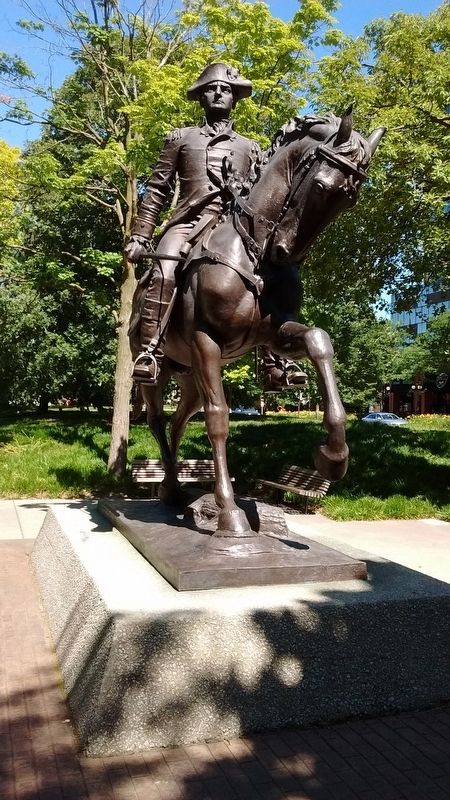
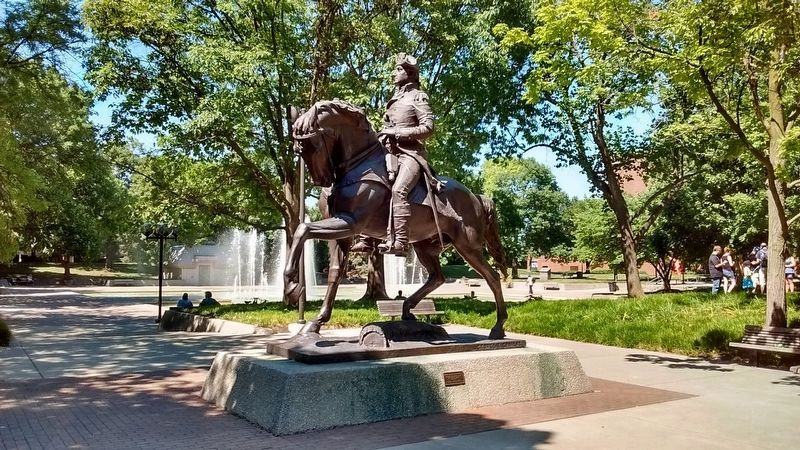
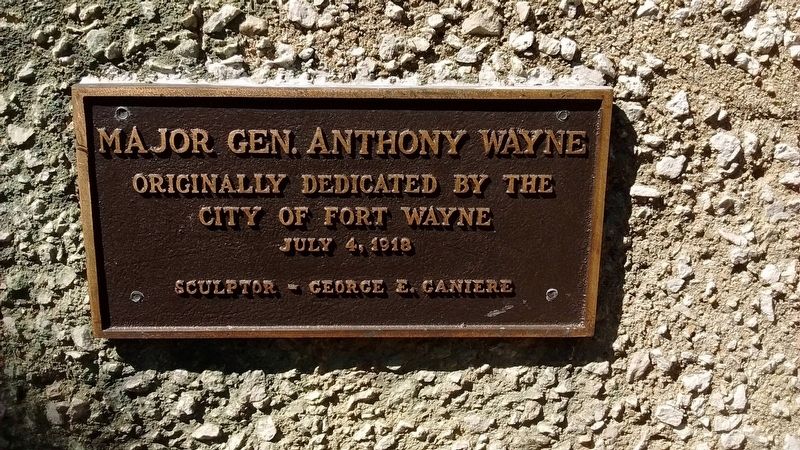
Major General Anthony Wayne
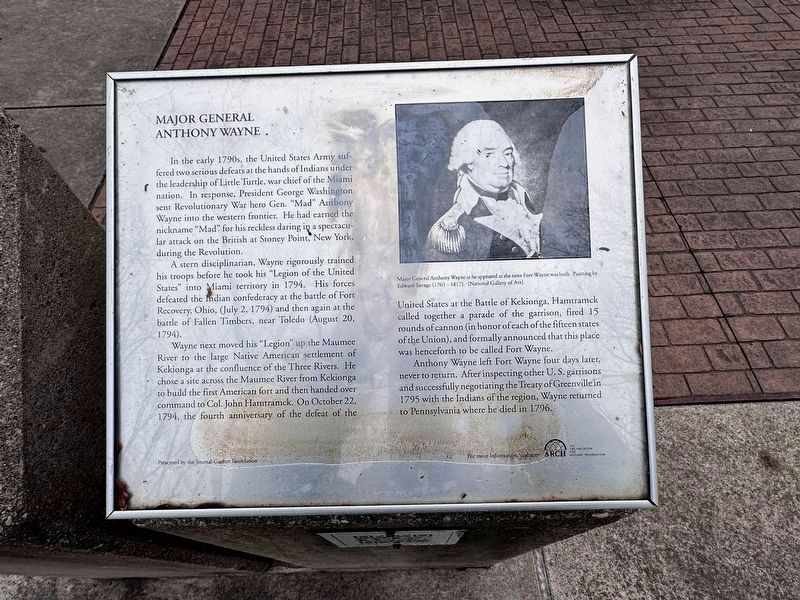
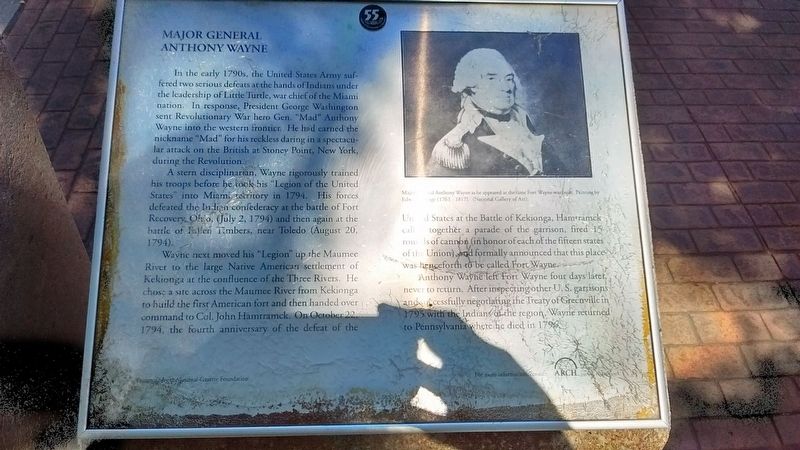
A stern disciplinarian, Wayne rigorously trained his troops before he took his “Legion of the United States” into Miami territory in 1794. His forces defeated the Indian confederacy at the battle of Fort Recovery, Ohio (July 2, 1794) and then again at the battle of Fallen Timbers, near Toledo (August 20, 1794).
Wayne next moved his “Legion” up the Maumee river to the large Native American settlement of Kekionga at the confluence of the Three Rivers. He chose a site across the Maumee River from Kekionga to build the first American fort and then handed over command to Col. John Hamtramck. On October 22, 1794, the fourth anniversary of the defeat
this page online
Anthony Wayne left Fort Wayne four days later, never to return. After inspecting other U.S. garrisons and successfully negotiating the Treaty of Greenville in 1795 with the Indians of the region, Wayne returned to Pennsylvania where he died in 1796.
Erected by ARCH, Inc.
Topics. This historical marker is listed in these topic lists: Forts and Castles • Patriots & Patriotism • Wars, US Indian. A significant historical date for this entry is October 22, 1794.
Location. 41° 4.856′ N, 85° 8.28′ W. Marker is in Fort Wayne, Indiana, in Allen County. It is at the intersection of East Main Street and South Clinton Street, on the left when traveling east on East Main Street. Touch for map. Marker is at or near this postal address: 209 E Main St, Fort Wayne IN 46802, United States of America. Touch for directions.
Regionally, this marker is in Northern Indiana. It is also in the American
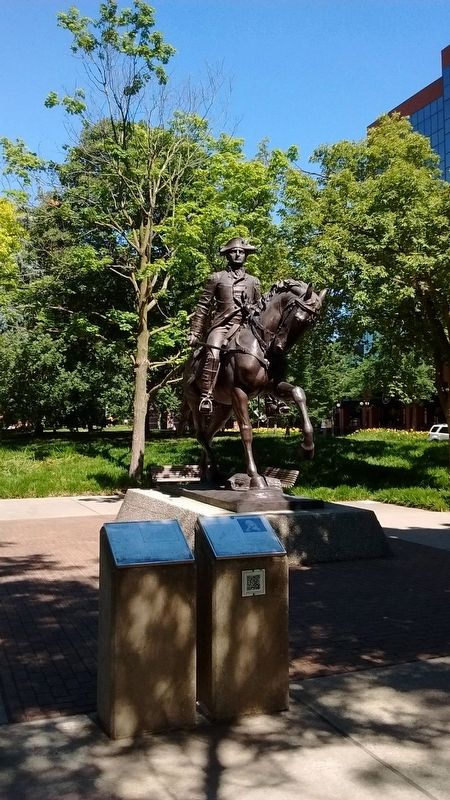
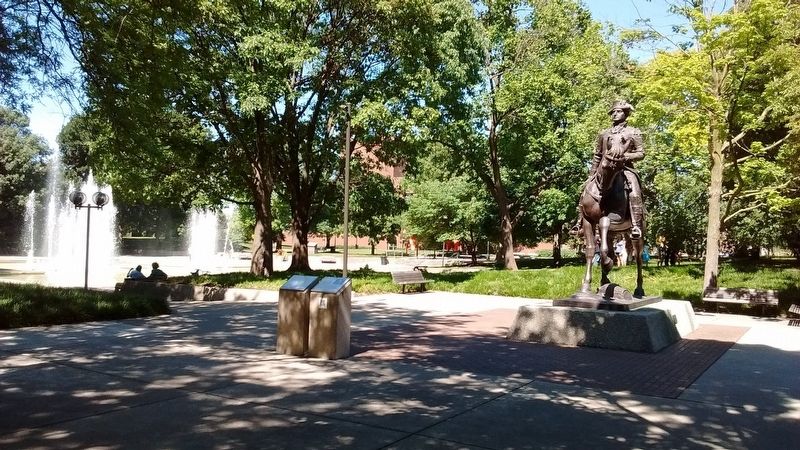
Other nearby markers. At least 8 other markers are within walking distance of this marker: The Bicentennial Heritage Trail (here, next to this marker); Journal Gazette Building (within shouting distance of this marker); Barr And Columbia (about 400 feet away, measured in a direct line); This Barr And Columbia Street Intersection (about 400 feet away); The Elektron Building (about 500 feet away); Takaoka and Fort Wayne Time Capsule (about 500 feet away); The First Police Station (about 500 feet away); The Transfer Corner (about 500 feet away). Touch for a list and map of all markers in Fort Wayne.
Credits. This page was last revised on January 18, 2024. It was originally submitted on July 10, 2018, by Tom Bosse of Jefferson City, Tennessee. This page has been viewed 899 times since then and 119 times this year. Photos: 1. submitted on January 14, 2024, by J.T. Lambrou of New Boston, Michigan. 2, 3, 4, 5, 6, 7. submitted on July 10, 2018, by Tom Bosse of Jefferson City, Tennessee. • Andrew Ruppenstein was the editor who published this page.
