Churchill in Allegheny County, Pennsylvania — The American Northeast (Mid-Atlantic)
Beulah Chapel
Erected in 1837
| — | American Presbyterian and Reformed Historical Site | — |
Photographed by Mike Wintermantel, December 16, 2012
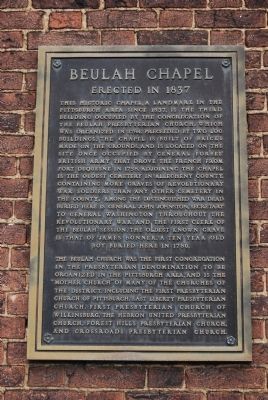
1. Beulah Chapel Marker
The Beulah Church was the first congregation in the Presbyterian denomination to be organized in the Pittsburgh area, and is the "Mother Church" of many of the churches of the district, including the First Presbyterian Church of Pittsburgh, East Liberty Presbyterian Church, First Presbyterian Church of Wilkinsburg, the Hebron United Presbyterian Church, Forest Hills Presbyterian Church, and Crossroads Presbyterian Church. (Marker Number 59.)
Topics and series. This historical marker is listed in these topic lists: Cemeteries & Burial Sites • Religion & Religious Structures • War, US Revolutionary. In addition, it is included in the American Presbyterian and Reformed Historic Sites, and the Former U.S. Presidents: #01 George Washington series lists. A significant historical year for this entry is 1837.
Location. 40° 26.815′ N, 79° 50.896′ W. Marker is in Churchill, Pennsylvania, in Allegheny County. It can be reached from the intersection of McCrady Road and Beulah Road (Pennsylvania Route 130). Touch for map.
this page online

Regionally, this marker is in Greater Pittsburgh. It is also in the American Northeast, in the Mid-Atlantic, in Appalachia, and specifically in Northern Appalachia. Globally, it is in North America, the Western Hemisphere, the Western World, and the Anglosphere. Historically, it finds itself in what was once the Viceroyalty of New France, the Haudenosaunee (Iroquois) Confederacy, and one of the original Thirteen Colonies.
Other nearby markers. At least 8 other markers are within 2 miles of this marker, measured as the crow flies: Churchill (approx. 0.2 miles away); 1939 House (approx. half a mile away); Pittsburgh (approx. 1.7 miles away); Morrow Barn-Penn Hebron Garden Club (approx. 1.8 miles away); Mulberry Presbyterian Church (approx. 1.9 miles away); Western Pennsylvania School for the Deaf (approx. 2 miles away); The Crescent Apartments (approx. 2 miles away); 7 Mile Stone (approx. 2 miles away).
Another marker is no longer nearby. Homewood/Brushton World War II Memorial (was approx. 1.8 miles away but has
Photographed by Mike Wintermantel, December 16, 2012
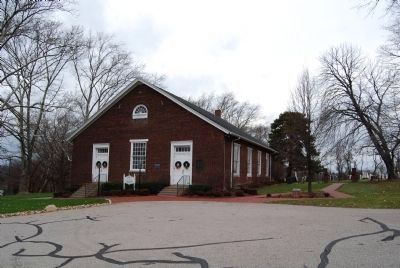
2. Beulah Chapel
Marker is mounted on wall to right of right set of doors.
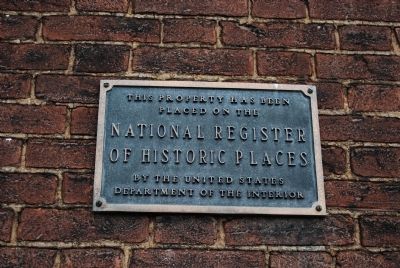
Regarding Beulah Chapel. Beulah Presbyterian Church was listed in the National Register of Historic Places in 1975. This church is also one of 445 American Presbyterian and Reformed Historical Sites registered between 1973 and 2003 by the Presbyterian Historical Society (PHS), headquartered in Philadelphia. Approved sites received a metal plaque featuring John Calvin’s seal and the site’s registry number (PHS marker location unknown).
The following text is taken from the Presbyterian Historical Society website:
Existing at least as early as 1784, Bullock-pens Presbyterian Church was the second oldest Presbyterian congregation west of the Alleghenies. The name was changed in 1785 to Pitt Township Presbyterian Church, and later to Beulah. The original log meetinghouse was replaced in 1813 by a log church designed in the form of a cross. The present brick structure was erected in 1837. Pastor John Graham organized the Library Society of Beulah, thought to be first subscription library west of the Allegheny Mountains. Graham also established the Pittsburgh Recorder. George Washington's secretary, General John Johnston, was first Clerk of Session and is buried, together with many other Revolutionary patriots in the church cemetery.
Also see . . . Beulah Prebyterian Church.
Photographed by Mike Wintermantel, December 16, 2012
3. Beulah Chapel National Register of Historic Places Marker
Photographed by Mike Wintermantel, December 16, 2012
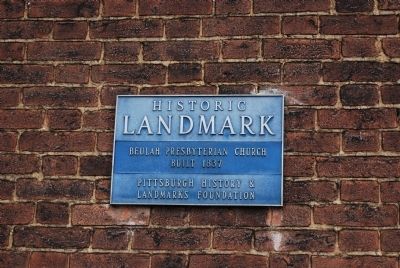
4. Beulah Chapel Pittsburgh History and Landmarks Foundation Marker
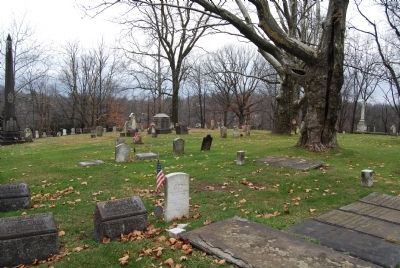
Photographed by Mike Wintermantel, December 16, 2012
5. Beulah Presbyterian Church Cemetery
Credits. This page was last revised on September 7, 2018. It was originally submitted on December 16, 2012, by Mike Wintermantel of Pittsburgh, Pennsylvania. This page has been viewed 1,178 times since then and 93 times this year. Last updated on August 23, 2018, by Douglass Halvorsen of Klamath Falls, Oregon. Photos: 1, 2, 3, 4, 5. submitted on December 16, 2012, by Mike Wintermantel of Pittsburgh, Pennsylvania. • Bill Pfingsten was the editor who published this page.
