Climax in Lake County, Colorado — The American Mountains (Southwest)
Top Secret
Photographed by Cosmos Mariner, August 28, 2017
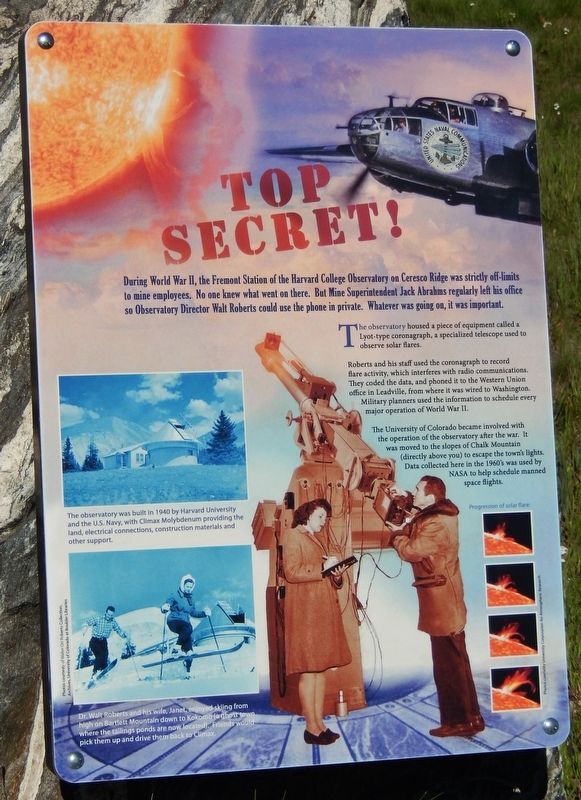
1. Top Secret Marker
During World War II, the Fremont Station of the Harvard College Observatory on Ceresco Ridge was strictly off-limits to mine employees. No one knew what went on there. But Mine Superintendent Jack Abrahms regularly left his office so Observatory Director Walt Robert could use the phone in private. Whatever was going on, it was important.
The observatory housed a piece of equipment called a Lyot-type coronagraph, a specialized telescope used to observe solar flares.
Roberts and his staff used the coronagraph to record flare activity, which interferes with radio communications. They coded the data, and phoned it to the Western Union office in Leadville, from where it was wired to Washington. Military planners used the information to schedule every major operation of World War II.
The University of Colorado became involved with the operation of the observatory after the war. It was moved to the slopes of Chalk Mountain (directly above you) to escape the town’s lights. Data collected here in the 1960’s was used by NASA to help schedule manned space flights.
Erected by Climax Molybdenum Company & the
this page online
Topics. This historical marker is listed in these topic lists: Air & Space • Communications • Science & Medicine • War, World II.
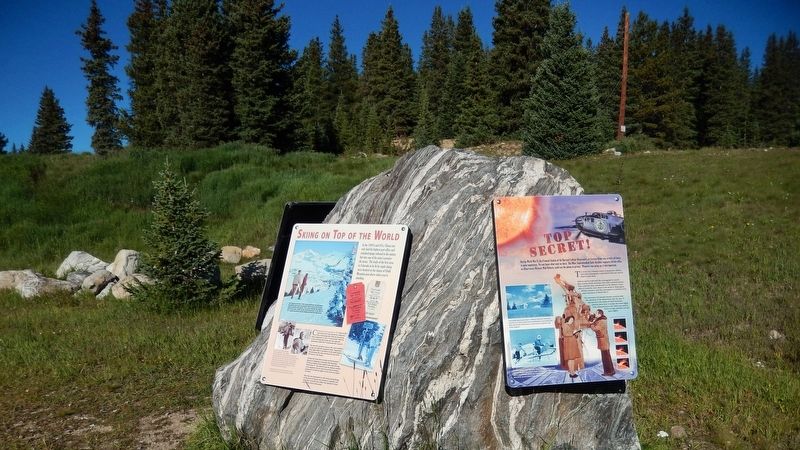
Location. 39° 22.048′ N, 106° 11.32′ W. Marker is in Climax, Colorado, in Lake County. It can be reached from State Highway 91 11 miles south of Interstate 70, on the right when traveling south. Marker is located on the west side of Colorado Highway 91, at the summit of Fremont Pass, directly across from the Climax Molybdenum Mine, within a small park containing historical markers and mining exhibits. The marker is mounted on a large boulder, beside other markers. Touch for map. Marker is in this post office area: Climax CO 80429, United States of America. Touch for directions.

Regionally, this marker is in the Arkansas River Valley, in the Colorado High Rockies and on the Continental Divide. It is also in the American Mountain West. Globally, it is in North America, the Rocky Mountains, the Western Hemisphere, the Western World, and the Anglosphere.
Other nearby markers. At least 8 other markers
Photographed by Cosmos Mariner, August 28, 2017
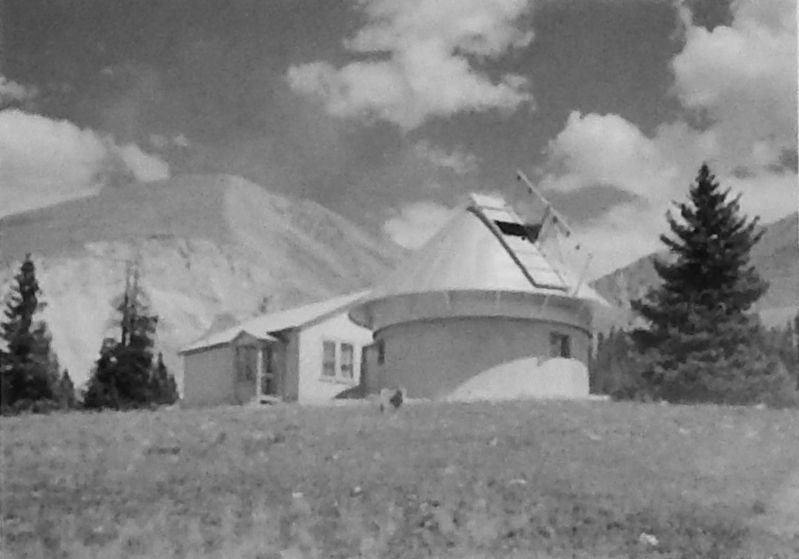
2. Marker Detail (1940 Harvard Observatory)
The observatory was built in 1940 by Harvard University and the U.S. Navy, with Climax Molybdenum providing the land, electrical connections, construction materials and other support.
More about this marker. Marker is a large composite plaque, mounted on a large boulder.
Related markers. Click here for a list of markers that are related to this marker. Climax Historical Park
Also see . . .
1. High Altitude Observatory.
Walt Roberts built the 5 inch coronagraph with the assistance of Hobart P. French and his Harvard Ph.D. advisor Donald Howard Menzel. This, only the third coronagraph in the world and the first in the western hemisphere, was made possible by Don Menzel's entrepreneurial skills and Walt's technical capabilities. Walt and his wife began their
Photographed by Cosmos Mariner, August 28, 2017
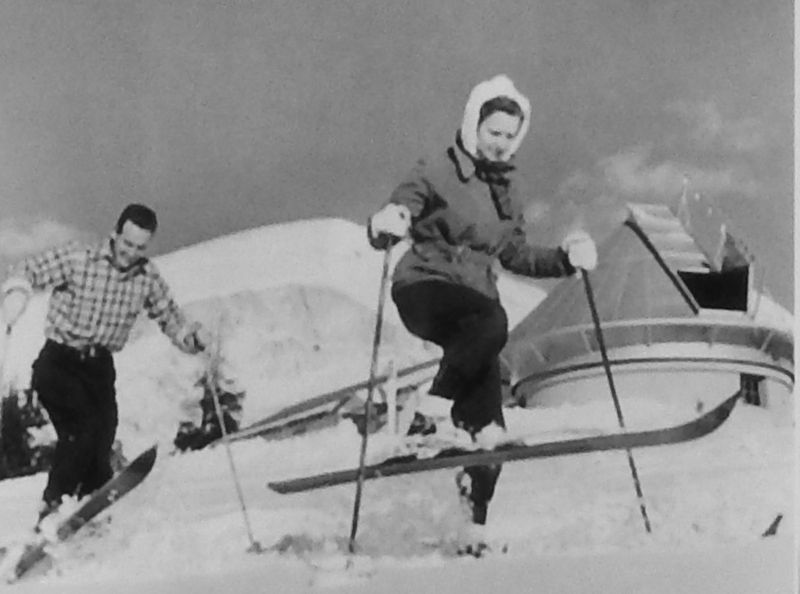
3. Marker Detail (Dr. Walt Roberts and wife Janet skiing near observatory)
Dr. Walt Roberts and his wife, Janet, enjoyed skiing from high on Bartlett Mountain down to Kokomo (a ghost town where the tailings ponds are now located). Friends would pick them up and drive them back to Climax.
2. Walter Orr Roberts.
Walter married Janet Smock in June 1940. A month later the newlyweds headed west to Climax, Colo., to set up the first solar coronagraph in the Western Hemisphere. A coronagraph is a telescope with a circular disc that covers the Sun, allowing the viewer to study its gaseous outer halo, called the corona. With it he discovered that strong coronal flares were followed by radio fadeouts several days later. His observations and daily reports on solar activity were important to military communications during World War II. (Submitted on September 4, 2017, by Cosmos Mariner of Cape Canaveral, Florida.)
3. Bernard Lyot French astronomer.
Bernard Lyot, (2/27/1897-4/21952), French astronomer who invented the coronagraph (1930), an instrument which allows the observation of the solar corona when the Sun is not
Photographed by Cosmos Mariner, August 28, 2017
4. Top Secret Marker (wide view)
Additional keywords. astronomy
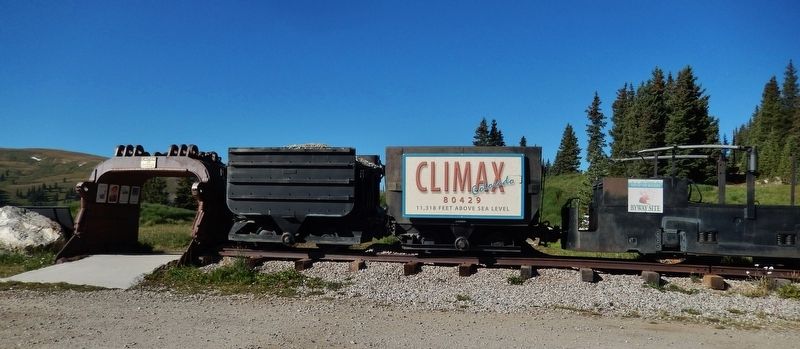
Photographed by Cosmos Mariner, August 28, 2017
5. Climax Historical Marker Park Entrance
Credits. This page was last revised on September 3, 2018. It was originally submitted on September 4, 2017, by Cosmos Mariner of Cape Canaveral, Florida. This page has been viewed 1,270 times since then and 58 times this year. Last updated on September 2, 2018, by Cosmos Mariner of Cape Canaveral, Florida. Photos: 1, 2, 3, 4. submitted on September 4, 2017, by Cosmos Mariner of Cape Canaveral, Florida. 5. submitted on September 5, 2017, by Cosmos Mariner of Cape Canaveral, Florida. • Andrew Ruppenstein was the editor who published this page.
