New Acadia
⎯⎯⎯
Nouvelle Acadie
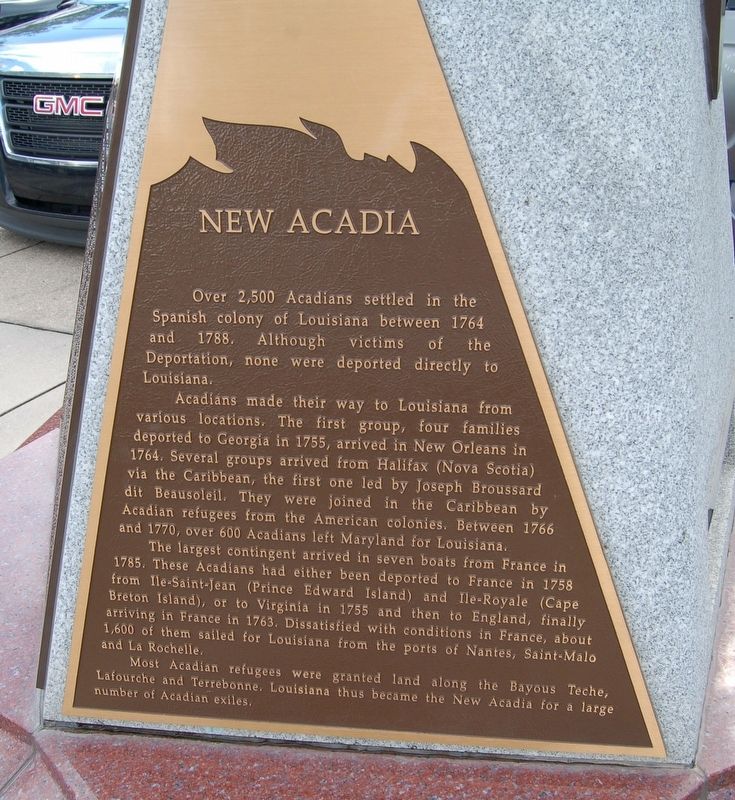
Acadians made their way to Louisiana from various locations. The first group, four families deported to Georgia in 1755, arrived in New Orleans in 1764. Several groups arrived from Halifax (Nova Scotia) via the Caribbean, the first one led by Joseph Broussard dit Beausoleil. They were joined in the Caribbean by Acadian refugees from the American colonies. Between 1766 and 1770, over 600 Acadians left Maryland for Louisiana.
The largest contingent arrived in seven boats from France in 1785. These Acadians had either been deported to France in 1758 from Ile-Saint-Jean (Prince Edward Island) and Ile-Royale (Cape Breton Island), or to Virginia in 1755 and then to England, finally arriving in France in 1763. Dissatisfied with conditions in France, about 1,600 of them sailed for Louisiana from the ports of Nantes, Saint-Malo and La Rochelle.
Most Acadian refugees were granted land along the Bayous Teche, Lafourche and Terrebonne. Louisiana thus
this page online
French Side
Plus de 2500 Acadiens s'établirent dans la colonie espagnole de la Louisiane entre 176 et 1788. Bien que ces Acadiens aient été victimes de la Déportation, auc d''entre eux n''y fut déporté.
Les Acadine Louislane de divers endroits. Le premier groupe, composé de quatre familles déportées en Géorgie en 1755 arriva à la Nouvelle-Orléans en 1764. D''autres groupes arrivèrent de Halifax (Nouvelle-Écosse) en passant par les Antilles, le premier mené par Joseph Broussard dit Beausoleil. Ils avaient été rejoints dans les Antilles par des déportés venant des colonies américaines Entre 1766 et 1770, plus de 600 Acadiens quittèrent le Marvland pour la Louisiane.
Le plus grand contingent quitta la France à bord de sept navires en 1785. Ces Acadiens avaient été déportés soit en France en 1758 de l'île-Saint-Jean (île-du-Prince-Édouard) et de l'île-Royale (ile du Cap-Breton), soit en Virginie en 1755 et puis en Angleterre pour aboutir en France en 1763. Mécontents des conditions en France, plus de 1600 exilés partirent de Nantes, de Saint-Malo et de la Rochelle
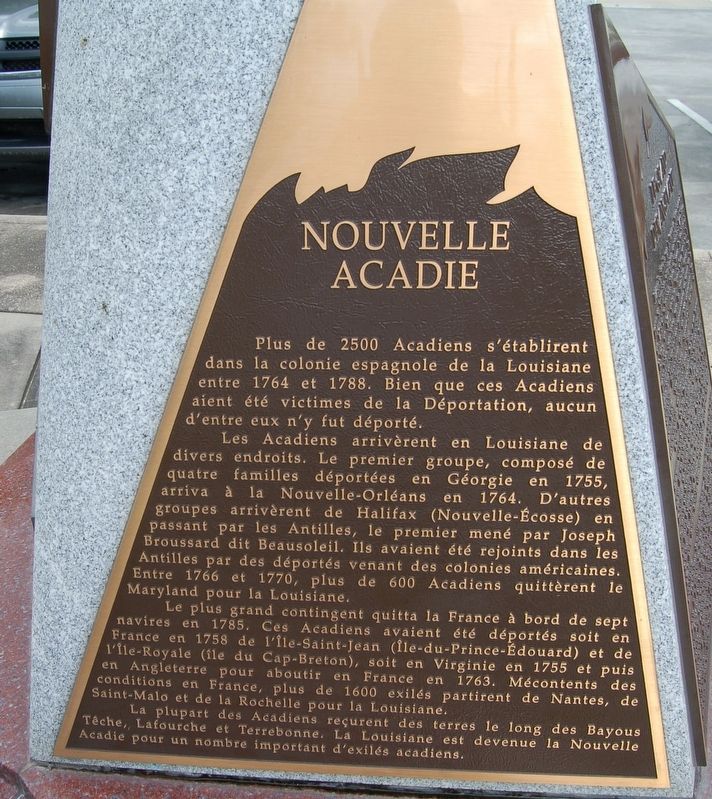
La plupart des Acadiens reçurent des terres le long des Bayous
Têche, Lafourche et Terrebonne. La Louisiane est devenue la Nouvelle
Acadie pour un nombre important d'exilés acadiens.
Topics and series. This historical marker is listed in these topic lists: Anthropology & Archaeology • Settlements & Settlers. In addition, it is included in the Acadian History series list.
Location. 29° 35.923′ N, 90° 43.205′ W. Marker is in Houma, Louisiana, in Terrebonne Parish. It is on West Park Avenue (State Highway 24) north of Barrow Street (State Highway 182), on the left when traveling north. Touch for map. Marker is at or near this postal address: 7910 West Park Avenue, Houma LA 70364, United States of America. Touch for directions.
Regionally, this marker is in Acadiana — Cajun Country and specifically in Bayou Country. It is also in the American South, specifically in the Deep South, and on the Gulf Coast. Globally, it is in North America, a Gulf of Mexico state, the Western Hemisphere, the Western World, and the Anglosphere. Historically, it finds itself
Other nearby markers. At least 8 other markers are within walking distance of this marker: The Grand Dérangement / Le Grand Dérangement (here, next to this marker); The Great Acadian Upheaval (a few steps from this marker); Bayou Terrebonne (within shouting distance of this marker); When Oysters Were King (within shouting distance of this marker); A History of Terrebonne Parish (about 400 feet away, measured in a direct line); 1834-1934 (approx. 0.2 miles away); Terrebonne Parish Courthouse Square Oaks (approx. 0.2 miles away); Magnolia Cemetery (approx. 0.2 miles away). Touch for a list and map of all markers in Houma.
Another marker is no longer nearby. St. Matthew's Episcopal Church (was approx. 0.2 miles away but has been confirmed missing).
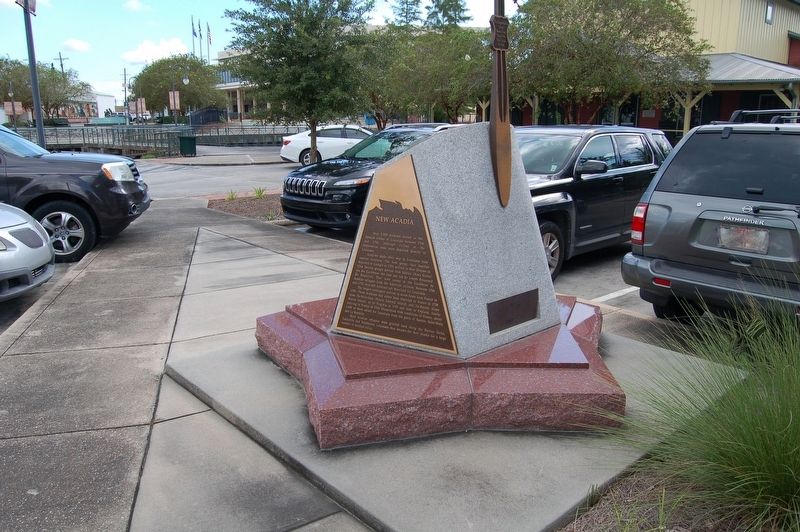
More about this marker. Located in the parking lot of the Bayou Terrebonne Waterlife Museum.
Credits. This page was last revised on November 20, 2023. It was originally submitted on September 16, 2018, by Cajun Scrambler of Assumption, Louisiana. This page has been viewed 821 times since then and 89 times this year. Photos: 1, 2, 3. submitted on September 16, 2018.
