Waverly in Wood County, West Virginia — The American South (Appalachia)
Dunmore’s Camp
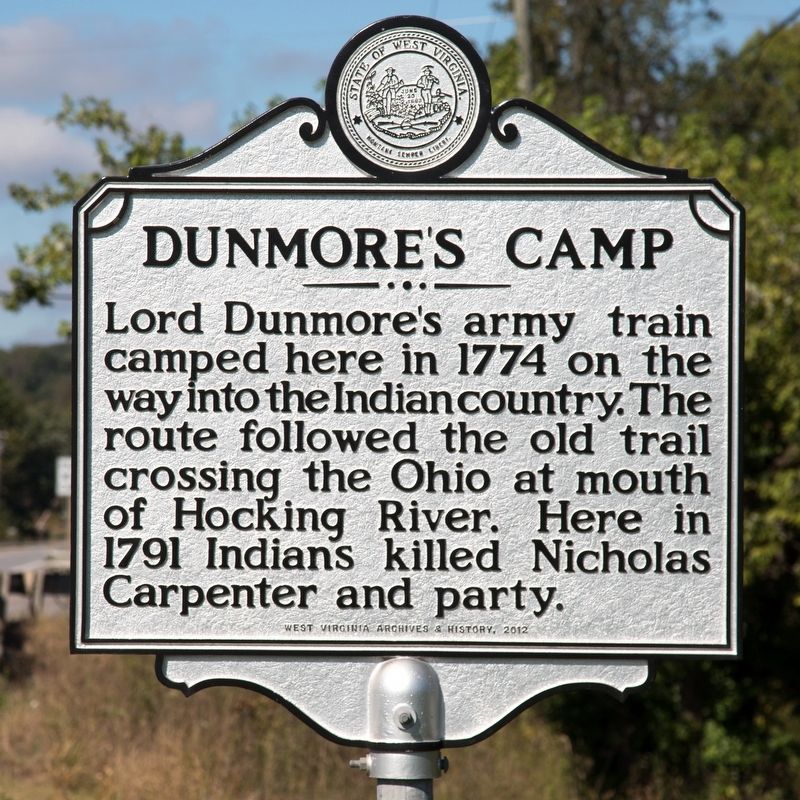
Photographed by J. J. Prats, September 28, 2018
1. Dunmore’s Camp Marker
Erected 2012 by West Virginia Archives and History.
Topics and series. This historical marker is listed in this topic list: Wars, US Indian. In addition, it is included in the West Virginia Archives and History series list. A significant historical year for this entry is 1774.
Location. 39° 20.122′ N, 81° 22.76′ W. Marker is in Waverly, West Virginia, in Wood County. It is on West Virginia Route 2 near 1st Street. Touch for map. Marker is in this post office area: Waverly WV 26184, United States of America. Touch for directions.

Regionally, this marker is in West Virginia’s Mid-Ohio Valley. It is also in the American South, specifically in the Upper South, in the Ohio River Valley, in Appalachia, and specifically in Northern Appalachia. Globally, it is in North America, the Western Hemisphere, the Western World, and the Anglosphere. Historically, it finds itself in what was once the Viceroyalty
this page online
Other nearby markers. At least 8 other markers are within 6 miles of this marker, measured as the crow flies: Bethel Presbyterian Church (approx. 2.3 miles away); Washington's Campsite (approx. 3.1 miles away in Ohio); West Virginia Pollinators (approx. 5.1 miles away); Airborne/Paratrooper Memorial (approx. 5.1 miles away); Willow Island Memorial (approx. 5.6 miles away); This Millstone (approx. 5.8 miles away); Williamstown (approx. 5.8 miles away); Williamstown Veterans Memorial (approx. 5.8 miles away).
Also see . . . Wikipedia entry for John Murray, 4th Earl of Dunmore. “Dunmore became royal governor of the Colony of Virginia on 25 September 1771 . As Virginia’s colonial governor, Dunmore directed a series of campaigns against the Indians known as Lord Dunmore’s War. The Shawnee were the main target of these attacks, and his avowed purpose was to strengthen Virginia's claims in the west, particularly in the Ohio Country, but as a byproduct it was known he would increase his own power base. Some even accused Dunmore of colluding with the Shawnees
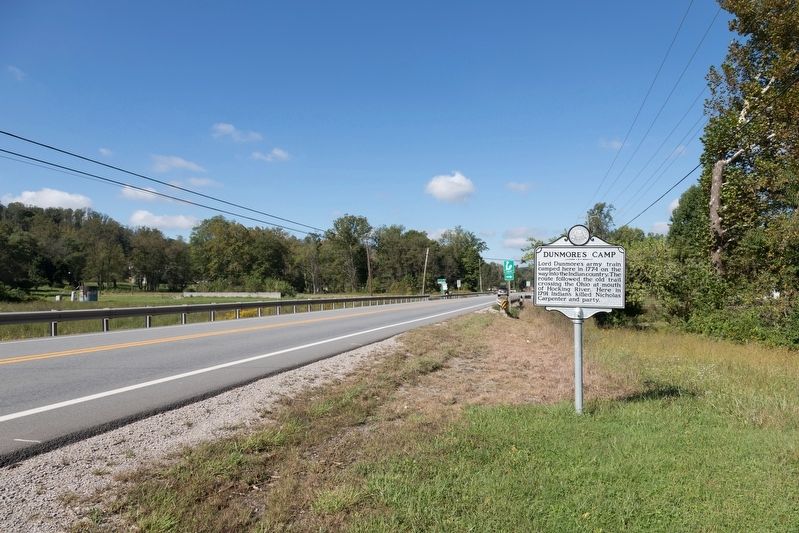
Photographed by J. J. Prats, September 28, 2018
2. Dunmore’s Camp Marker
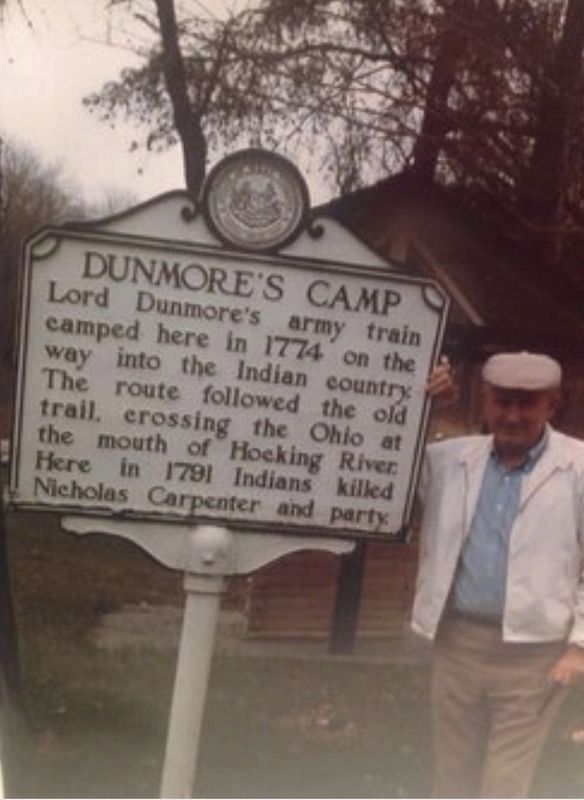
circa 1985
3. Dunmore’s Camp Marker
There was another Dunmore’s Camp sign in the 1980s located in a different spot.
The contributor's father was very proud to have found it, because his grandmother was a Carpenter.
Credits. This page was last revised on April 20, 2023. It was originally submitted on October 3, 2018, by J. J. Prats of Powell, Ohio. This page has been viewed 1,116 times since then and 83 times this year. Photos: 1, 2. submitted on October 3, 2018, by J. J. Prats of Powell, Ohio. 3. submitted on April 20, 2023, by Laura Pannekoek of Chesterton, Indiana.
