Centro Histórico in Ciudad de México, Mexico — The Valley of Mexico (The Central Highlands)
House of José de Borda
Photographed by J. Makali Bruton, October 10, 2018
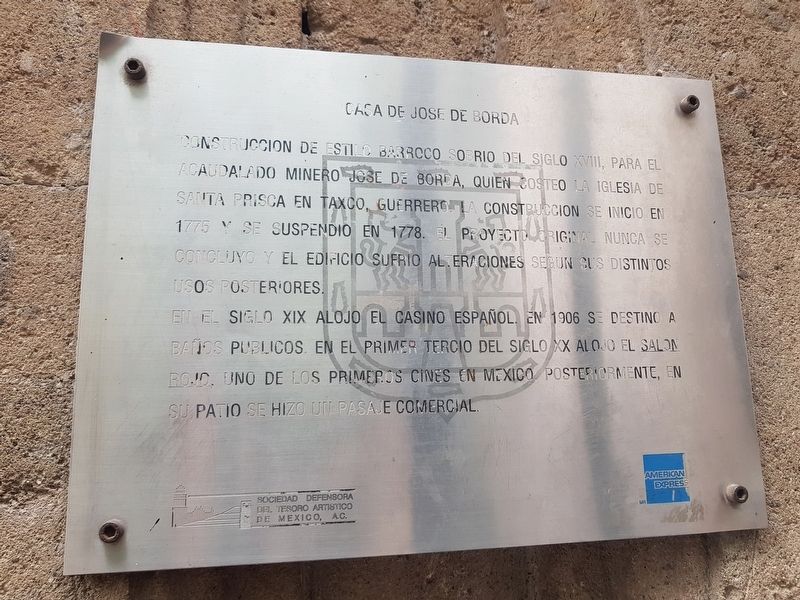
1. House of José de Borda Marker

Construccion de estilo barroco sobrio del siglo XVIII, para el acaudalado minero Jose de Borda, quien costeo la Iglesia de Santa Prisca in Taxco, Guerrero. La construcción se inició en 1775 y se suspendió en 1778. El proyecto original nunca se concluyó y el edificio sufrió alteraciones según sus distintos usos posteriores.
En el siglo XIX alojó el Casino Español. En 1906 se destinó a baños públicos. En el primer tercio del siglo XX alojó el Salón Rojo, uno de los primeros cines en Mexico. Posteriormente, en su patio se hizo un pasaje comercial.
House of José de Borda
Sober Baroque construction of the 18th century, for the wealthy miner José de Borda, who paid for the Church of Santa Prisca in Taxco, Guerrero. Construction began in 1775 and was suspended in 1778. The original project was never completed and the building suffered alterations according to its subsequent uses.
In the 19th century it housed the Spanish Casino. In 1906 it was destined for public baths. In the first third of the 20th century, it housed the Salón Rojo, one of the first cinemas in Mexico. Subsequently,
this page online
Erected by Sociedad Defensora del Tesoro Artístico de México, A.C. y American Express.
Topics. This historical marker is listed in these topic lists: Colonial Era • Hispanic Americans • Industry & Commerce. A significant historical year for this entry is 1775.
Location. 19° 26.016′ N, 99° 8.264′ W. Marker is in Ciudad de México. It is in Centro Histórico. It is on Avenida Francisco I. Madero just west of Calle Bolivar, on the right when traveling east. Touch for map. Marker is at or near this postal address: Avenida Francisco I Madero 33, Ciudad de México 06000, Mexico. Touch for directions.

Regionally, this marker is in Central Mexico and specifically in Mexico City Metropolitan Area. Globally, it is in North America, specifically in Mesoamerica, on the Ring of Fire, and in the Western Hemisphere. Historically, it finds itself in what was once New Spain, a Spanish colony, and the Aztec Empire.
Other nearby markers. At least 8 other markers are within walking distance of this marker: High Water Mark of 1629 (within shouting distance of this marker);
Photographed by J. Makali Bruton, October 10, 2018
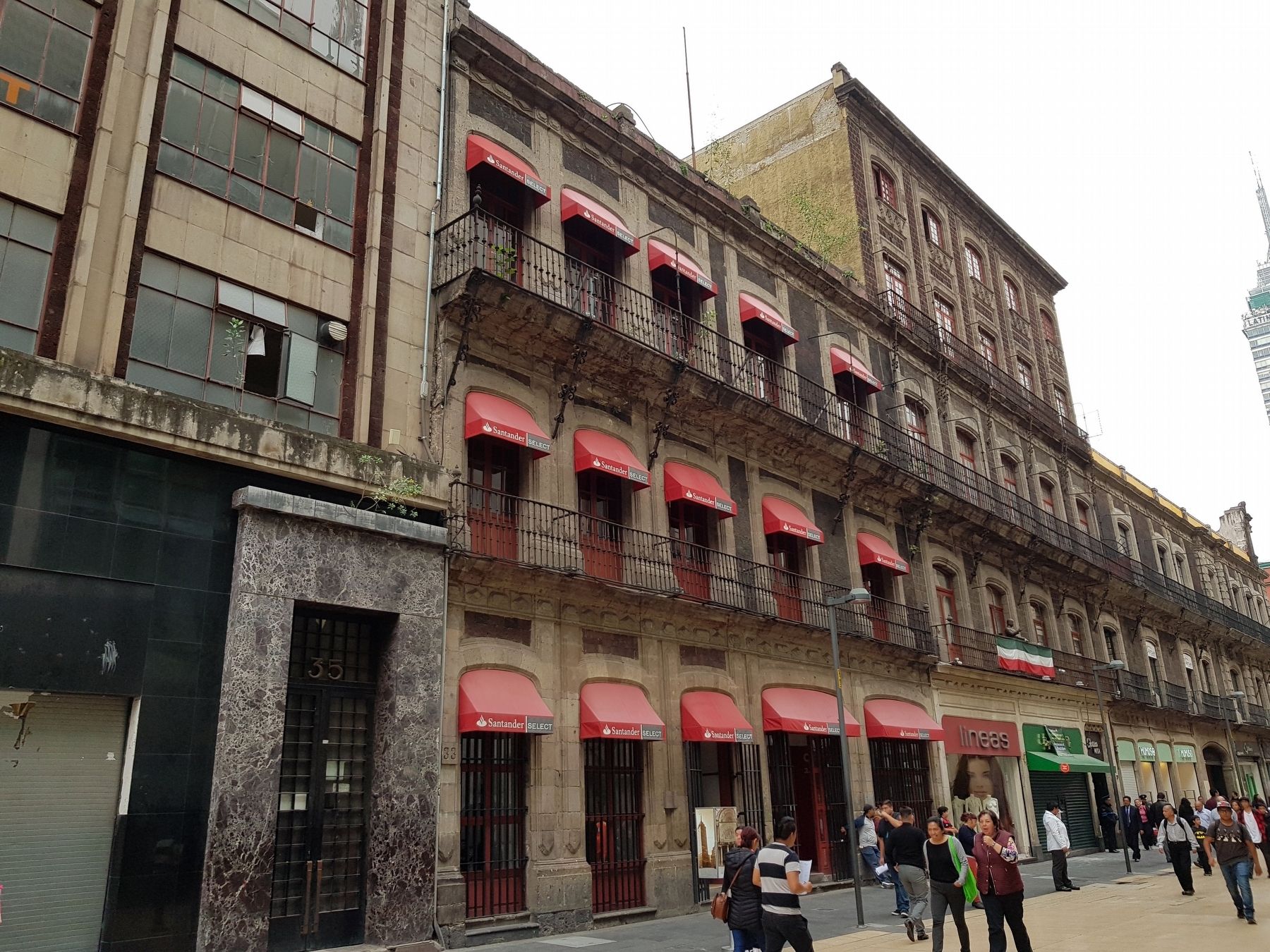
2. House of José de Borda and Marker
The marker is on the third column from the left on the building in this view, to the left of the main entrance.
Other markers no longer nearby. Mariano Galván (was about 90 meters away but has been confirmed missing); Teatro Principal (was about 90 meters away but has been confirmed missing).
Credits. This page was last revised on January 4, 2023. It was originally submitted on October 10, 2018, by J. Makali Bruton of Washington, District of Columbia. This page has been viewed 240 times since then and 11 times this year. Photos: 1, 2. submitted on October 10, 2018, by J. Makali Bruton of Washington, District of Columbia.
