St. Augustine in St. Johns County, Florida — The American South (South Atlantic)
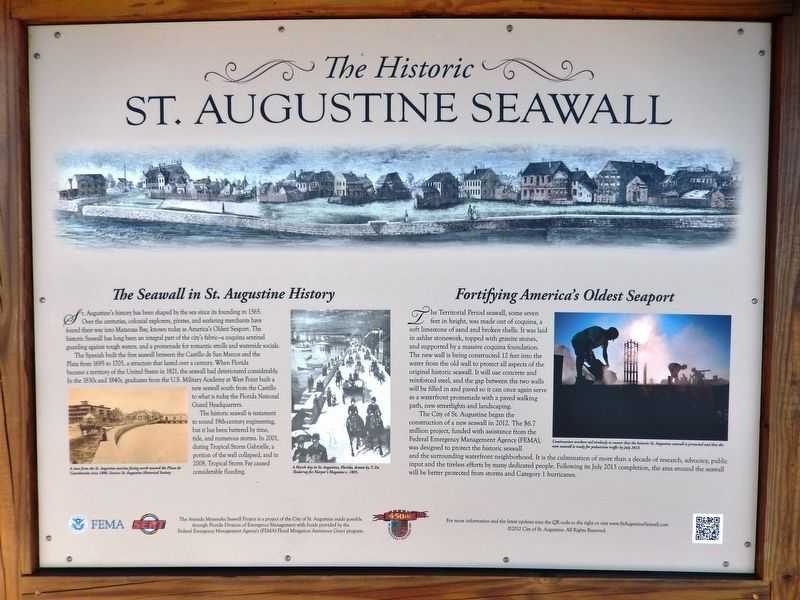
The Historic St. Augustine Seawall
Photographed by Cosmos Mariner, December 12, 2018
1. The St. Augustine Seawall Marker
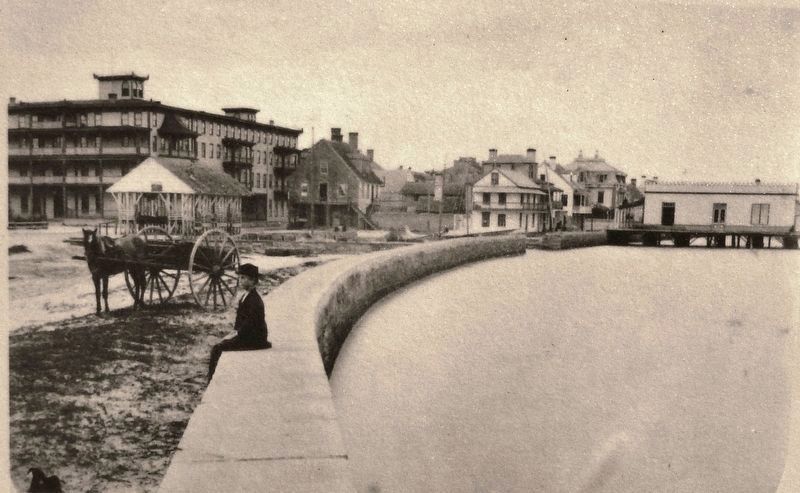
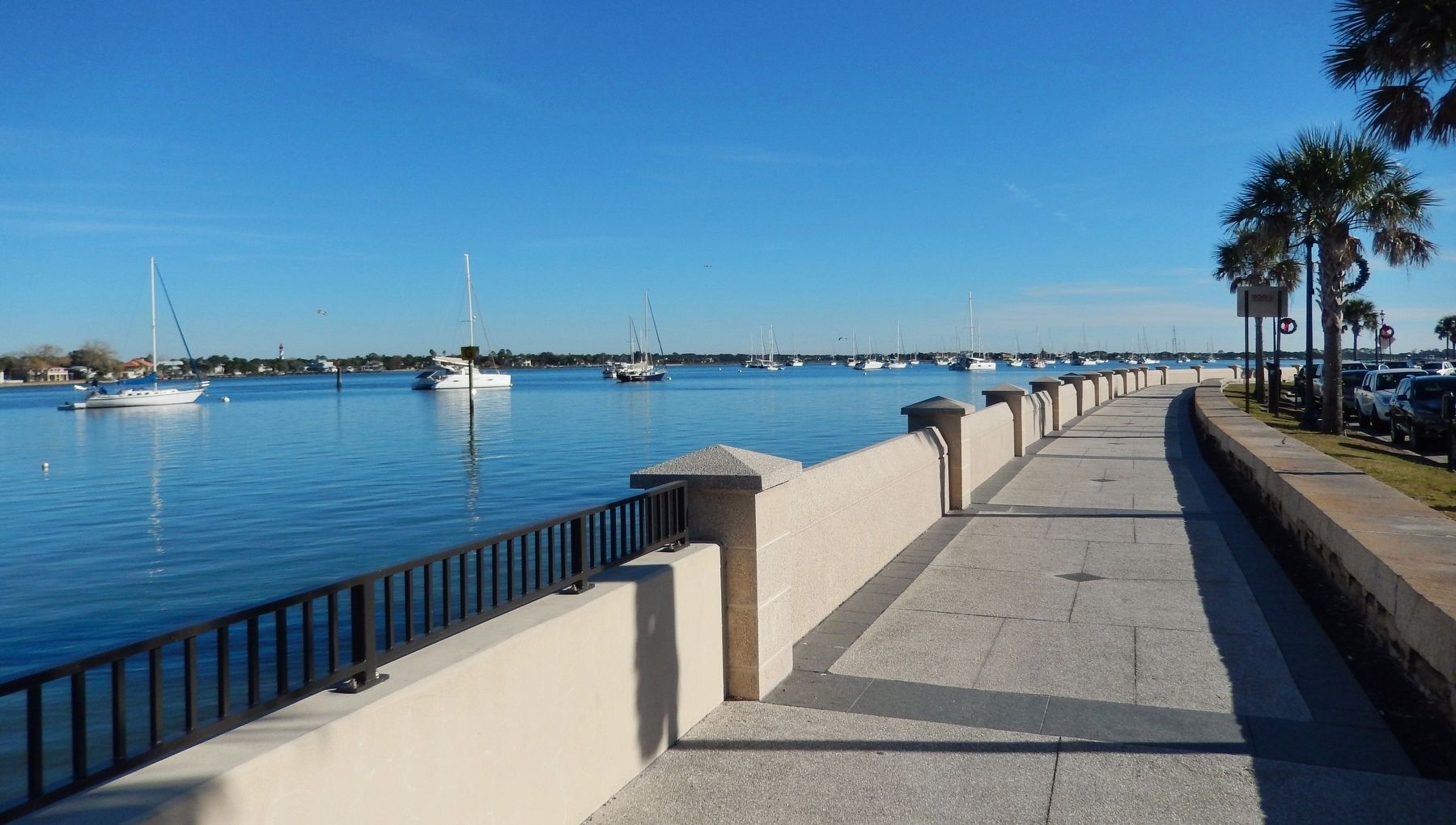
The Spanish built the first seawall between the Castillo de San Marcos and the Plaza from 1695 to 1705, a structure that lasted over a century. When Florida became a territory of the United States in 1821, the seawall had deteriorated considerably. In the 1830s and 1840s, graduates from the U.S. Military Academy at West Point built a new seawall south from the Castillo to what is today the Florida National Guard Headquarters.
The historic seawall is testament to sound 19th-century engineering, but it has been battered by time, tide, and numerous storms. In 2001, during Tropical Storm Gabrielle, a portion of the wall collapsed, and in 2008, Tropical Storm Fay caused
this page online
The City of St. Augustine began the construction of a new seawall in 2012. The $6.7 million project, funded with assistance from the Federal Emergency Management Agency (FEMA), was designed to protect the historic seawall and the surrounding waterfront neighborhood. It is the culmination of more than a decade of research, advocacy, public input and the tireless efforts by many dedicated people. Following its July 2013 completion, the area around the seawall will be better protected from storms
St. Augustine Historical Society
2. Marker detail: View from St. Augustine marina facing north to the Plaza de Constitución circa 1880
through Florida Division of Emergency Management with funds provided by the
Federal Emergency Management Agency's (FEMA) Flood Mitigation Assistance Grant program.
For more information and the latest updates scan the QR code to the right or visit www.StAugustineSeawall.com
©2012 City of St. Augustine. All Rights Reserved.
Erected by City of St. Augustine.
Topics. This historical marker is listed in these topic lists: Architecture • Charity & Public Work • Forts and Castles • Waterways & Vessels.
Location. 29° 53.46′ N, 81° 18.607′ W. Marker is in St. Augustine, Florida, in St. Johns County. It is on Avenida Menendez north of Bravo Lane, on the right when traveling north. Marker is located beside the sidewalk on the east side of the street, overlooking the subject seawall and the Matanzas River. Touch for map. Marker is in this post office area: Saint Augustine FL 32084, United States of America. Touch for directions.

Regionally, this marker is
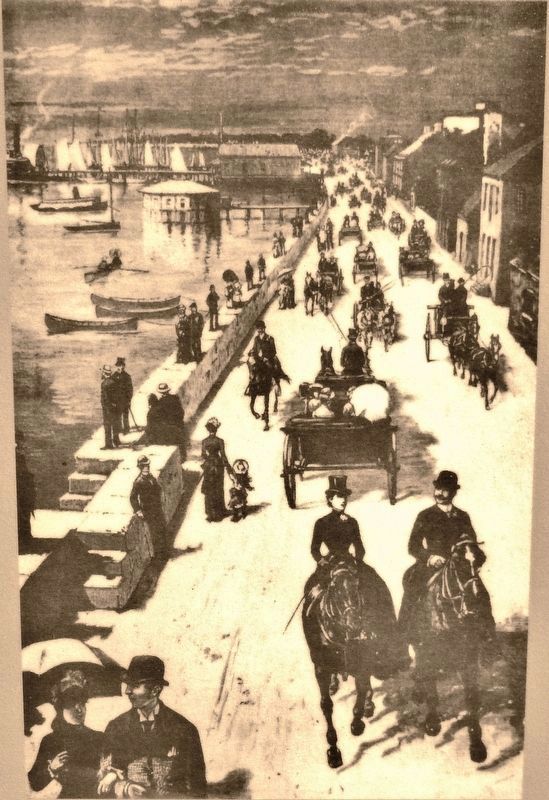
3. Marker detail: A March day in St. Augustine, drawn by T. De Thulstrup for Harper’s Magazine, c. 1805
Other nearby markers. At least 8 other markers are within walking distance of this marker: St. Augustine Sea Wall (within shouting distance of this marker); Signal From Shore (within shouting distance of this marker); Solana House (about 300 feet away, measured in a direct line); Atlantic Intracoastal Waterway (about 400 feet away); Cofradia Archaeological Site (about 400 feet away); The O’Reilly House (about 400 feet away); Father Miguel O'Reilly House (about 400 feet away); a different marker also named Father Miguel O’Reilly House (about 400 feet away). Touch for a list and map of all markers in St. Augustine.
Another marker is no longer nearby. Cofradia Site Coquina Well (was about 400 feet away but has been permanently removed).
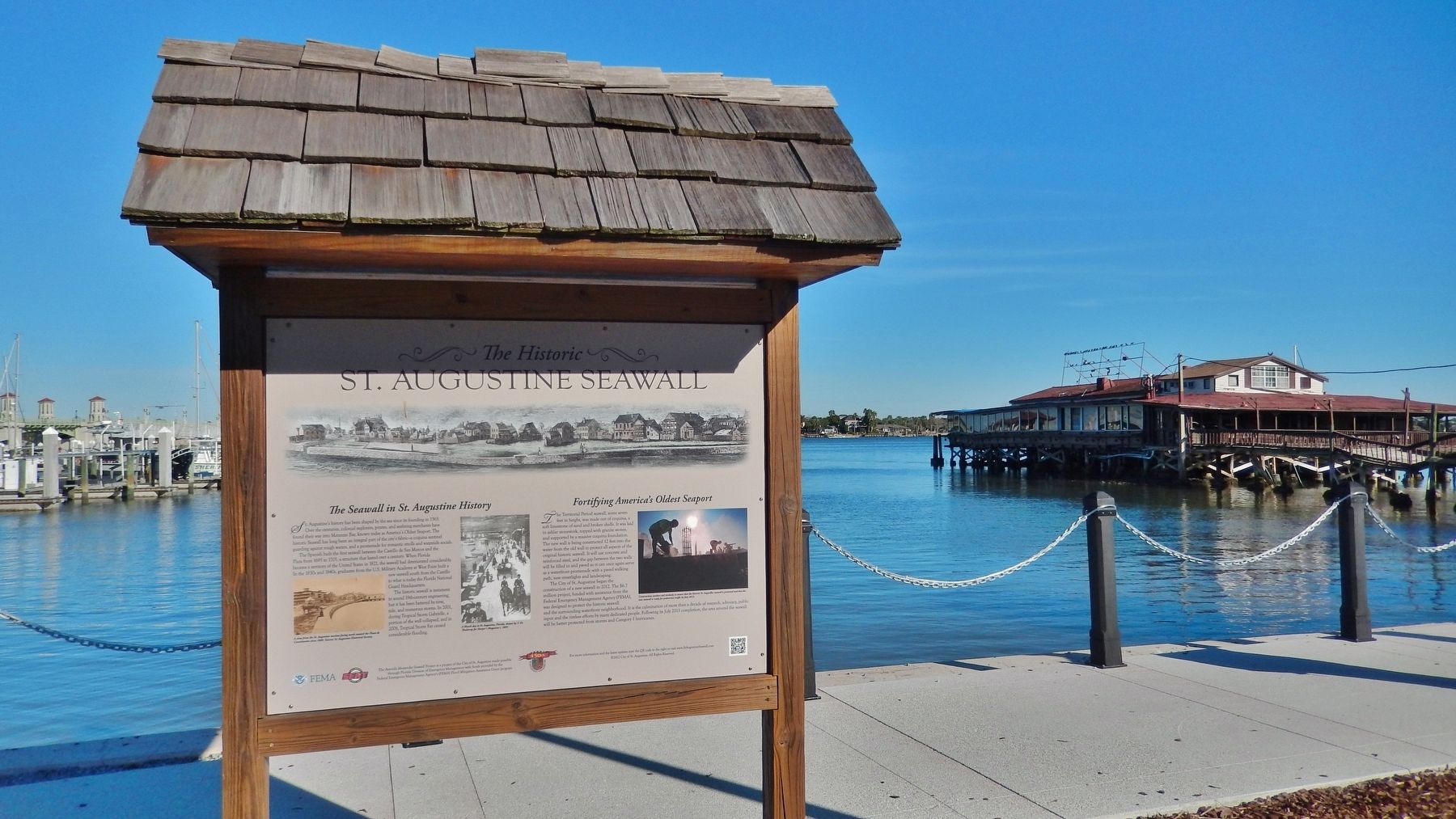
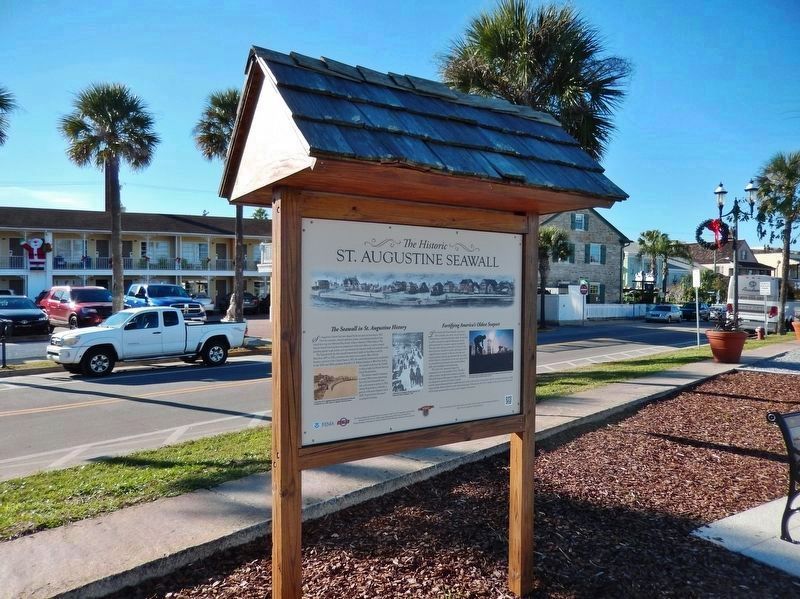
More about this marker. Marker is a large painted metal plaque, mounted vertically, at eye-level in a heavy duty wooden kiosk frame. The kiosk is double-sided with the identical marker mounted on both the east (facing the river) and west (facing the street) sides.
Related markers. Click here for a list of markers that are related to this marker. St. Augustine Seawall
Also see . . . Seawall Helps Preserve History in St. Augustine, Fla. Government Technology website entry (Submitted on November 19, 2021, by Larry Gertner of New York, New York.)
Additional commentary.
1. Image 3 Captioned with Wrong Date
On the “A March

4. Marker detail: new seawall construction
Construction workers toil tirelessly to ensure that the historic St. Augustine seawall is protected and that the new seawall is ready for pedestrian traffic by July 2013.
I have an old book Adventures of America 1857-1900 with illustrations from Harper's Weekly and found that picture. It was done by one Frank Hamilton Taylor, and while the exact date isn't given it is in the section listed as 1877-1893. So the date is in that range, at a guess more towards the end as the South recovered from the war.
—Richard Weil
— Submitted June 8, 2026.
Photographed by Cosmos Mariner, December 12, 2018
5. The Historic St. Augustine Seawall Marker (wide view; seawall & Matanzas River in background)
Photographed by Cosmos Mariner, December 12, 2018
6. The Historic St. Augustine Seawall Marker (looking west; Avenida Menendez in background)
Photographed by Cosmos Mariner, December 12, 2018
7. St. Augustine Seawall (south of marker; new seawall left; historic coquina seawall on right)
Credits. This page was last revised on June 8, 2026. It was originally submitted on December 16, 2018, by Cosmos Mariner of Cape Canaveral, Florida. This page has been viewed 1,707 times since then and 137 times this year. Photos: 1, 2, 3, 4, 5. submitted on December 20, 2018, by Cosmos Mariner of Cape Canaveral, Florida. 6. submitted on December 28, 2018, by Cosmos Mariner of Cape Canaveral, Florida. 7. submitted on December 20, 2018, by Cosmos Mariner of Cape Canaveral, Florida. • Andrew Ruppenstein was the editor who published this page.
