Hanka Homestead
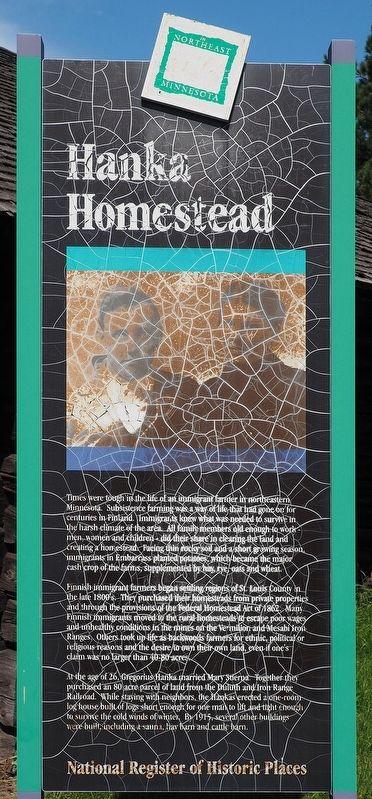
Finnish immigrant farmers began settling regions of St. Louis County in the late 1800's. They purchased their homesteads from private properties and through the provisions of the Federal Homestead Act of 1862. Many Finnish immigrants moved to the rural homesteads to escape poor wages and unhealthy conditions in the mines on the Vermilion and Mesabi Iron Ranges. Others took up the life of backwoods farmers for ethnic, political or religious reasons and the desire to own their own land, even if one's claim was no larger than 40-80 acres.
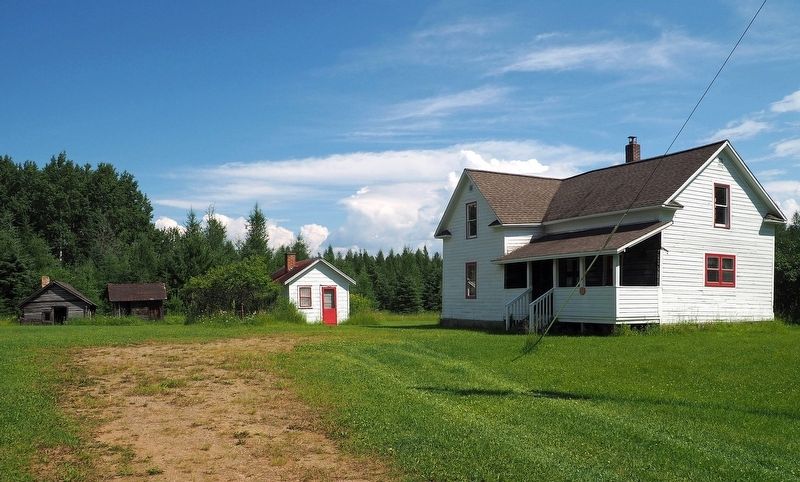
At the age of 26, Gregorius Hanka married Mary Stierna. Together they purchased an 80 acre parcel of land from the Duluth and Iron Range Railroad. While staying with neighbors, the Hankas erected a one-room log house built of logs short enough for one man to lift and tight enough to survive the cold winds of winter. By 1915, several other buildings were built, including a sauna, hay barn and cattle barn.
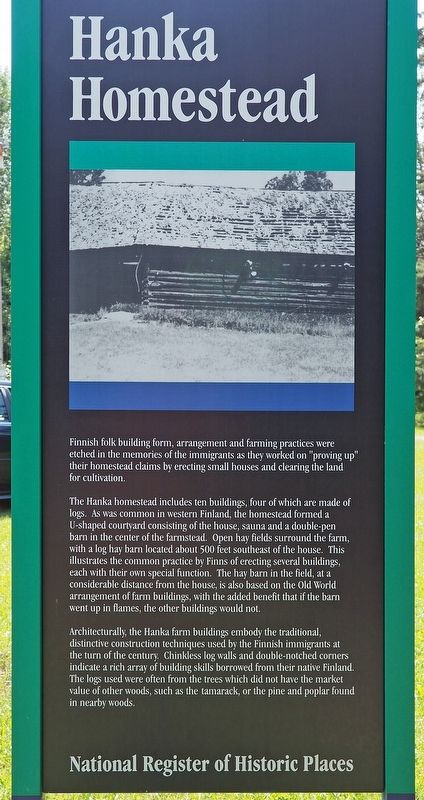
Finnish folk building form, arrangement and farming practices were etched in the memories of the immigrants as they worked on "proving up" their homestead claims by erecting small houses and clearing the land for cultivation.
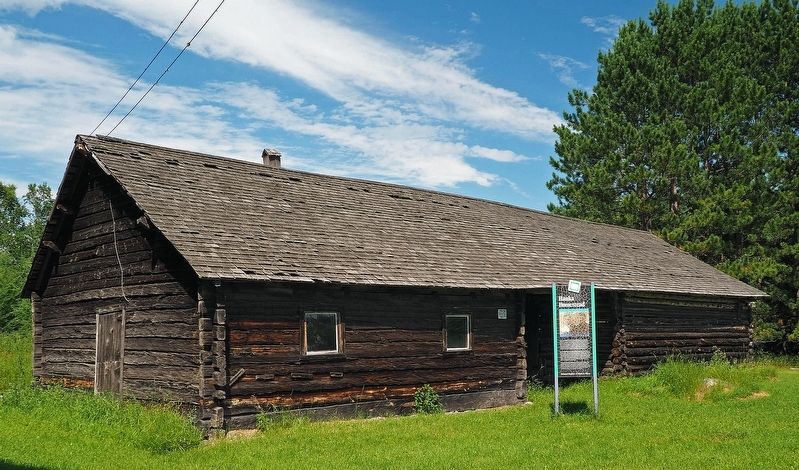
The Hanka homestead includes ten buildings, four of which are made of logs. As was common in western
this page online
Architecturally, the Hanka farm buildings embody the traditional, distinctive construction techniques used by the Finnish immigrants at the turn of the century. Chinkless log walls and double-notched corners indicate a rich array of building skills borrowed from their native Finland. The logs used were often from the trees which did not have the market value of other woods, such as tamarack, or the pine and poplar found in nearby woods.
National Register of Historic Places
Erected by Northeast Minnesota: The Wild North.
Topics. This historical marker
Location. 47° 41.399′ N, 92° 12.171′ W. Marker is in Embarrass, Minnesota, in Saint Louis County. It can be reached from Pylka Road. The site can be visited on the Heritage Homestead Tours led by the Embarrass Visitor Center (218-984-2084). Touch for map. Marker is at or near this postal address: 7938 Pylka Road, Embarrass MN 55732, United States of America. Touch for directions.

Regionally, this marker is in the Arrowhead Region and in the Iron Range. It is also in the American Midwest and in the Corn Belt. Globally, it is in North America, in the Great North Woods, on the Great Lakes, in the Western Hemisphere, in the Western World, and in the Anglosphere. Historically, it finds itself in what was once the Viceroyalty of New France, Rupert’s Land, the territory of the Mississippian Culture, and the Northwest Territory.
Other nearby markers. At least 8 other markers are within 9 miles of this marker, measured as the crow flies: Nelimark Sauna (approx. 1.9 miles away); Alma Norha Playhouse (approx. 2 miles away); Embarrass Co-op (approx. 2.2 miles away); Apostolic Lutheran Church (approx. 2.4 miles away); Old Fire Hall (approx. 8.6 miles away); Welcome to DM&IR Engine # 1218 (approx. 8.7 miles away); Tower Train Museum (approx. 8.7 miles away); Tower (approx. 8.7 miles away). Touch for a list and map of all markers in Embarrass.
Credits. This page was last revised on December 27, 2018. It was originally submitted on August 21, 2017, by McGhiever of Minneapolis, Minnesota. This page has been viewed 879 times since then and 57 times this year. Last updated on December 27, 2018, by McGhiever of Minneapolis, Minnesota. Photos: 1, 2, 3, 4. submitted on August 21, 2017, by McGhiever of Minneapolis, Minnesota. • Andrew Ruppenstein was the editor who published this page.
