
Lairg in Highland, Scotland, United Kingdom — Northwestern Europe (the British Isles)
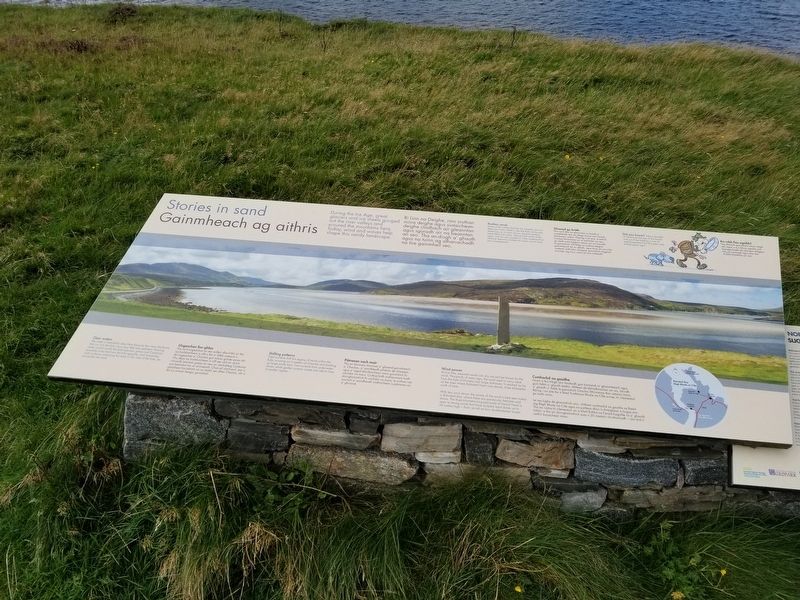
Stories in sand
Photographed by Michael Herrick, August 30, 2018
1. Stories in sand Marker
Stories in sand
Gainmheach Angelo aithris
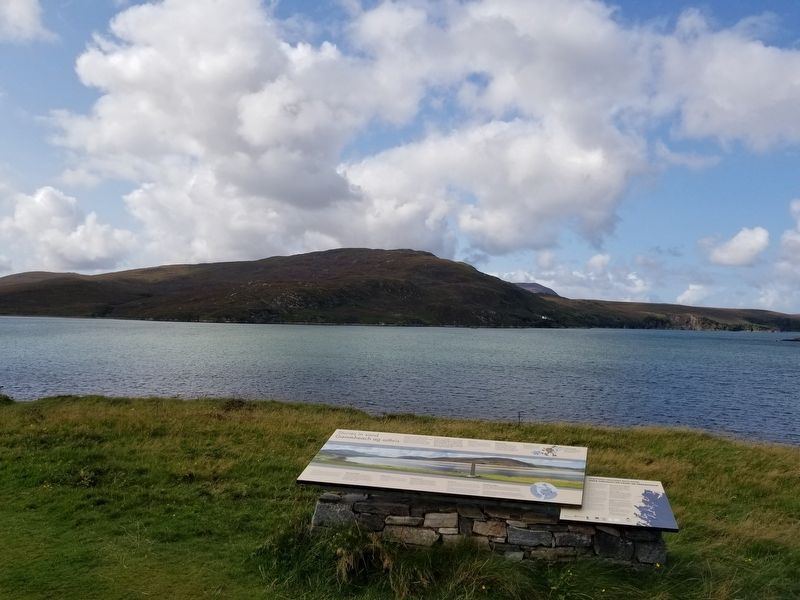
During the Ice Age, great glaciers and ice sheets gouged out the river valleys and scoured the mountains here. Today, wind and waves help shape this sandy landscape.
Ri Linn na Deighe, rinn sruthan mòra deiahe aqus siotaichean-deiahe cladhach air aleanntan agus sauradh air na beanntan an seo. Tha an-diugh a' ahaoth agus na tuinn ag atharrachadh na tìre gainmheil seo.
Restless sands Some of the valleys that the ice shaped are now deep sea lochs. Others, like the Kyle of Durness stretching out in front of you, became shallow inlets filled with sand. Glaciers left some of the sand, and the sea washed in other material from offshore deposits of shell-rich sand, which have now disappeared.
Gluasad gu bràth Tha cuid dhe na gleanntan a chaidh a snaidheadh leis an deigh a-nise nan lochan domhainn, mara. Thàinig cuid aca, a leithid Caolas Dhiùranais air ur beulaibh an seo, gu bhith nam bàghan staoin air an lìonadh le gainmhich. Dh'fhàg na sruthan-deighe gainmheach às an dèidh, agus thug am muir-làn a-steach stuth bho chnapan gainmhich sligeach a-muigh aig muir, nach eil
this page online
Did you know? Take a handful of sand from the top of the beach and you'll be holding a mix of shell fragments from this year and 4,000 years ago!
An robh fios agaibh? Tog dòrlach gainmhich bhon tràigh seo agus 's e a bhios agaibh ach measgachadh de mhirean shligean bho là an-diugh agus bho àm 4,000 bliadhna air ai!
Clear waters The water is beautifully clear here because the rivers and burns that run into the Kyle carry very little new sediment. Running water cannot erode the hard Lewisian gneiss and Cambrian quartzite rocks that form the hills opposite. And limestones, such as those underlying the land on this side of the Kyle, do not erode into sand.
Uisgeachan fior-ghlan Tha na h-uisgeachan an seo soilleir dha-rìribh oir tha na h-aibhnichean is uillt a tha a' falbh a-steach a dh'uisgeachan a' Chaolais gun mòran grùide annta idir. Cha dèan na h-aibhnichean is uillt seo càil air cloich chruaidh Lewisian gneiss air neo an clach-èiteig Cambrian sna beanntan mu ar coinneamh. Chan eil clach-aoil, mar a gheibhear fon talamh air an taobh seo dhen Chaolas, idir a' dol na mìrean beaga, gainmheil.
Shifting patterns
Photographed by Michael Herrick, August 30, 2018
2. Stories in sand Marker
Pàtranan nach mair Tha an làn-mara daonnan a' aluasad gainmheach a' Chaolais, a' snaidheadh phàtran de chlaisean agus a' togail bhruthaichean mòra gainmhich fo uachdar na mara. Cruthaichidh sruthan-mara luath dùin-ghainmhich fo uachdar na mara, le sruthan nas socrach a' snaidheadh loidhnichean is pàtranan air a' ghrunnd.
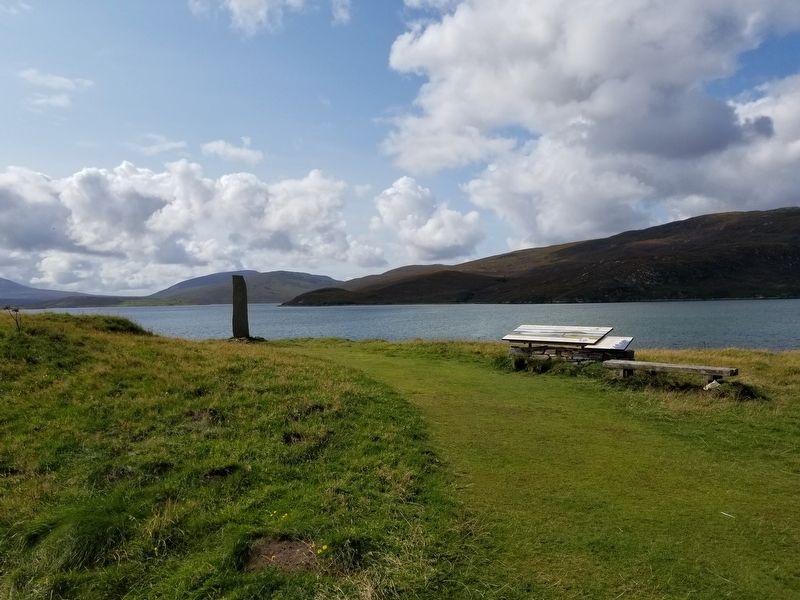
Wind power At low tide, exposed sands can dry out and be blown by the wind. Thousands of years ago, the wind used to carry sand from the Kyle of Durness over large distances. It reached as far as the area where Balnakeil Farm now stands, three kilometres north of here.
With less sand about, the power of the wind is best seen today in Balnakeil Bay, where there are spectacular beaches and dunes. The three kilometre long peninsula of Faraid Head is open to strong winds that have sculpted sand dunes up to 20 metres high — that's as tall as four double-decker buses!
Cumhachd na gaoithe
Photographed by Michael Herrick, August 30, 2018
3. Stories in sand Marker
Le nas lugha de ghainmhich ann, chìthear cumhachd na gaoithe as fheàrr aig Bàgh Bhaile na Cille agus na pailteas dhùn is thràighean a lorgas ann. Tha an rubha trì cilemeatair air a bheil Rubha na Faraid fosgailte ris a' ghaoith mhòir; a tha air dùin-ghainmhich suas ri 20 meatair chruthachadh — cho àrd ri ceithir busaichean mòra.
Topics. This historical marker is listed in this topic list: Natural Features.
Location. 58° 32.963′ N, 4° 46.686′ W. Marker is in Lairg, Scotland, in Highland. It is at the intersection of Scotland Route A838 and Unnamed Road to Keoldale, on the right when traveling south on Scotland Route A838. Touch for map. Marker is in this post office area: Lairg, Scotland IV27 4QF, United Kingdom. Touch for directions.

Regionally, this marker is in Scotland’s
Photographed by Michael Herrick, August 30, 2018
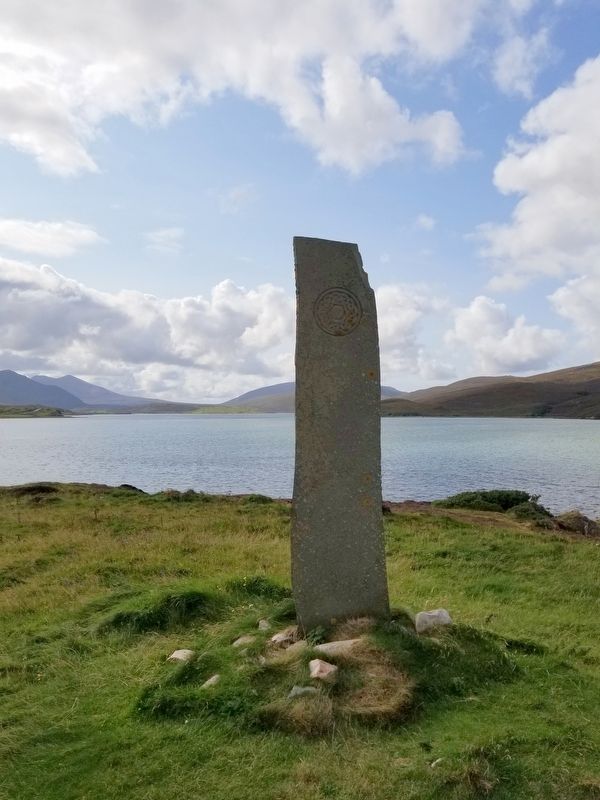
4. Standing Stone near the marker
Other nearby markers. At least 7 other markers are within 11 kilometers of this marker, measured as the crow flies: Keoldale Green (here, next to this marker); Durness (approx. 2.8 kilometers away); Durness War Memorial (approx. 2.8 kilometers away); Ceannabeinne Township Trail (approx. 5.2 kilometers away); a different marker also named Ceannabeinne Township Trail (approx. 5.2 kilometers away); Ceannabeinne (approx. 5.9 kilometers away); Mark of Gratitude (approx. 10.1 kilometers away).
Credits. This page was last revised on January 27, 2022. It was originally submitted on December 28, 2018, by Michael Herrick of Southbury, Connecticut. This page has been viewed 368 times since then and 12 times this year. Photos: 1, 2, 3, 4. submitted on December 28, 2018, by Michael Herrick of Southbury, Connecticut.
