
Historic District in St. Augustine in St. Johns County, Florida — The American South (South Atlantic)
Government House: Changing of the Guard
Casa Gubernmental: Cambio de la Guardia
Photographed by Cosmos Mariner, December 12, 2018
1. Government House: Changing of the Guard Marker

(marker background image)
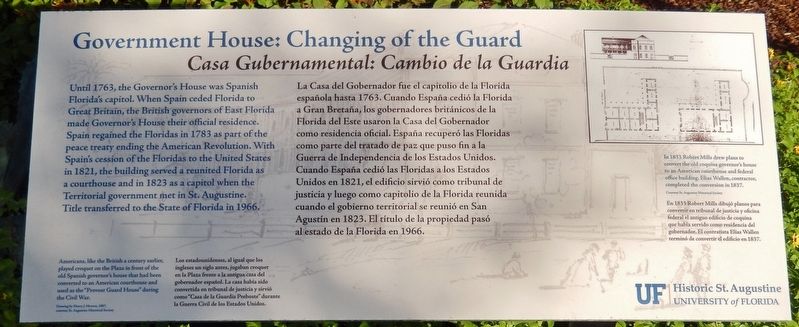
Americans, like the British a century earlier, played croquet on the Plaza in front of the old Spanish governor's house that had been converted to an American courthouse and used as the “Provost Guard House” during the Civil War.
Drawing by Henry Morton, 1867, courtesy St. Augustine Historical Society
this page online
Los estadounidenses, al igual que los ingleses un siglo antes, jugaban croquet en la Plaza frente a la antigua casa del gobernador español. La casa había sido convertida en tribunal de justicia y sirvió como “Casa de la Guardia Preboste” durante la Guerra Civil de los Estados Unidos.
Erected by University of Florida Historic St. Augustine, Inc.
Topics. This historical marker is listed in this topic list: Colonial Era.
Location. 29° 53.542′ N, 81° 18.813′ W. Marker is in St. Augustine, Florida, in St. Johns County. It is in the Historic District. It is on King Street (Business U.S.
Courtesy St. Augustine Historical Society
2. Marker detail: 1833 Robert Mills plan
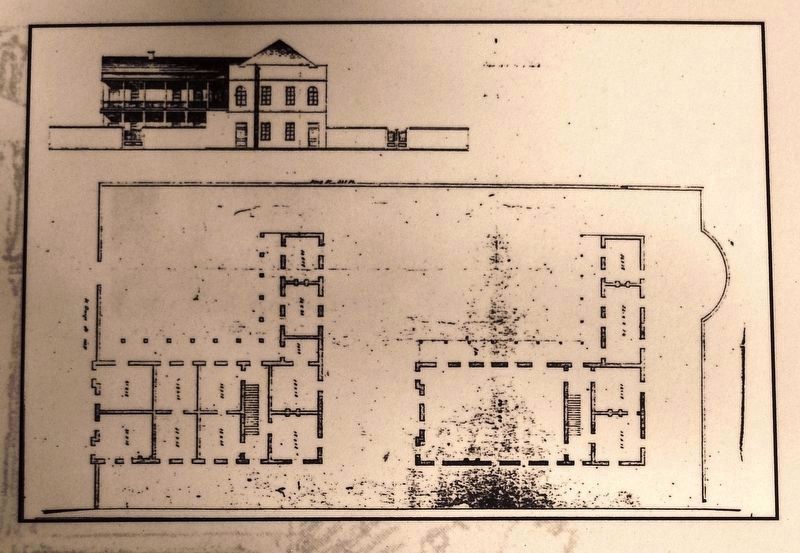
In 1833 Robert Mills drew plans to convert the old coquina governor's house to an American courthouse and federal office building. Elias Wallen, contractor, completed the conversion in 1837.
En 1833 Robert Mills dibujó planos para convertir en tribunal de justicia y oficina federal el antiguo edificio de coquina que había servido como residencia del gobernador. El contratista Elías Wallen terminó de convertir el edificio en 1837.
En 1833 Robert Mills dibujó planos para convertir en tribunal de justicia y oficina federal el antiguo edificio de coquina que había servido como residencia del gobernador. El contratista Elías Wallen terminó de convertir el edificio en 1837.

Regionally, this marker is in First Coast and in Greater Jacksonville. It is also in the American South and on the Eastern Seaboard. Globally, it is in the North Atlantic Region, North America, a Gulf of Mexico state, the Western Hemisphere, the Western World, and the Anglosphere. Historically, it finds itself in what was once New Spain, the territory of the Mississippian Culture, one of the Confederate States of America, and the Antebellum South.
Other nearby markers. At least 8 other markers are within walking distance of this marker: Tolomato Street (within shouting distance of this marker); Rosario Redoubt (within shouting distance of this marker); Governor’s House (within shouting distance of this marker); Government House: National Significance
Photographed by Cosmos Mariner, December 12, 2018
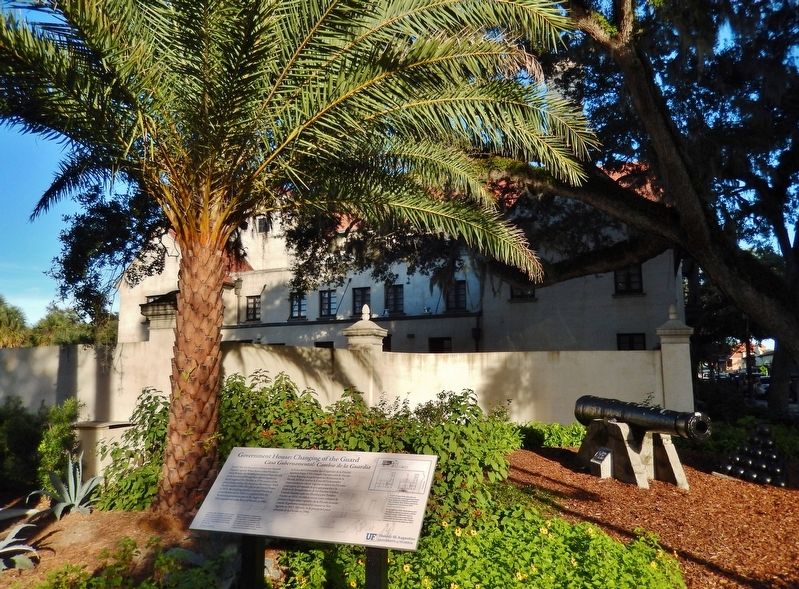
3. Government House: Changing of the Guard Marker (wide view; Government House in background)
Another marker is no longer nearby. Cordova Hotel/County Courthouse (was within shouting distance of this marker but has been confirmed missing).
More about this marker. Marker is a large rectangular composite plaque, mounted horizontally on waist-high metal posts.
Related markers. Click here for a list of markers that are related to this marker. Government House, St. Augustine, Florida
Also see . . . Government House. Since 1598, a government building has stood on this site with a view of the harbor landing, accommodating administrative headquarters and residences of colonial governors appointed by the Crowns of Spain, then Britain, then Spain again. After Spain ceded Florida to the United States in 1821, this current Government House
Photographed by Cosmos Mariner, December 12, 2018
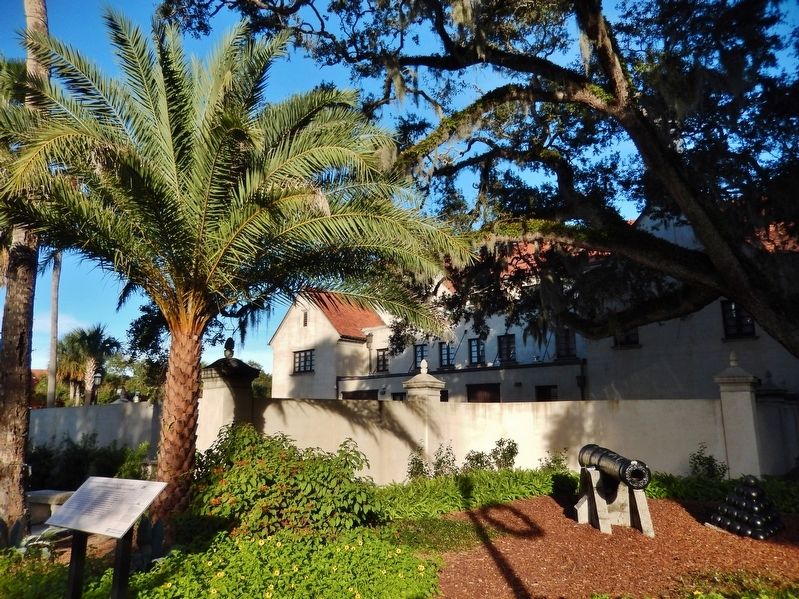
4. Government House (southwest corner view; marker visible on left)
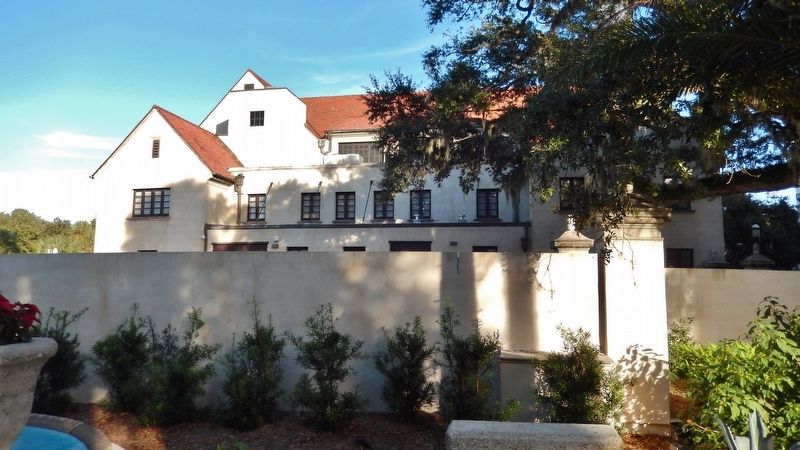
Photographed by Cosmos Mariner, December 12, 2018
5. Government House (south side view)
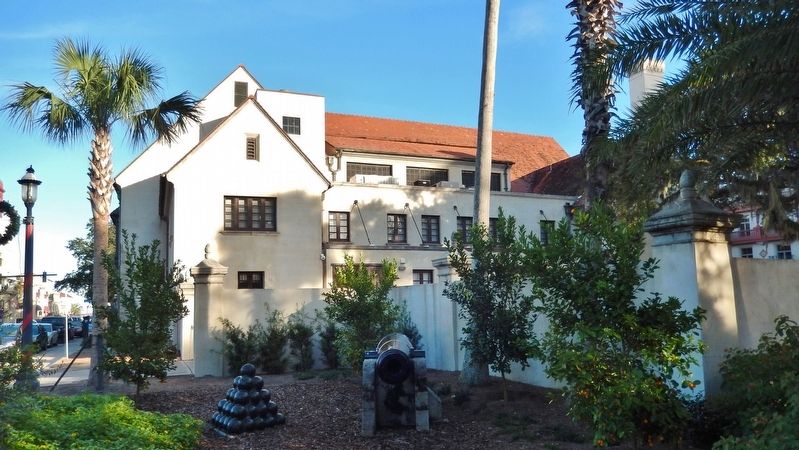
Photographed by Cosmos Mariner, December 12, 2018
6. Government House (northwest corner view; Cathedral Place on the left)
Credits. This page was last revised on July 30, 2026. It was originally submitted on December 16, 2018, by Cosmos Mariner of Cape Canaveral, Florida. This page has been viewed 399 times since then and 26 times this year. Last updated on January 3, 2019, by Byron Hooks of Sandy Springs, Georgia. Photos: 1. submitted on December 16, 2018, by Cosmos Mariner of Cape Canaveral, Florida. 2, 3, 4, 5, 6. submitted on December 17, 2018, by Cosmos Mariner of Cape Canaveral, Florida. • Andrew Ruppenstein was the editor who published this page.
