Agua Dulce in Los Angeles County, California — The American West (Pacific Coastal)
Toney Residence
Vasquez Rocks
Photographed by Craig Baker, May 11, 2019
1. Toney Residence Marker
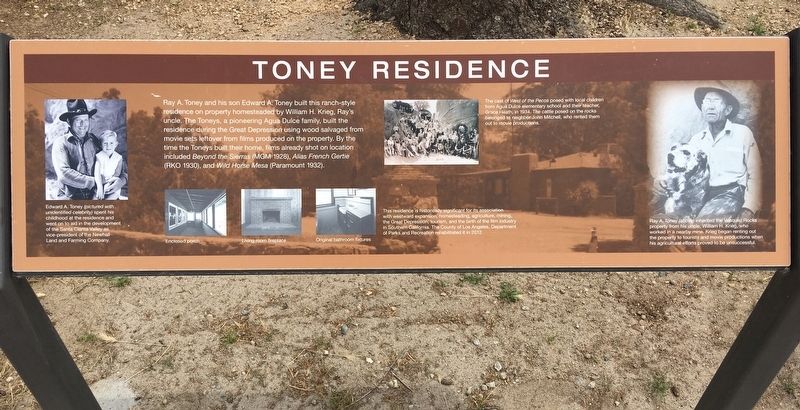
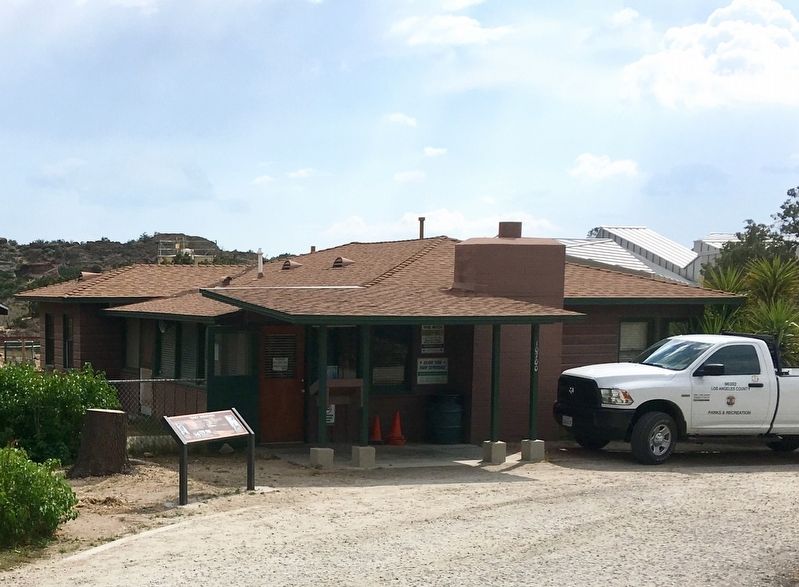
Ray A. Toney and his son Edward A. Toney built this ranch-style residence on property homesteaded by William H. Krieg, Ray's uncle. The Toneys, a pioneering Agua Dulce family, built the residence during the Great Depression using wood salvaged from movie sets leftover from films produced on the property. By the time the Toneys built their home, films already shot on location included Beyond the Sierras (MGM 1928), Alias French Gertie (RKO 1930), and Wild Horse Mesa (Paramount 1932).
This residence is historically significant for its association with westward expansion, homesteading, agriculture, mining, the Great Depression, tourism, and the birth of the film industry in Southern California. The County of Los Angeles, Department of Parks and Recreation rehabilitated it in 2012.
photo captions:
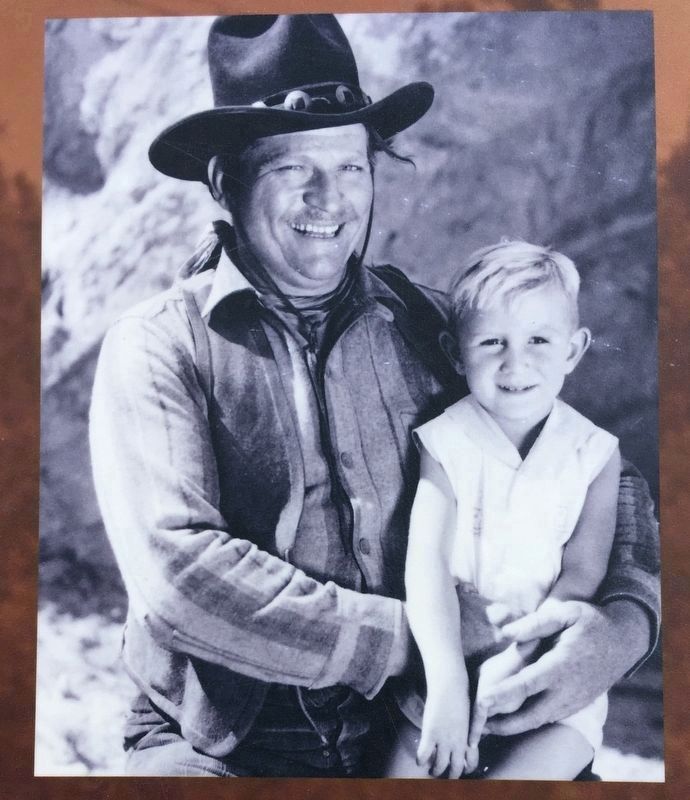
· Edward A. Toney (pictured with unidentified celebrity) spent his childhood at the residence and went on to aid in the development of the Santa Clarita Valley as vice-president of the Newhall Land and Farming Company.
· The cast of West of the Pecos posed with local children from Agua Dulce elementary school
this page online
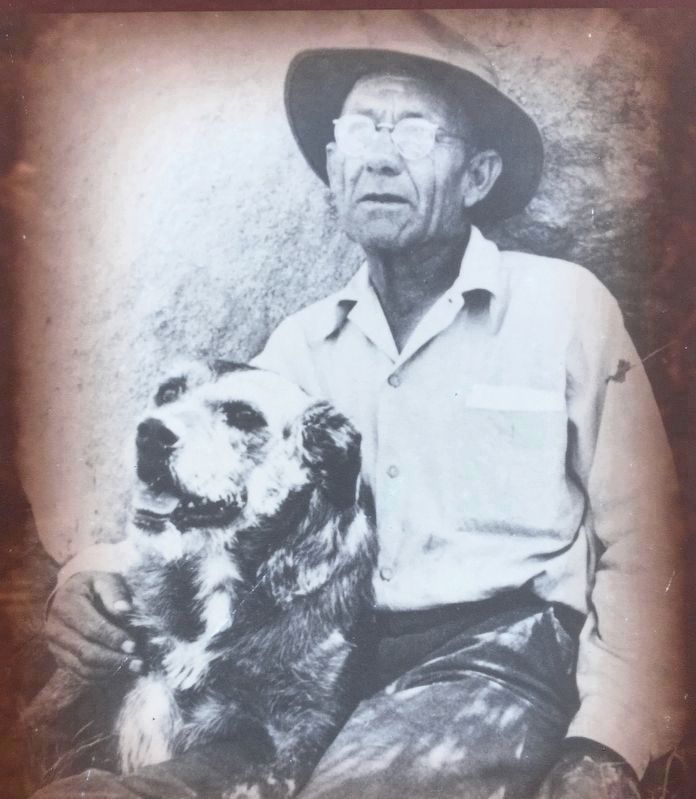
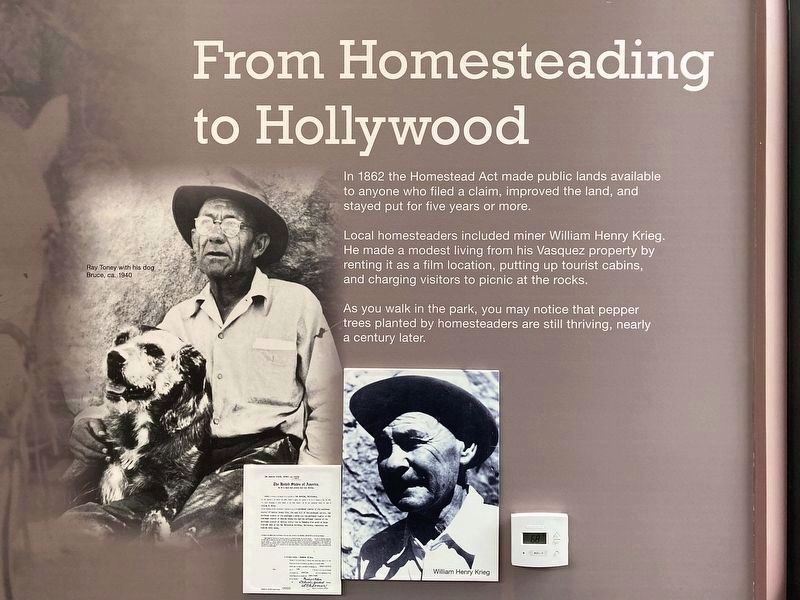
· Ray A. Toney (above) inherited the Vasquez Rocks property from his uncle, William H. Krieg, who worked in a nearby mine. Krieg began renting out the property to tourists and movie productions when his agricultural efforts proved to be unsuccessful.
Erected by County of Los Angeles Department of Parks and Recreation.
Topics. This historical marker is listed in these topic lists: Entertainment • Parks & Recreational Areas • Settlements & Settlers.
Location. 34° 29.324′ N, 118° 19.257′ W. Marker is in Agua Dulce, California, in Los Angeles County. It can be reached from Escondido Canyon Road half a mile east of Agua Dulce Canyon Road, on the right when traveling east. Touch for map. Marker is at or near this postal address: 10700 Escondido Canyon Road, Santa Clarita CA 91390, United States of America. Touch for directions.

Regionally, this marker is in Greater Los Angeles and in the Transverse Ranges. It is also
2. Edward A. Toney
Other nearby markers. At least 11 other markers are within walking distance of this marker: "Devil’s Punchbowl Wildlife" Mural (a few steps from this marker); The Village of Mapipinga (a few steps from this marker); Pacific Crest Trail (about 400 feet away, measured in a direct line); How Do We Know What We Know? (about 800 feet away); European Contact & the Spanish Era (approx. ¼ mile away); The Mexican & Early American Eras (approx. 0.3 miles away); Land and Industry (approx. 0.4 miles away); The Castle of Vasquez Rocks (approx. 0.6 miles away); The Krieg-Toney Family (approx. 0.6 miles away); Vasquez Rocks Becomes a Park (approx. 0.7 miles away); The Asher Family (approx. ¾ mile away). Touch for a list and map of all markers in Agua Dulce.
More about this marker. Located near the parking lot of Vasquez Rocks Interpretive Center.
Regarding Toney Residence. In
3. Ray A. Toney
The Toney Residence is now the park offices. The modern Interpretive Center is next door.
Also see . . .
1. Vasquez Rocks. Wikipedia entry (Submitted on September 14, 2026, by Larry Gertner of New York, New York.)
2. Wikipedia list of productions at Vasquez Rocks. Including Zoro, a character inspired by real-life bandit Tiburcio Vasquez, who hid in these rocks in the 1870s. (Submitted on May 12, 2019.)
Photographed by Craig Baker, May 11, 2019
4. Toney Residence and Marker
Photographed by Craig Baker, May 17, 2025
5. Additional Information
Display located inside the interpretive center.
Photographed by Craig Baker, May 11, 2019
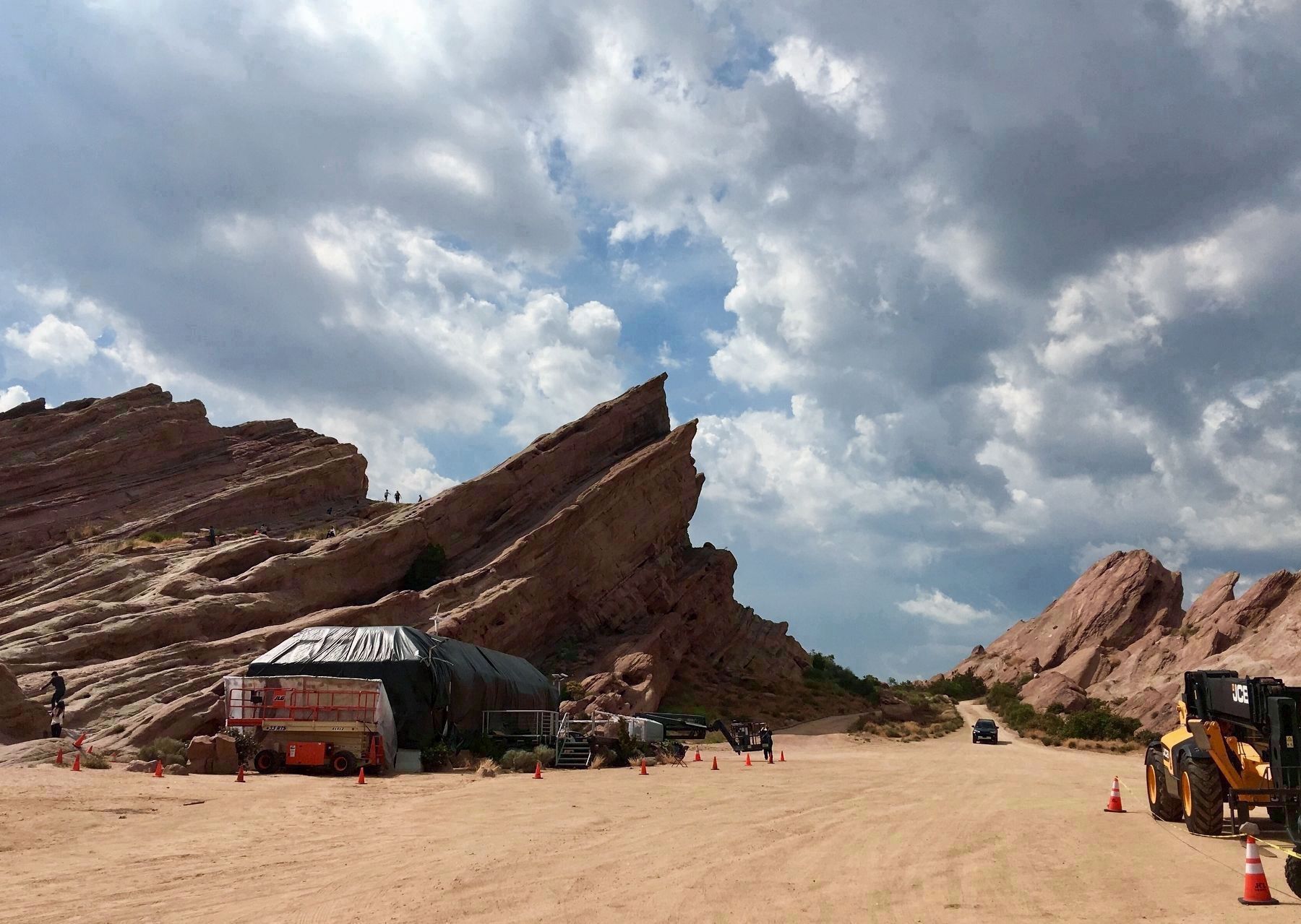
6. Vasquez Rocks
With film production equipment. This has been a popular filming location for nearly 100 years.
Credits. This page was last revised on September 14, 2026. It was originally submitted on May 12, 2019, by Craig Baker of Sylmar, California. This page has been viewed 778 times since then and 49 times this year. Photos: 1, 2, 3, 4. submitted on May 12, 2019, by Craig Baker of Sylmar, California. 5. submitted on May 28, 2025, by Craig Baker of Sylmar, California. 6. submitted on May 12, 2019, by Craig Baker of Sylmar, California. • Andrew Ruppenstein was the editor who published this page.
