Downtown in Knoxville in Knox County, Tennessee — The American South (East South Central)
Battery Wiltsie
Photographed by Cosmos Mariner, May 10, 2019
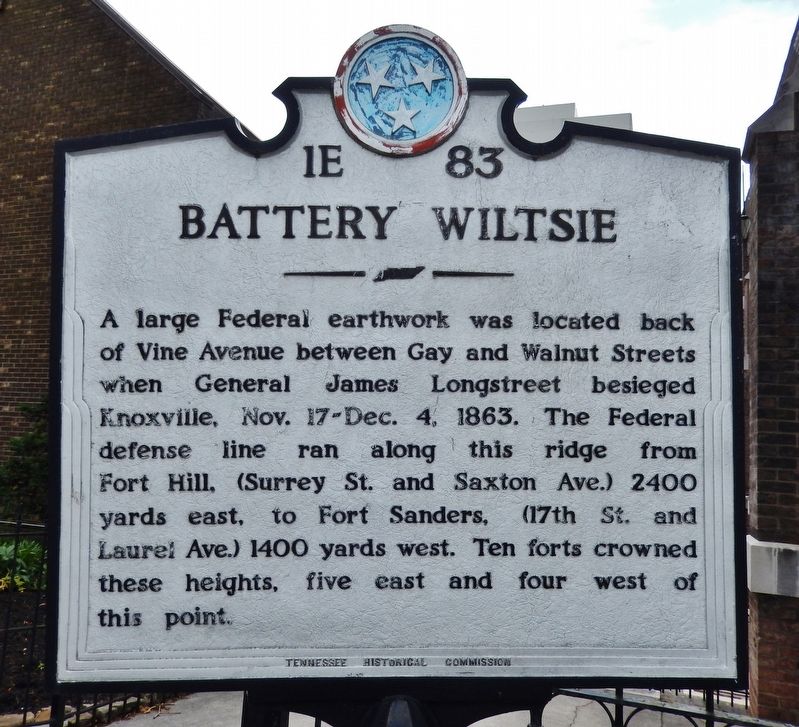
1. Battery Wiltsie Marker
A large Federal earthwork was located back of Vine Avenue between Gay and Walnut Streets when General James Longstreet besieged Knoxville, Nov. 17-Dec. 4, 1863. The Federal defense line ran along this ridge from Fort Hill, (Surrey St. and Saxton Ave.) 2400 yards east, to Fort Sanders, (17th St. and Laurel Ave.) 1400 yards west. Ten forts crowned these heights, five east and four west of this point.
Erected by Tennessee Historical Commission. (Marker Number 1E-83.)
Topics. This historical marker is listed in these topic lists: Forts and Castles • War, US Civil. A significant historical year for this entry is 1863.
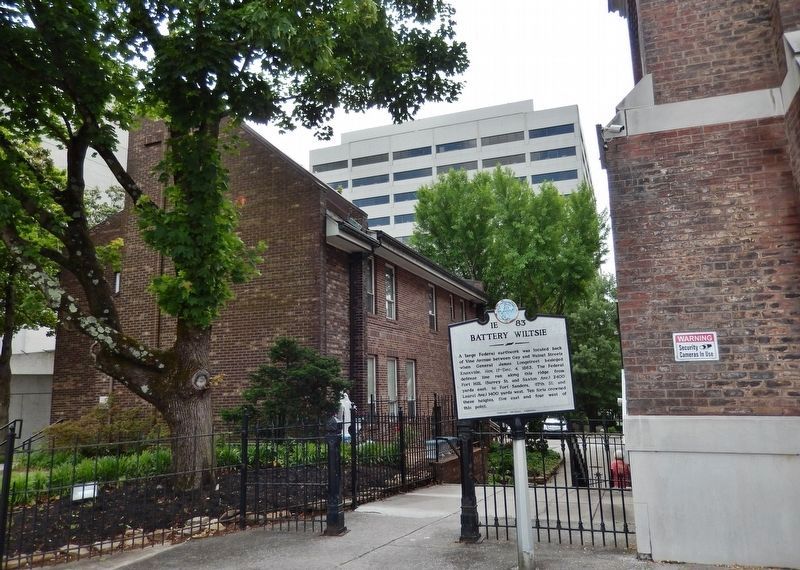
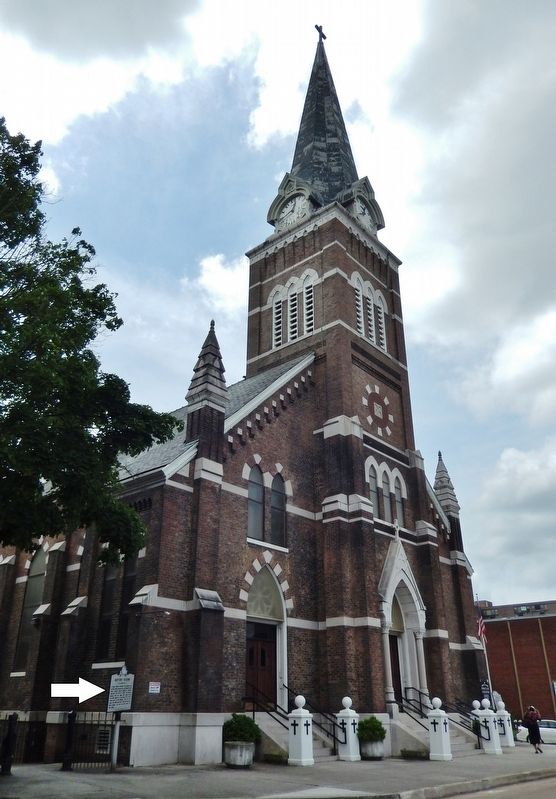
Location. 35° 58.027′ N, 83° 55.296′ W. Marker is in Knoxville, Tennessee, in Knox County. It is in Downtown. It is on West Vine Avenue east of Walnut Street, on the left when traveling west. Marker is located along the sidewalk, near the northeast corner of the Immaculate Conception of the Blessed Virgin Mary Catholic Church. Touch for map. Marker is at or near this postal address: 414 West Vine Avenue, Knoxville TN 37902, United States of America. Touch for directions.

Regionally, this marker is in East
this page online
Other nearby markers. At least 8 other markers are within walking distance of this marker: Father Abram J. Ryan (a few steps from this marker); Ted Burnett (about 300 feet away, measured in a direct line); Hubris Building (about 600 feet away); The Midday Merry-Go-Round (about 600 feet away); Uncle Dave Macon (about 600 feet away); Archie Campbell / Chet Atkins (about 600 feet away); Robert Birdwell (about 700 feet away); St. James Hotel (about 700 feet away). Touch for a list and map of all markers in Knoxville.
Regarding Battery Wiltsie. Named Battery Wiltsie in Government Order 37, 11 Dec 1863 (Army of the Ohio), after Captain Wendell D. Wiltsie, 20th Michigan Volunteer Infantry, who was mortally
Photographed by Cosmos Mariner, May 10, 2019
2. Battery Wiltsie Marker (wide view; Immaculate Conception Catholic Church is right of marker)
Battery Wiltsie was one of 20 named Union fortifications surrounding Knoxville, Tennessee (8 Forts and 12 Batteries) during the U.S. Civil War. The Battery was hastily established in 1863 to counter the Confederate threat to the city. Confederate forces attempted to capture the city in November-December 1863 and laid siege to the city. Large losses were sustained by Confederate forces who withdrew, lifting the siege. Battery Wiltsie was abandoned in 1865 at the end of the war.
Related markers. Click here for a list of markers that are related to this marker. The 1863 Siege of Knoxville
Also see . . . The Siege of Knoxville, November 4–December 14, 1863. American History Central website entry (Submitted on November 24, 2024, by Larry Gertner of New York, New York.)
Photographed by Cosmos Mariner, May 10, 2019
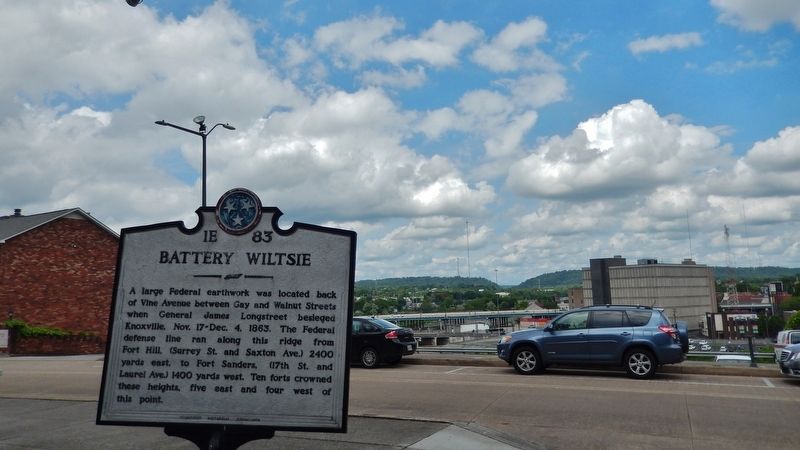
3. Battery Wiltsie Marker (view from back side of marker looking across West Vine Avenue)
Photographed by Cosmos Mariner, May 10, 2019
4. Battery Wiltsie Marker (tall view; marker visible on left side of church)
Credits. This page was last revised on November 24, 2024. It was originally submitted on May 15, 2019, by Cosmos Mariner of Cape Canaveral, Florida. This page has been viewed 1,393 times since then and 106 times this year. Photos: 1, 2, 3, 4. submitted on May 15, 2019, by Cosmos Mariner of Cape Canaveral, Florida.
