Near Redwood in Warren County, Mississippi — The American South (East South Central)
French Fort St. Pierre
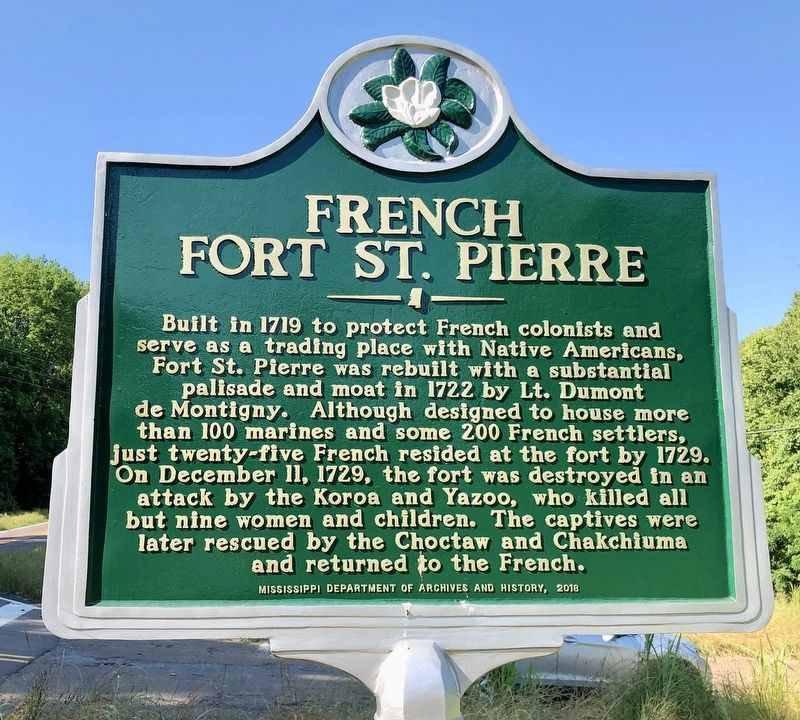
Photographed by Mark Hilton, May 15, 2019
1. French Fort St. Pierre Marker
Erected 2018 by the Mississippi Department of Archives and History.
Topics and series. This historical marker is listed in these topic lists: Forts and Castles • Indigenous Peoples and Communities. In addition, it is included in the Mississippi State Historical Marker Program series list. A significant historical date for this entry is December 11, 1729.
Location. 32° 29.687′ N, 90° 47.93′ W. Marker is near Redwood, Mississippi, in Warren County. It is on Mississippi Route 3 0.6 miles south of Mary Hearn Road, on the right when traveling south. Touch for map. Marker is in this post office area:
this page online

Regionally, this marker is in Natchez Trace Corridor and in Greater Jackson. It is also in the American South, specifically in the Deep South, in the Mississippi Delta, and in the Great River Road Region. Globally, it is in North America, a Gulf of Mexico state, the Western Hemisphere, the Western World, and the Anglosphere. Historically, it finds itself in what was once New Spain, the territory of the Mississippian Culture, one of the Confederate States of America, and the Antebellum South.
Other nearby markers. At least 8 other markers are within 8 miles of this marker, measured as the crow flies: Fort St. Peter (a few steps from this marker); Fort Snyder (a few steps from this marker); Snyder's Bluff (about 600 feet away, measured in a direct line); Haynes Bluff Mound (approx. 2.3 miles away); Steele's Bayou Expedition (approx. 6 miles away); Vick Graves (approx. 6.4 miles away); Chickasaw Bayou Battle (approx. 6.8 miles away); Kings School (approx. 7.9 miles away). Touch for a list and map of all markers in Redwood.
Another marker is no longer
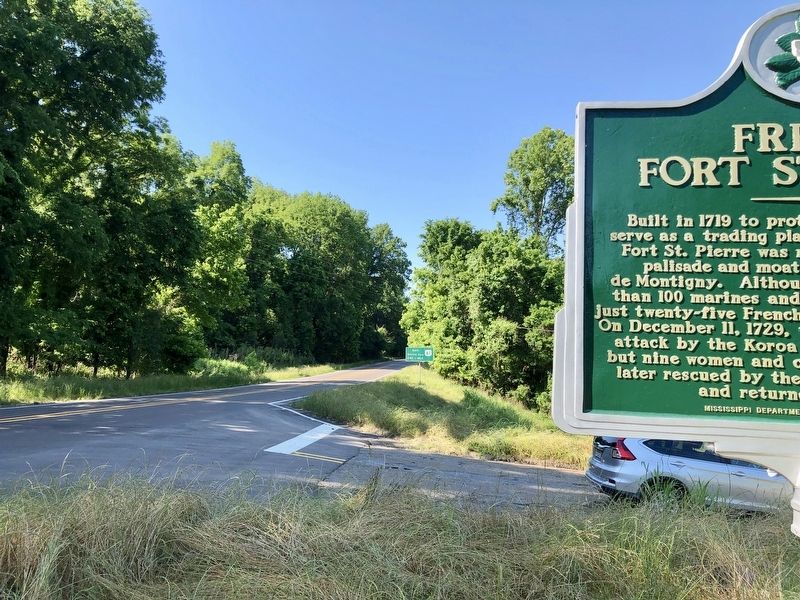
Photographed by Mark Hilton, May 15, 2019
2. The view south from marker on MS-3.
Regarding French Fort St. Pierre. A French post established in 1719 by four missionary priests from the Seminary of Quebec. Located on present day Snyder's Bluff in Warren County, Mississippi. Their leader was the Reverend Francis de Montigny. The fort and the farms established by the settlers expanded until there were a total of 16 farms associated with the post.
The post was abandoned in 1729 after all but four of the inhabitants were massacred by Yazoo Indians on 31 Dec 1729. Also known as Fort San Pierre, Fort St. Pierre des Yazous, Fort St. Claude. U.S. Civil War Confederate Fort Snyder was built on the site in 1862.
Also see . . . Wikipedia entry on Fort St. Pierre. (Submitted on May 16, 2019, by Mark Hilton of Montgomery, Alabama.)
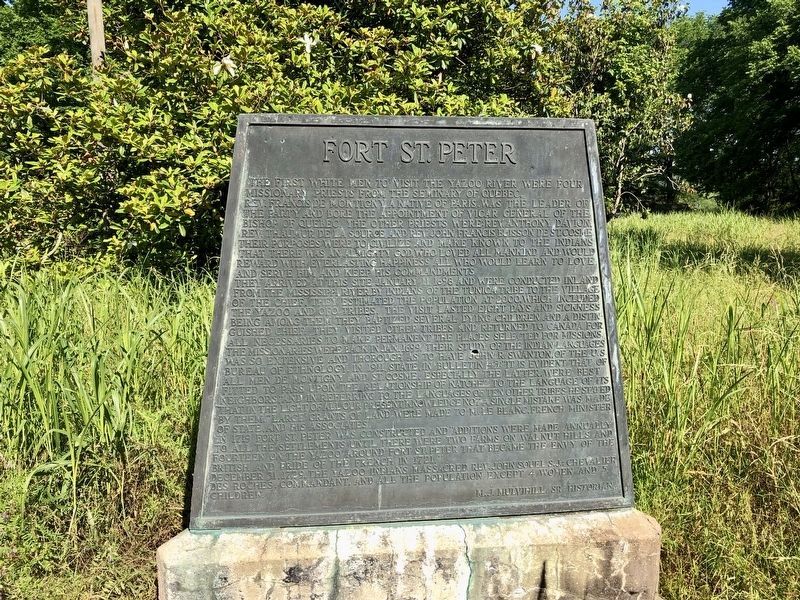
Photographed by Mark Hilton, May 15, 2019
3. Another nearby marker about Fort St. Pierre (Peter).
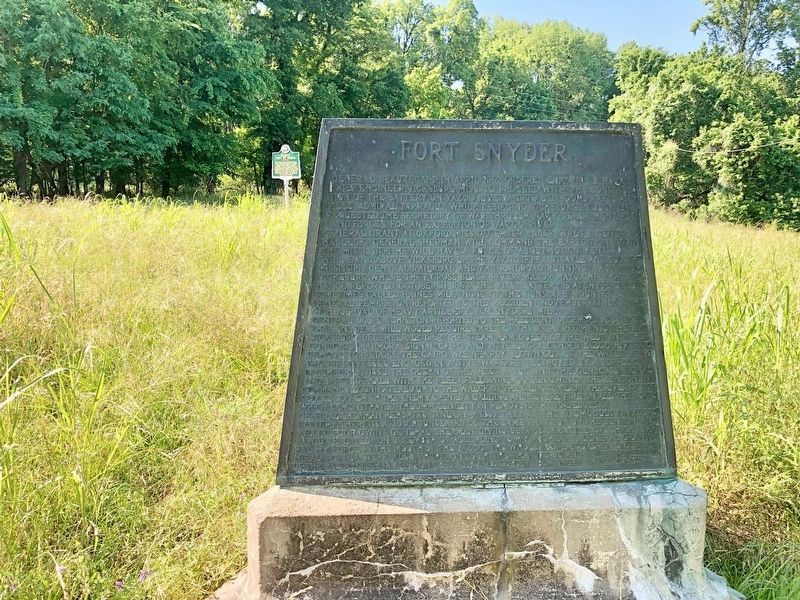
Photographed by Mark Hilton, May 15, 2019
4. During the Civil War, Fort Snyder (1862-1865) was later built here.
Fort Snyder was a Confederate earthworks fortification established in 1862 as a part of the defenses of Vicksburg. This fort was built on the site of the previous fortification, Fort St. Peter, at Snyder's Bluff overlooking the Yazoo River. Captured by Union forces in 1863, it was abandoned at the end of the Civil War in 1865.
Credits. This page was last revised on June 4, 2020. It was originally submitted on May 16, 2019, by Mark Hilton of Montgomery, Alabama. This page has been viewed 1,552 times since then and 116 times this year. Photos: 1, 2, 3, 4. submitted on May 16, 2019, by Mark Hilton of Montgomery, Alabama.
