Battery Park City in Manhattan in New York County, New York — The American Northeast (Mid-Atlantic)
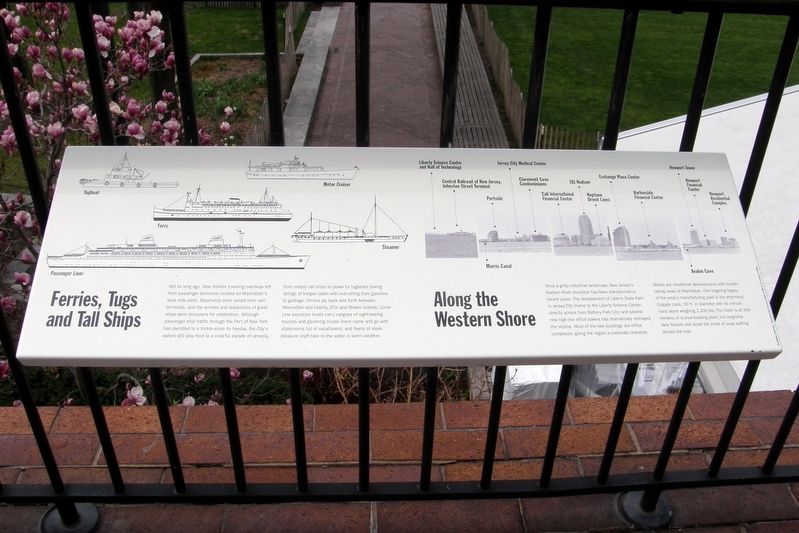
Ferries, Tugs and Tall Ships
⎯⎯⎯
Along the Western Shore
Photographed by Larry Gertner, April 12, 2019
1. Ferries, Tugs and Tall Ships/Along the Western Shore Marker
Left:
Ferries, Tugs and Tall Ships
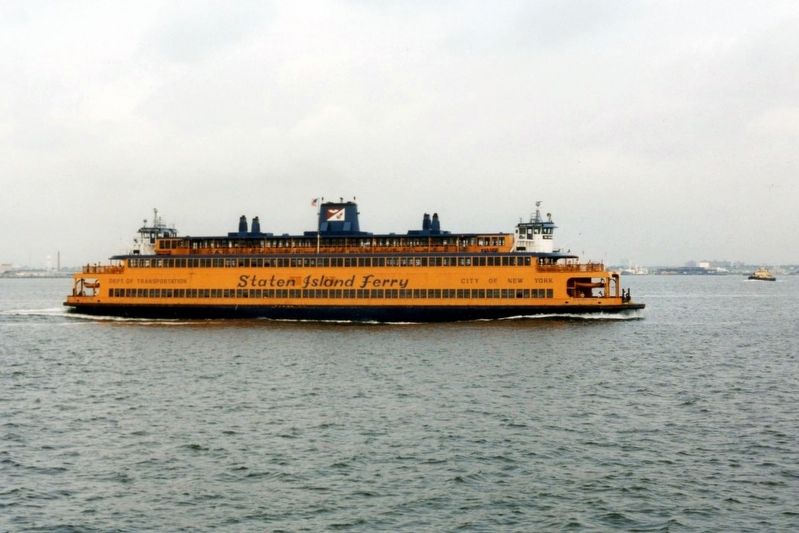
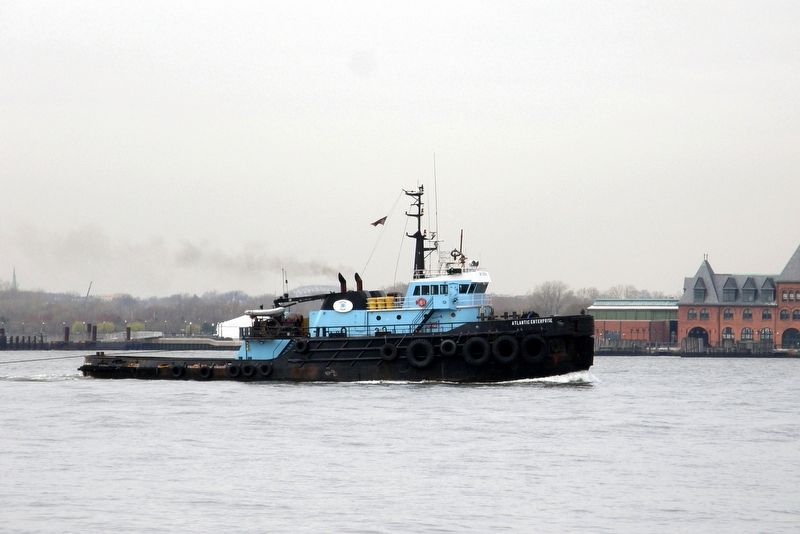
Not so long ago, New Yorkers travelling overseas left from passenger terminals located on Manhattan’s west side piers. Steamship lines owned their own terminals, and the arrivals and departures of great ships were occasions for celebration. Although passenger ship traffic through the Port of New York has dwindled to a trickle since its heyday, the city’s waters still play host to a colorful parade of vessels, from stately tall ships to powerful tugboats towing strings of barges laden with everything from gasoline to garbage. Ferries ply back and forth between Manhattan and Liberty, Ellis and Staten Island; Circle Line excursion boats carry cargos of sight-seeing tourists and gleaming cruise liners come and go with staterooms full of vacationers; and fleets of sleek pleasure craft take to the water in warm weather.
Right:
Along the Western Shore
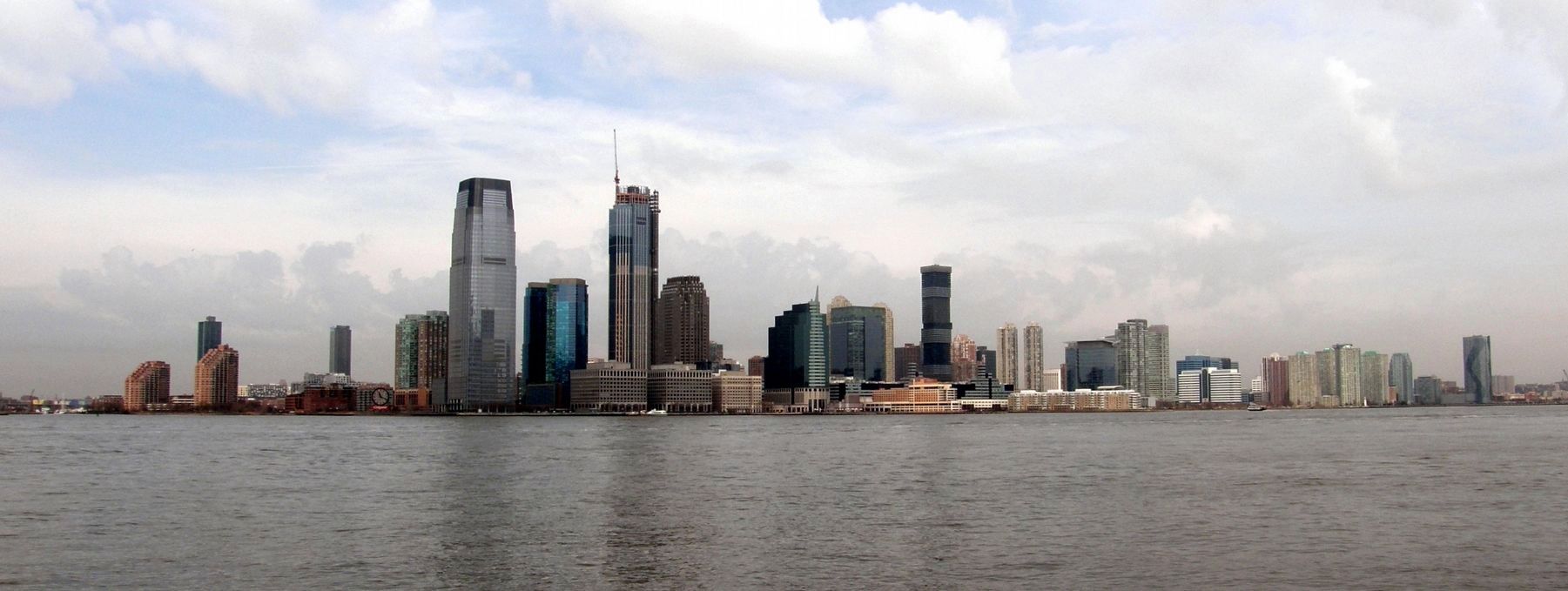
Once a gritty, industrial landscape, New Jersey’s Hudson River shoreline has been transformed in recent years. The development of Liberty State Park in Jersey City (home to the Liberty Science Center, directly across from Battery Park City) and several new high-rise office towers has dramatically reshaped the skyline. Most of the new buildings are office complexes, giving the region a corporate character. Others are residential developments with breath-taking
this page online
Topics. This historical marker is listed in these topic lists: Industry & Commerce • Waterways & Vessels.
Location. Marker has been permanently removed. It was located near 40° 42.311′ N, 74° 1.105′ W. Marker was in Manhattan, New York, in New York County. It was in Battery Park City. It could be reached from Battery Place near Robert F. Wagner Jr. Park, on the right when traveling south. The marker was one of four atop the viewing platform of the Robert J. Wagner Jr. Park pavilion. Touch for map. Marker was in this post office area: New York NY 10280, United States of America.
We have been informed that this marker is no longer there and will not be replaced. This page is an archival view of what was.
Regionally, this marker was in New York City. It was also in the American Northeast, in the Mid-Atlantic, and on the Eastern Seaboard. Globally, it was in the North Atlantic Region, North America, the Western Hemisphere, the Western World, and the Anglosphere. Historically, it found

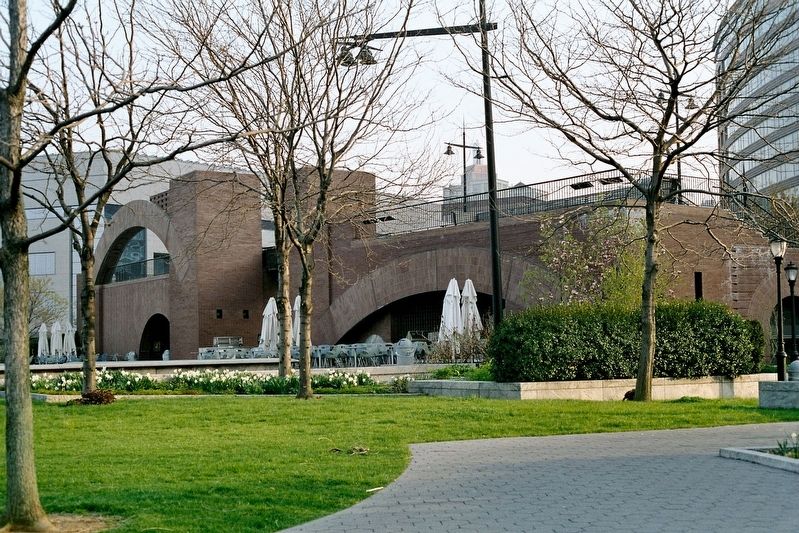
Photographed by Larry Gertner, March 27, 2016
2. Ferries, Tugs and Tall Ships/Along the Western Shore Marker site
Robert J. Wagner Jr. Park pavilion
The markers are visible along the viewing platform.
Other nearby markers. At least 8 other markers are within walking distance of this location: History of New Pier 1 (about 300 feet away, measured in a direct line); History of Pier A (about 400 feet away); American Merchant Mariners' Memorial (about 500 feet away); a different marker also named American Merchant Mariners' Memorial (about 500 feet away); Mother Cabrini (1850-1917) (about 500 feet away); a different marker also named New York Korean War Veterans Memorial (about 600 feet away); a different marker also named New York Korean War Veterans Memorial (about 600 feet away); Battery Park City Employees Memorial (about 600 feet away). Touch for a list and map of all markers in Manhattan.
Other markers no longer nearby. A Field Guide of New York Harbor/The Age of Sail (was here, next to this marker but has been permanently removed); Battery Timeline (was here, next to this marker but has been permanently removed); A Floating Metropolis / Sailings, Sightings and Special Events (was a few steps from this marker but has been permanently removed); Statue of Liberty / Ellis Island (was about 400 feet away but has been confirmed missing); New York Korean War Veterans Memorial (was about 600 feet away but has been replaced with another marker now near
Photographed by Larry Gertner, 1997
3. "Ferries"
The Governor Herbert H. Lehman
More about this marker. The entire park, including the pavilion, has been demolished as part of a global warming resiliency project.
Photographed by Larry Gertner, April 12, 2019
4. "Tugs"
Atlantic Enterprise
Photographed by Larry Gertner, January 5, 2014
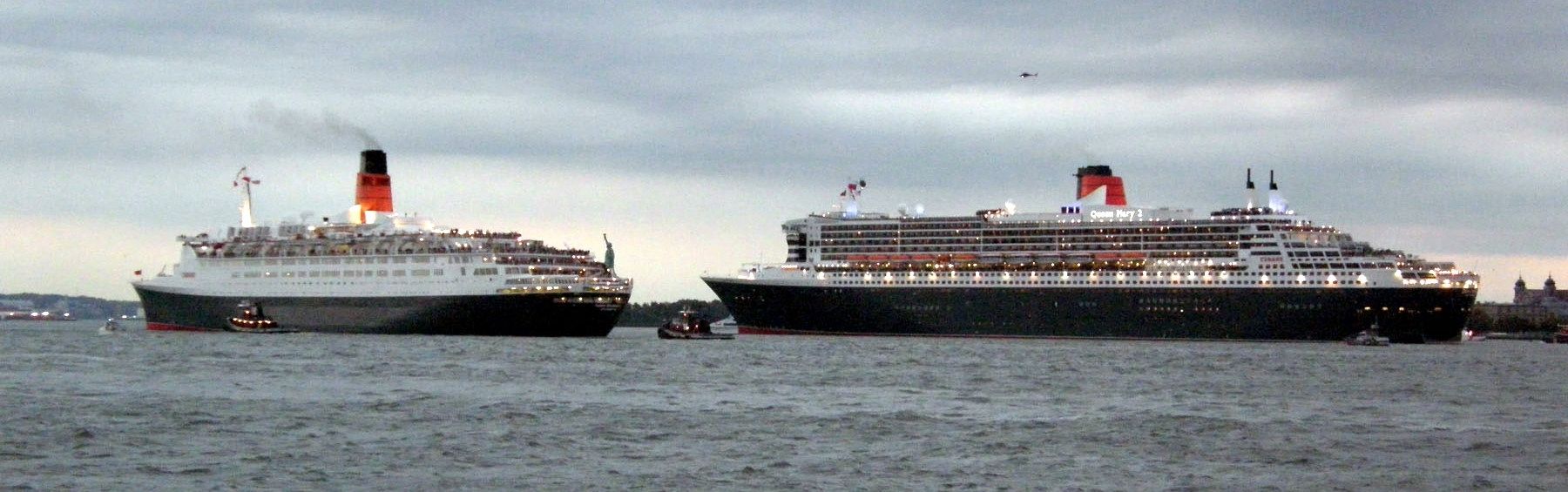
5. "Tall Ships", modern version
October 16, 2008 - Queen Elizabeth 2 (left) final departure from New York: Queen Mary 2 awaits her elder sister
Photographed by Larry Gertner, April 12, 2019
6. "Along the Western Shore"
The Jersey City skyline. For years, the building at center screen was the tallest one there. The Colgate Clock is visible to the left.
Photographed by Larry Gertner, May 31, 2019
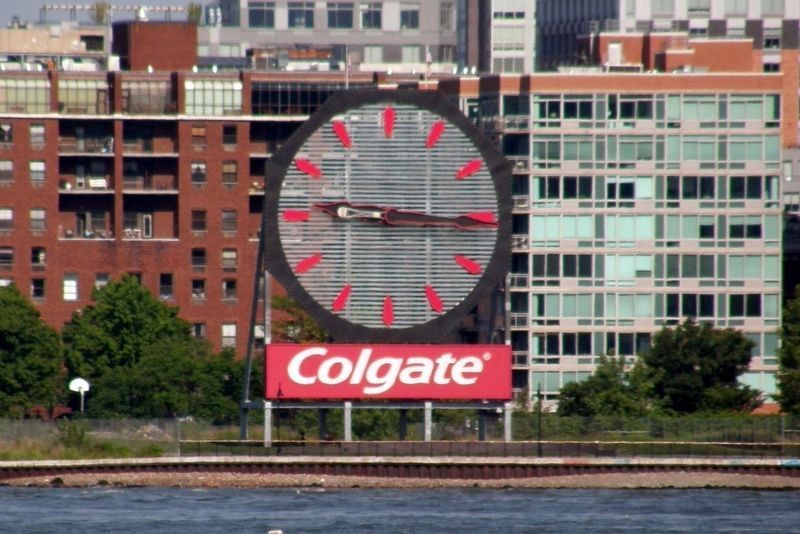
7. "Along the Western Shore"
The Colgate Clock
Photographed by Larry Gertner, September 27, 2017
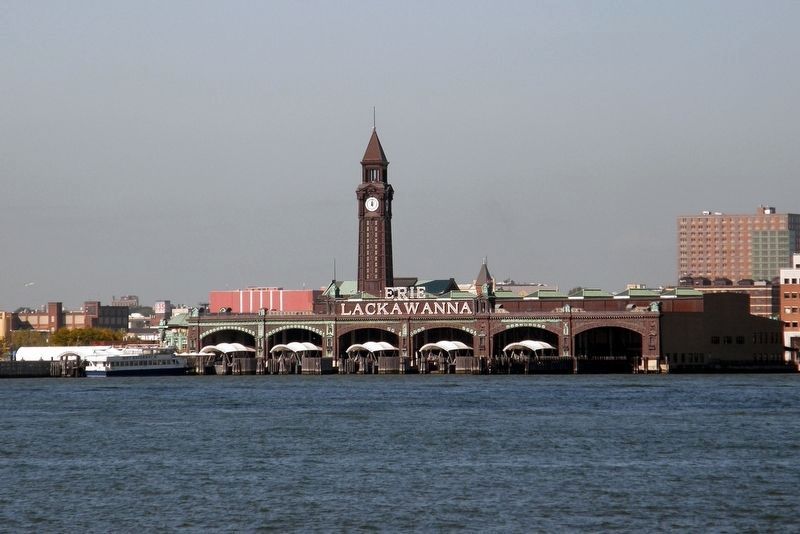
8. "Along the Western Shore"
Erie-Lackawanna Train and Ferry Terminal
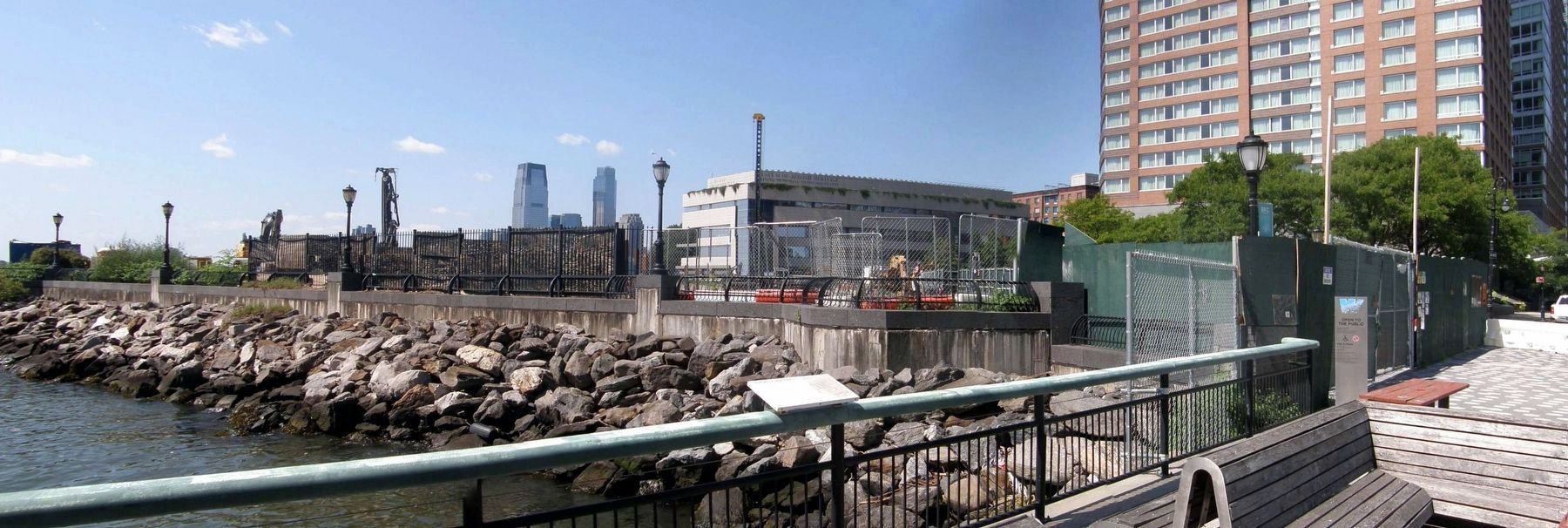
Photographed by Larry Gertner, September 3, 2023
9. Site of the former Robert J. Walker Jr. Park
Credits. This page was last revised on September 11, 2023. It was originally submitted on May 21, 2019, by Larry Gertner of New York, New York. This page has been viewed 232 times since then and 13 times this year. Photos: 1, 2, 3, 4, 5, 6. submitted on May 21, 2019, by Larry Gertner of New York, New York. 7, 8. submitted on June 1, 2019, by Larry Gertner of New York, New York. 9. submitted on September 11, 2023, by Larry Gertner of New York, New York. • Bill Pfingsten was the editor who published this page.
