Tehachapi in Kern County, California — The American West (Pacific Coastal)
The Kawaiisu
Tehachapi's Native American People
| — | Tomo-Kahni State Histori Park | — |
Photographed by Denise Boose, May 25, 2019
1. The Kawaiisu Marker
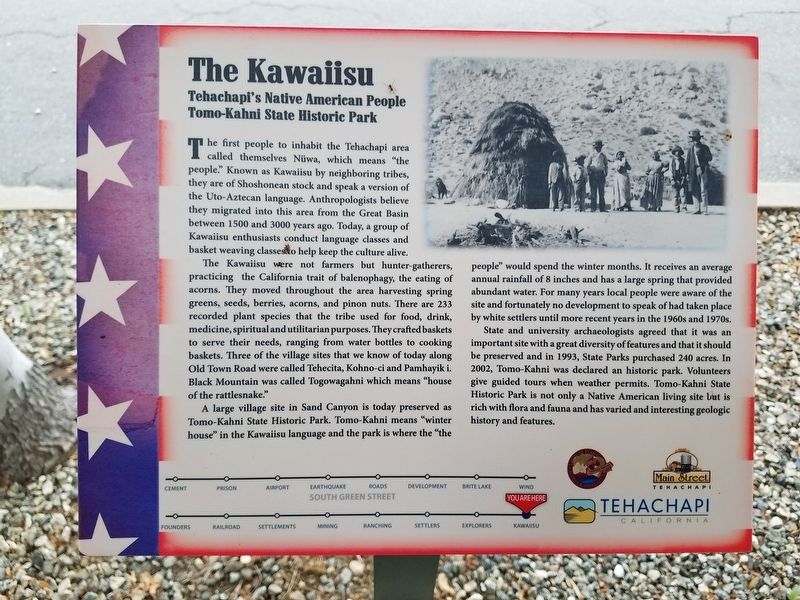
The first people to inhabit the Tehachapi area called themselves Nuwa, which means “the people.” Known as Kawaiisu by neighboring tribes, they are of Shoshonean stock and speak a version of Uto-Aztecan language. Anthropologists believe they migrated into this area from the Great Basin between 1500 and 3000 years ago. Today, a group of Kawaiisu enthusiasts conduct language classes and basket weaving classes to help keep the culture alive.
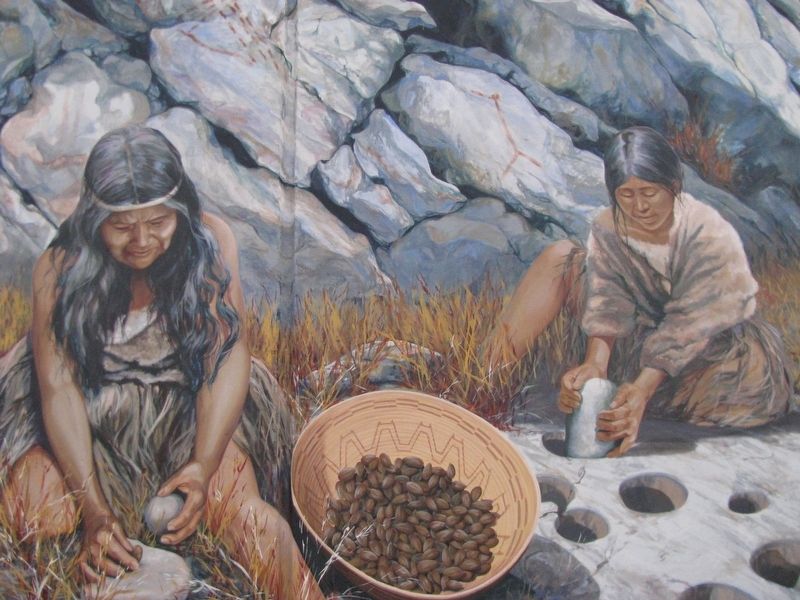
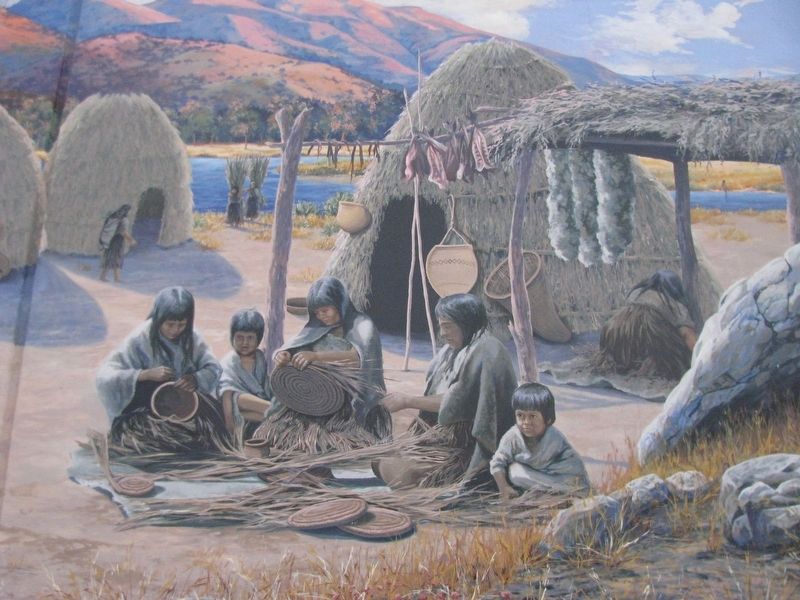
The Kawaiisu were not farmers both hunter-gatherers, practicing the California trait of balenophagy, the eating of acorns. They moved throughout the area harvesting spring greens, seeds, berries, acorns, and pinon nuts. There are 233 recorded plant species that the tribe used for food, drink, medicine, spiritual and utilitarian purposes. They crafted baskets to serve their needs, ranging from water bottles to cooking baskets. Three of the village sites that we know of today along Old Town Road were called Tehecita, Kohno-ci and Pamhayik i. Black Mountain was called Togowagahni which means “house of the rattlesnake.”
A larger village site in Sand Canyon is today preserved at Tomo-Kahni
this page online
State and university archaeologist agreed that it was an important site with a great diversity of features and that it should be preserved and in 1993, State Parks purchased 240 acres. In 2002, Tomo-Kahni was declared an historic park. Volunteers give guided tours when weather permits. Tomo-Kahni State Historic Park is not only a native American living site but is rich with flora and fauna and has varied and interesting geologic history and features.
Erected by Main Street Tehachapi, Tehachapi Heritage League and The City of Tehachapi.
Topics. This historical marker is listed in these topic lists: Indigenous Peoples and Communities • Settlements & Settlers. A significant historical year for this entry is 1500.
Location. 35° 7.771′ N,
Photographed by Denise Boose, May 25, 2019
2. The Kawaiisu Marker

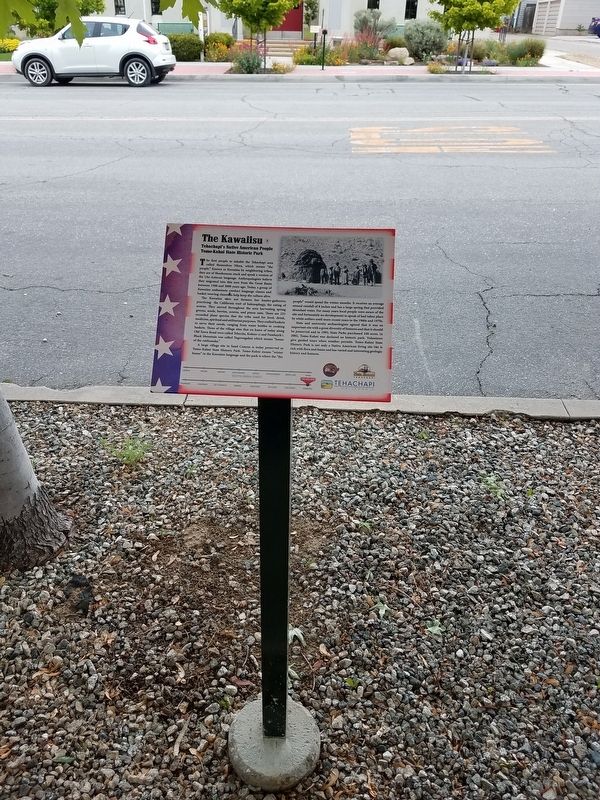
Regionally, this marker is in California’s San Joaquin Valley, specifically in the Central Valley, and in the Sierra Nevada. It is also on the American Pacific Coast. Globally, it is in North America, on the Ring of Fire, on the Pacific Rim, in the Western Hemisphere, in the Western World, and in the Anglosphere. Historically, it finds itself in what was once New Spain and also Mexico’s Alta California.
Other nearby markers. At least 8 other markers are within walking distance of this marker: Errea House (here, next to this marker); Wind Energy Industry (a few steps from this marker); The Tehachapi Museum (a few steps from this marker); a different marker also named Tehachapi Museum (a few steps from this marker); Early Explorers in the Tehachapi Area (within shouting distance of this marker); Importance of Water and Creation of Brite Lake
Photographed by Denise Boose, February 18, 2012
3. The People of Mountain Mural
Another marker is no longer nearby. McFarland House & Late 1880s House (was within shouting distance of this marker but has been confirmed missing).
Photographed by Denise Boose, February 18, 2012
4. The People of Mountain Mural
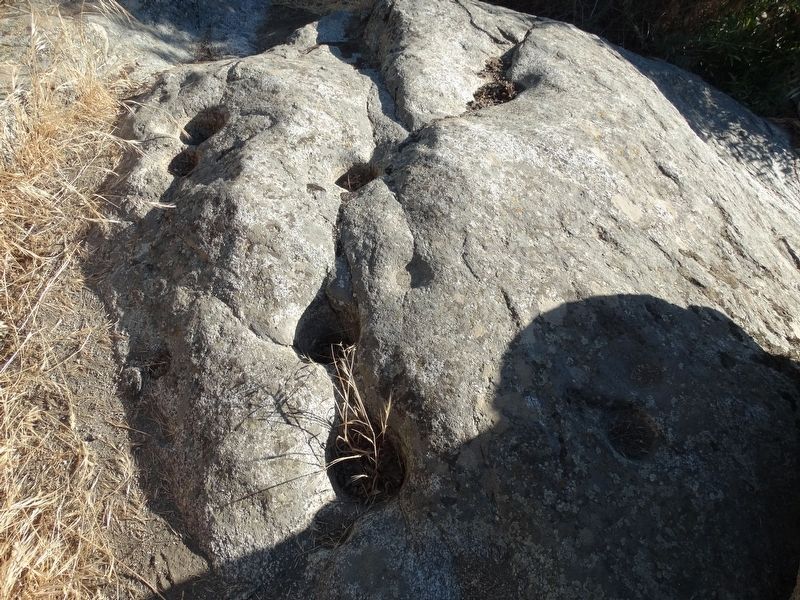
Photographed by Denise Boose, June 20, 2014
5. Kawaiisu grinding rock
Credits. This page was last revised on August 2, 2025. It was originally submitted on May 29, 2019, by Denise Boose of Tehachapi, California. This page has been viewed 1,957 times since then and 109 times this year. Photos: 1, 2, 3, 4, 5. submitted on May 29, 2019, by Denise Boose of Tehachapi, California. • Andrew Ruppenstein was the editor who published this page.
