Fort Recovery in Mercer County, Ohio — The American Midwest (Great Lakes)
Battle of Fort Recovery
Photographed by Dale K. Benington, July 15, 2019
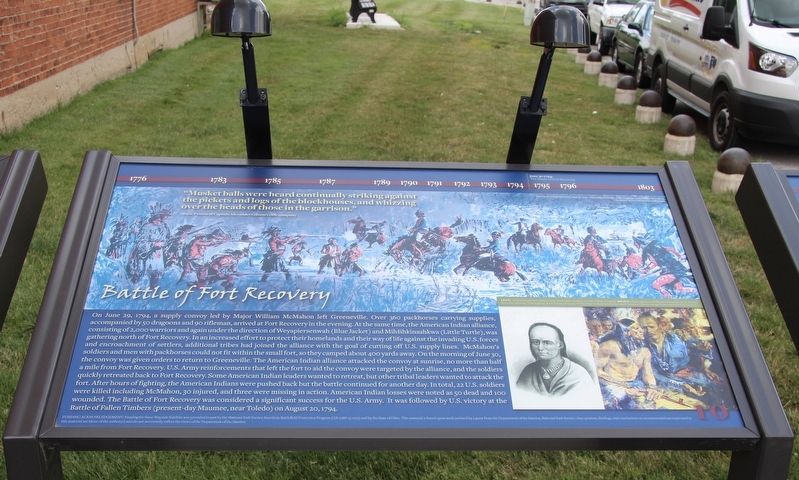
1. Battle of Fort Recovery Marker
Isaac Paxton of Captain Alexander Gibson's rifle company
On June 29, 1794, a supply convoy led by Major William McMahon left Greeneville. Over 360 packhorses carrying supplies, accompanied by 50 dragoons and 90 rifleman, arrived at Fort Recovery in the evening. At the same time, the American Indian alliance, consisting of 2,000 warriors and again under the direction of Weyapiersenwah (Blue Jacket) and Mihšihkinaahkwa (Little Turtle), was gathering north of Fort Recovery. In an increased effort to protect their homelands and their way of life against the invading U.S. forces and encroachment of settlers, additional tribes had joined the alliance with the goal of cutting off U.S. supply lines. McMahon's soldiers and men with packhorses could not fit within the small fort, so they camped about 400 yards away. On the morning of June 30, the convoy was given orders to return to Greeneville. The American Indian alliance attacked the convoy at sunrise, no more than half a mile
this page online
Erected by National Park Service American Battlefield Protection Program and the State of Ohio. (Marker Number 10.)
Topics. This historical marker is listed in these topic lists: Forts and Castles • Indigenous Peoples and Communities • Wars, US Indian. A significant historical date for this entry is June 30, 1794.
Location. 40° 24.855′ N, 84° 46.776′ W. Marker is in Fort Recovery, Ohio, in Mercer County.
Photographed by Dale K. Benington, July 15, 2019
2. Battle of Fort Recovery Marker
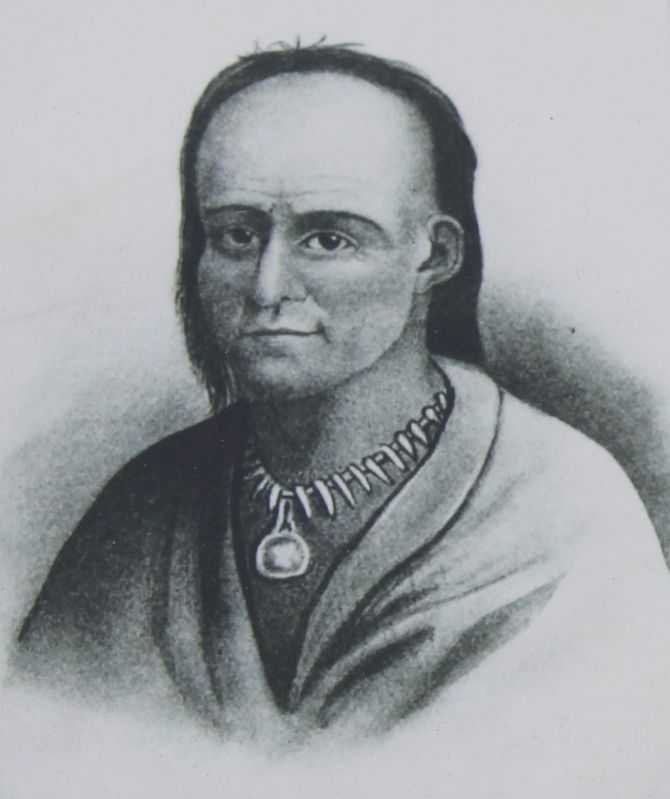
Close-up view of the portrait of Little Turtle that is displayed on this marker. The caption for this portrait reads: Mihšihkinaahkwa (Miami war chief Little Turtle). Credit: Public Domain.

Regionally, this marker is in Ohio’s Till Plains. It is also in the American Midwest and in the Corn Belt. Globally, it is in North America, the Western Hemisphere, the Western World, and the Anglosphere. Historically, it finds itself in what was once the Haudenosaunee (Iroquois) Confederacy, the territory of the Mississippian Culture, and the Northwest Territory.
Other nearby markers. At least 8 other markers are within walking distance of this marker: Locating the Fort (here, next to this marker); Building Fort Recovery (here, next to this marker); a different marker also named The Battle of Fort Recovery (within shouting distance of this marker); The Role of Women in the Battle (within
Photographed by Dale K. Benington, July 15, 2019
3. Battle of Fort Recovery Marker
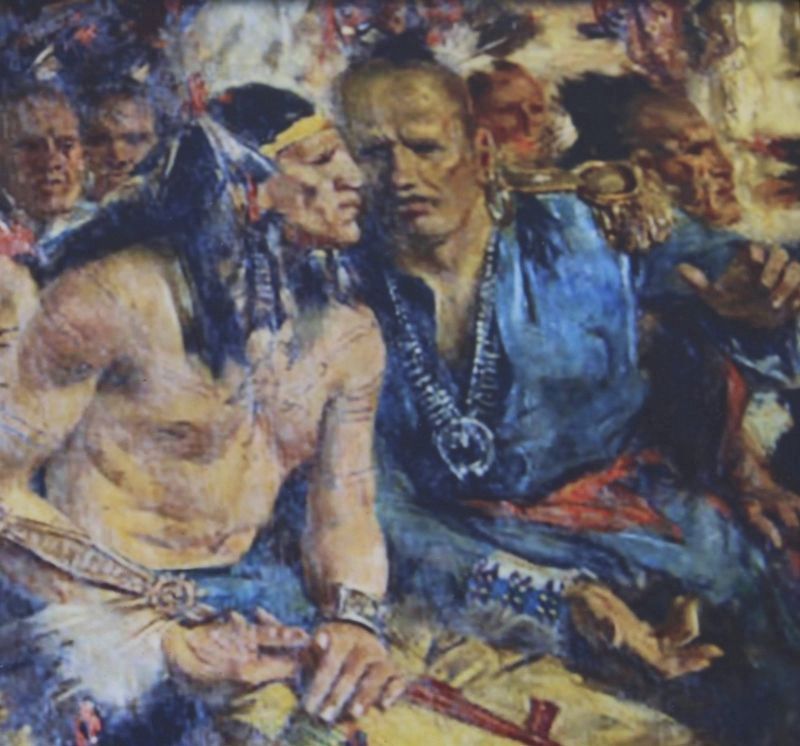
Close-up view of a painting of Blue Jacket that is displayed on this marker. The caption for this painting reads: Close-up view of Weyapiersenwah (Blue Jacket) from the painting "The Signing of the Treaty of Greene Ville, 1795" as depicted by Howard Chandler Christy. Image from Ohio History Central.
Another marker is no longer nearby. Background of the Log Home and Original Owners (was within shouting distance of this marker but has been permanently removed).
Photographed by Dale K. Benington, July 15, 2019
4. Battle of Fort Recovery Marker
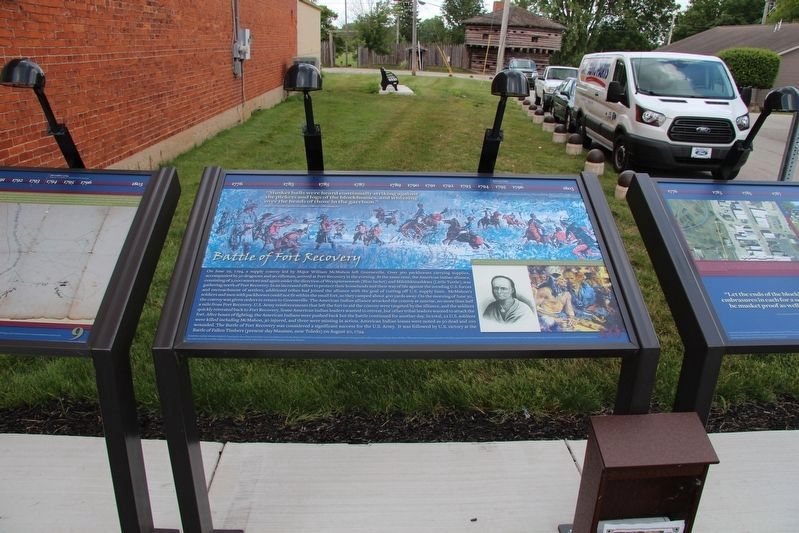
View of the marker looking west. In the distant background can be seen the reproduction of one of the Fort Recovery block houses, at the state historic site.
Photographed by Dale K. Benington, July 15, 2019
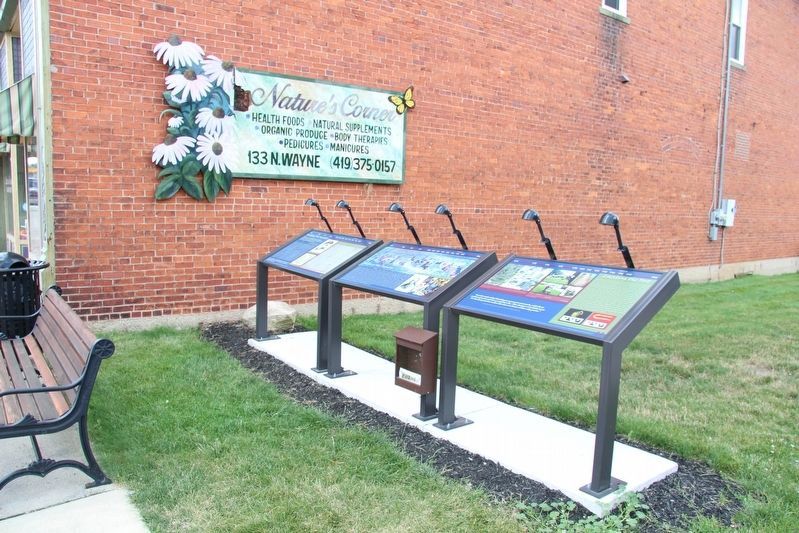
5. Battle of Fort Recovery Marker
View of a cluster of three markers. The featured marker is the one situated in the middle of the cluster.
Photographed by Dale K. Benington, July 15, 2019
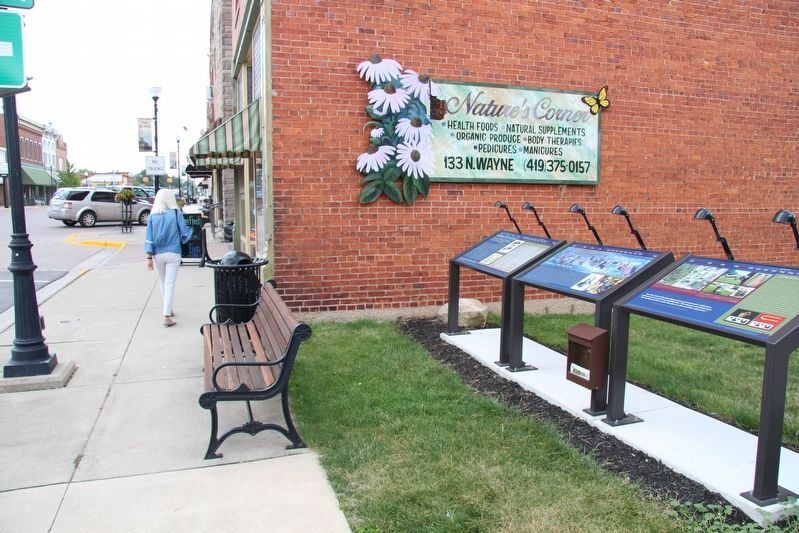
6. Battle of Fort Recovery Marker
View of the markers, looking south along Wayne Street.
Credits. This page was last revised on August 4, 2019. It was originally submitted on August 4, 2019, by Dale K. Benington of Toledo, Ohio. This page has been viewed 749 times since then and 68 times this year. Photos: 1, 2, 3, 4, 5, 6. submitted on August 4, 2019, by Dale K. Benington of Toledo, Ohio.
