Downtown in Baton Rouge in East Baton Rouge Parish, Louisiana — The American South (West South Central)
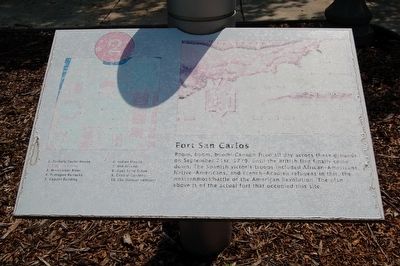
Fort San Carlos
Photographed by Cajun Scrambler, August 14, 2015
1. Fort San Carlos Marker
Boom, boom, boom! Cannon fired all day across these grounds on September 21st, 1779, until the British flag finally came down. The Spanish victor's troops included African-Americans, Native-Americans, and French-Acadian refugees, in this, the westernmost battle of the American Revolution. The plan above is of the actual fort that occupied the site. (Marker Number 2.)
Topics. This historical marker is listed in these topic lists: African Americans • Forts and Castles • Indigenous Peoples and Communities • War, US Revolutionary. A significant historical month for this entry is September 1858.
Location. 30° 27.281′ N, 91° 11.371′ W. Marker is in Baton Rouge, Louisiana, in East Baton Rouge Parish. It is in Downtown. It can be reached from the intersection of North 3rd Street and Spanish Town Road, on the left when traveling north. Touch for map. Marker is at or near this postal address: 900 N 3rd St, Baton Rouge LA 70802, United States of America. Touch for directions.

Regionally, this marker is in Louisiana’s Florida Parishes. It is also in the American South, specifically in the Deep South, and in the Great River
this page online
Other nearby markers. At least 8 other markers are within walking distance of this marker: A different marker also named Fort San Carlos (a few steps from this marker); Sigma Iota (a few steps from this marker); The Mississippi River (within shouting distance of this marker); Fort Baton Rouge (within shouting distance of this marker); The Amédé Ardoin Lemon Tree (within shouting distance of this marker); Pentagon Barracks (within shouting distance of this marker); Bogalusa to Baton Rouge March (about 300 feet away, measured in a direct line); Pentagon Buildings (about 400 feet away). Touch for a list and map of all markers in Baton Rouge.
More about this marker. Marker is number 2 of 10 of a series of walking tour markers on the Louisiana State Capitol grounds.
Regarding Fort San Carlos. (1779-1794,
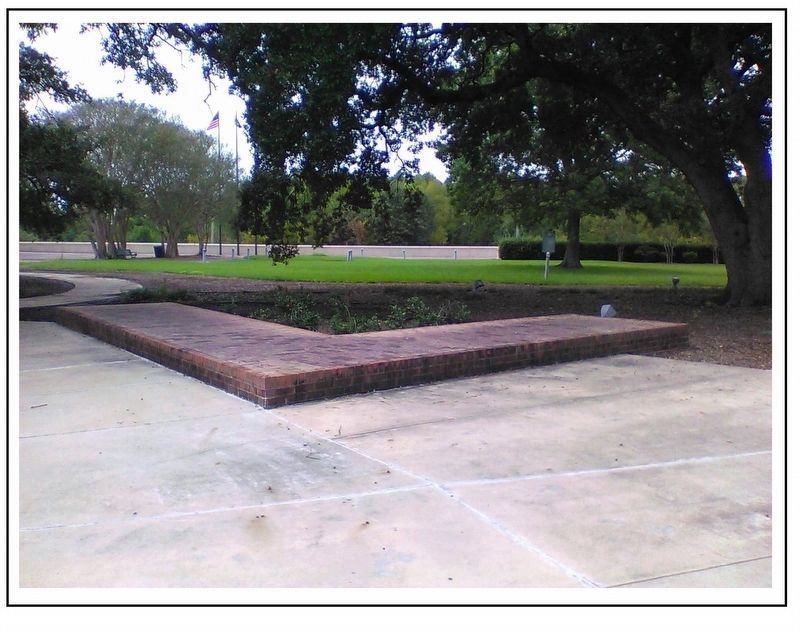
Photographed by Kenneth Ramagost, September 29, 2018
2. Fort San Carlos Marker
Eastern point of Fort San Carlos. See Google Map link Item 2 for overhead view.
Related markers. Click here for a list of markers that are related to this marker. To better understand the relationship, study each marker in the order shown.
Also see . . .
1. Fort New Richmond. Wikipedia (Submitted on August 23, 2015.)
2. Eastern half of fort San Carlos in bricks with the point of the fort viewable. Google
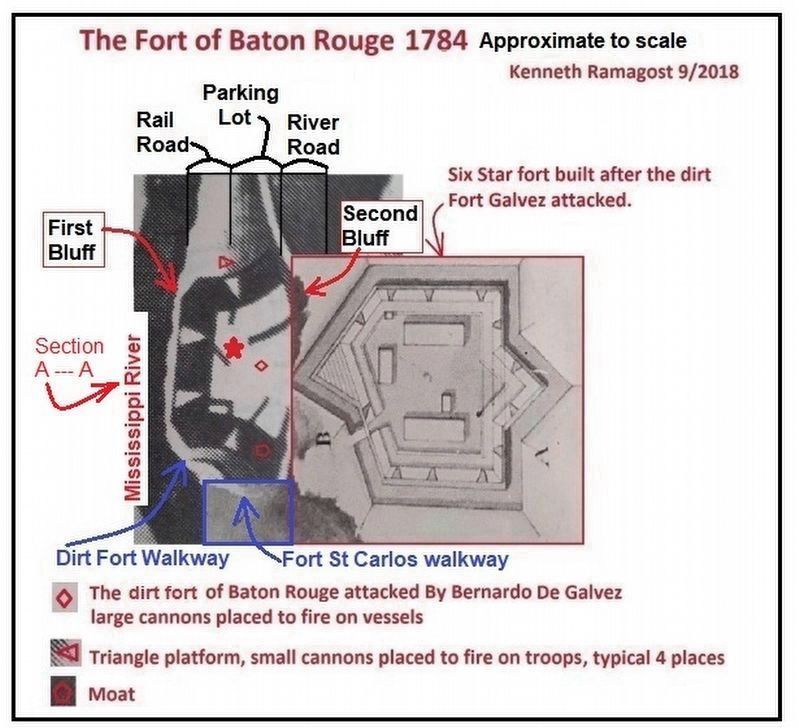
Photographed by Kenneth Ramagost
3. Fort San Carlos Marker
Location of the dirt fort, The Fort of Baron Rouge with respect to Fort San Carlos. Note the dirt fort was located in the parking lot across the River Road from Fort San Carlos. The dirt fort is overlaid on Fort San Carlos and the right walkways to the Mississippi River were matched in the blue square for magnitude scaling and location of both forts. See Google Map link Item 2 for overhead view.
3. Pentagon Barracks. Excavation of Pentagon Barracks and Fort San Carlos with artifacts. (Submitted on March 24, 2019, by Kenneth Ramagost of Louisiana, USA.)
4. W. Florida Republic. History of Fort San Carlos and West Florida Republic (Submitted on March 26, 2019, by Kenneth Ramagost of Louisiana, USA.)
5. Spain and the American Revolution. Museum of the American Revolution website entry (Submitted on November 1, 2022, by Larry Gertner of New York, New York.)
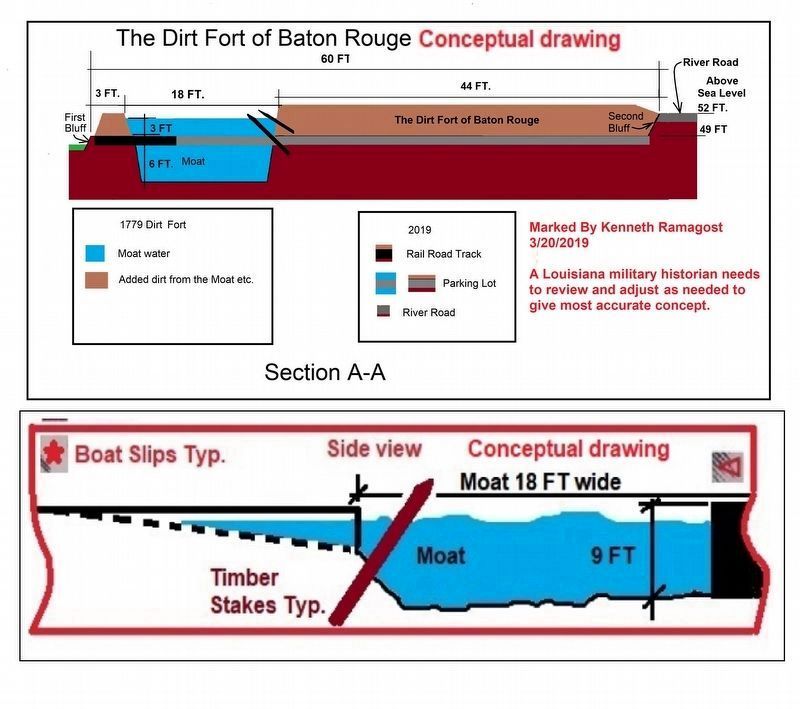
Photographed by Kenneth Ramagost
4. Fort San Carlos Marker
My concept drawings of a side view of the dirt fort Bernardo De Galvez attacked in the Revolutionary War and concept drawing of the boat slips in the dirt fort.
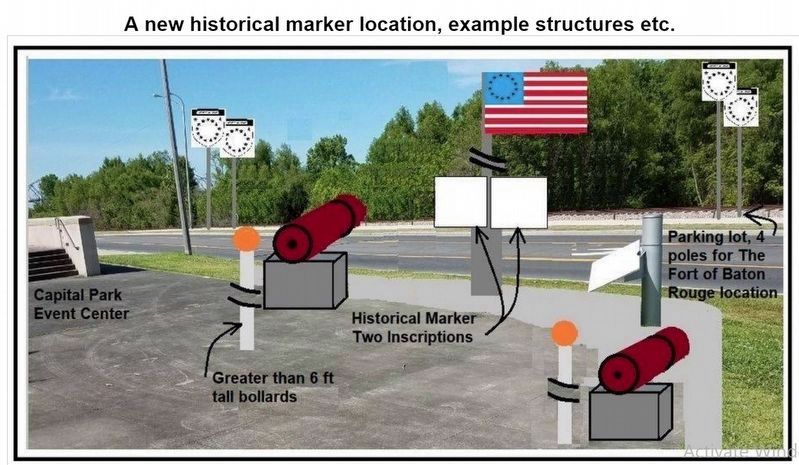
Photographed by Kenneth Ramagost
5. Example Historical Marker for The Fort of Baton Rouge
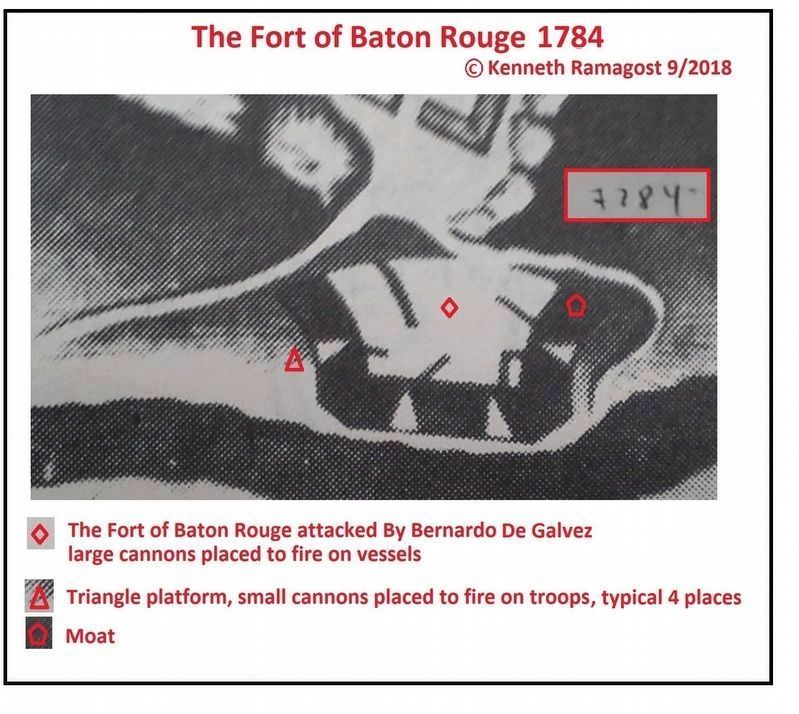
Photographed by Kenneth Ramagost, May 5, 2018
6. The Fort of Baton Rouge referenced to in the inscription.
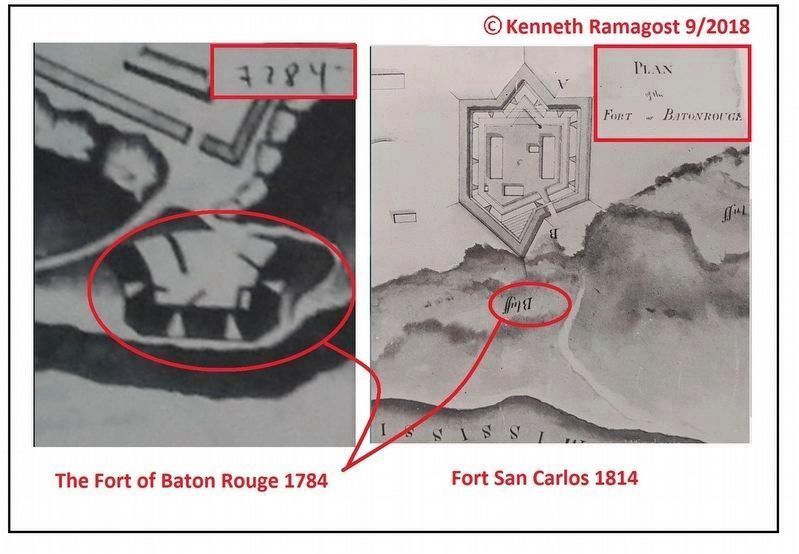
Photographed by Kenneth Ramagost, March 29, 2018
7. Fort San Carlos refering "the Fort of Baton Rouge" location
Credits. This page was last revised on August 7, 2025. It was originally submitted on August 22, 2015. This page has been viewed 2,933 times since then and 163 times this year. Last updated on August 28, 2019. Photos: 1. submitted on August 22, 2015. 2. submitted on October 26, 2018, by Kenneth Ramagost of Louisiana, USA. 3, 4. submitted on March 21, 2019, by Kenneth Ramagost of Louisiana, USA. 5. submitted on August 28, 2019, by Kenneth Ramagost of Louisiana, USA. 6, 7. submitted on September 10, 2018, by Kenneth Ramagost of Louisiana, USA. • Bill Pfingsten was the editor who published this page.
