
Museum District in Richmond, Virginia — The American South (Mid-Atlantic)
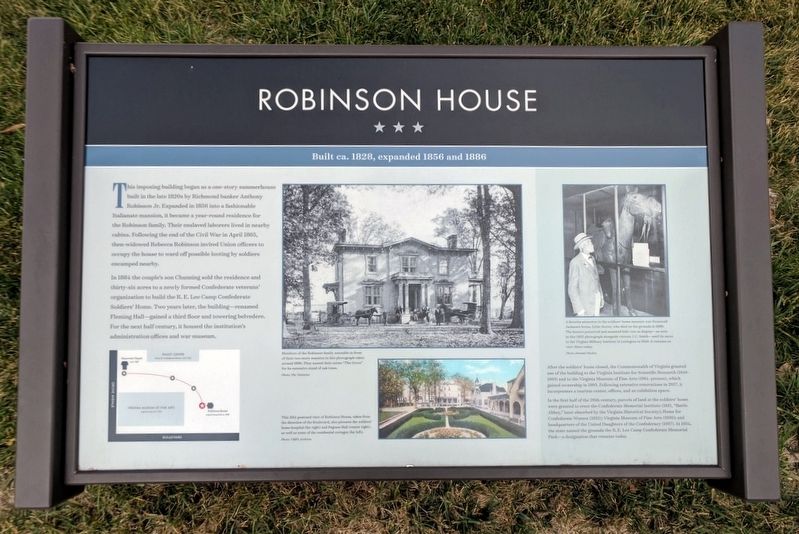
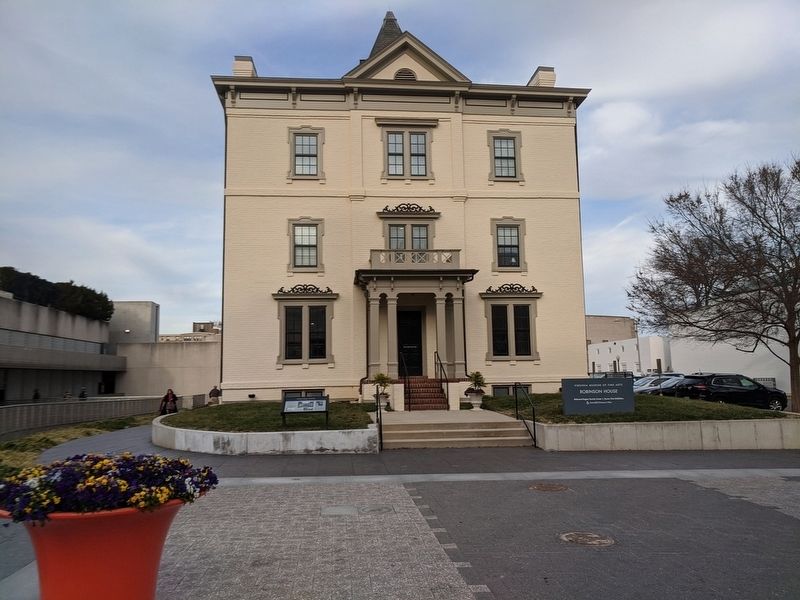
Robinson House
Built ca. 1828, expanded 1856 and 1886
December 27, 2019
1. Robinson House Marker
In 1884 the couple's son Channing sold the residence and thirty-six acres to a newly formed Confederate veterans' organization to build the R.E. Lee Camp Confederate Soldiers' Home. Two years later, the building—renamed Fleming Hall—gained a third floor and towering belvedere. For the next half century, it housed the institution's administration offices and war museum.
After the soldiers' home closed, the Commonwealth of Virginia granted use of the building to the Virginia Institute for Scientific Research (1949- 1963) and to the Virginia Museum of Fine Arts (1964-present), which gained ownership in 1993. Following extensive renovations in 2017, it incorporates
this page online
In the first half of the 20th century, parcels of land at the soldiers' home were granted to erect the Confederate Memorial Institute (1921, "Battle Abbey," later absorbed by the Virginia Historical Society); Home for Confederate Women (1932); Virginia Museum of Fine Arts (1936); and headquarters of the United Daughters of the Confederacy (1957). In 1934, the state named the grounds the R.E. Lee Camp Confederate Memorial Park—a designation that remains today.
Erected 2011 by Virginia Museum of Fine Arts.
Topics. This historical marker is listed in these topic lists: Arts, Letters, Music • War, US Civil.
Location. 37° 33.42′ N, 77° 28.474′ W. Marker is in Richmond, Virginia. It is in the Museum District. It can be reached from North Arthur Ashe Boulevard (Virginia Route 161) south of Stuart Avenue, on the right when traveling south. Located north of the Virginia Museum of Fine Arts. Touch for map. Marker is at or near this postal address: 200 North Arthur Ashe Boulevard, Richmond VA 23221, United States of America.
2. Robinson House
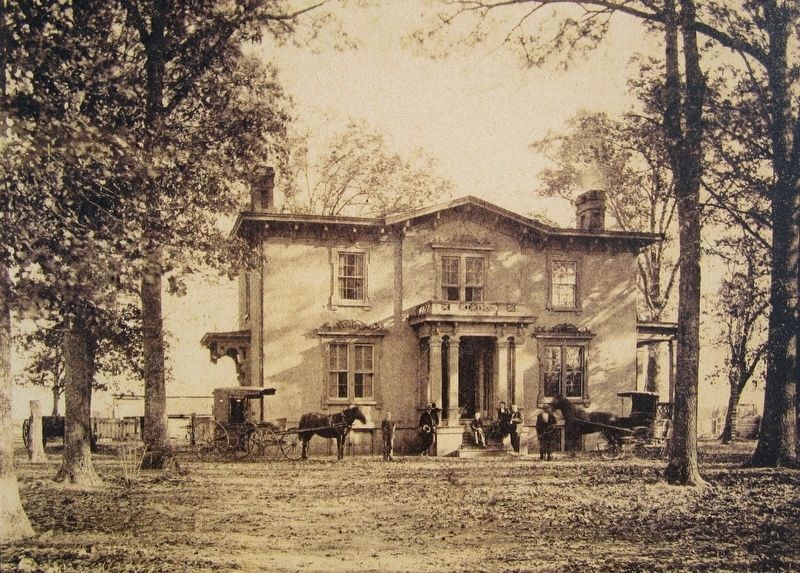
Members of the Robinson family assemble in front of their two-story mansion in this photograph taken around 1880. They named their estate "The Grove" for its extensive stand of oak trees. Photo: The Valentine

Regionally, this marker is in Central Virginia. It is also in the American South and specifically in the Upper South. Globally, it is in North America, the Western Hemisphere, the Western World, and the Anglosphere. Historically, it finds itself in what was once the territory of the Mississippian Culture, one of the original Thirteen Colonies, one of the Confederate States of America, and the Antebellum South.
Other nearby markers. At least 8 other markers are within walking distance of this marker: Slavery and Freedom (within shouting distance of this marker); Rumors of War (within shouting distance of this marker); Bridled Veterans (about 300 feet away, measured in a direct line); Civil War Horse (about 300 feet away); Confederate Soldiers' Home (about 400 feet away); The Home For Needy Confederate Women (about 400 feet away); Confederate Memorial Chapel (about 600 feet away); Virginia Historical Society (about 600 feet away). Touch for a list and map of all markers in Richmond.
Other markers no longer nearby. Robinson House (was a few steps from this marker but has been replaced with another
3. Confederate Soldiers' Home
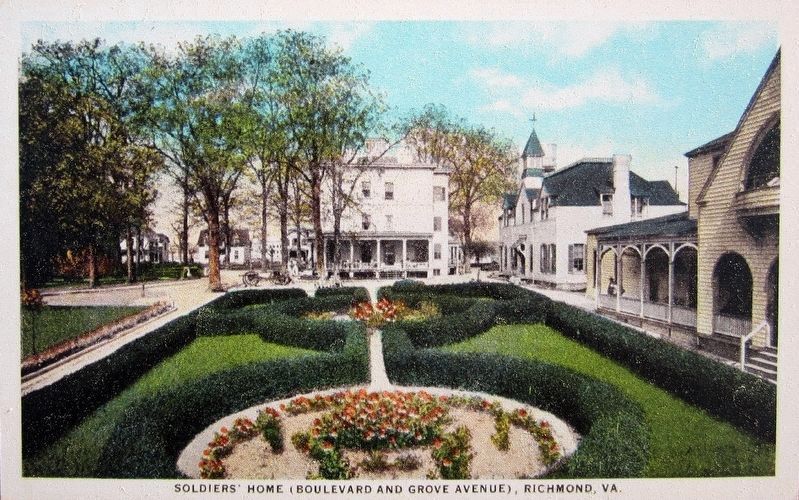
This 1914 postcard view of Robinson House, taken from the direction of the Boulevard, also pictures the soldiers' home hospital (far right) and Pegram Hall (center right), as well as some of the residential cottages (far left). Photo: VFMA Archives
Related marker. Click here for another marker that is related to this marker. Old Marker At This Location also titled "Robinson House".
4. Confederate Soldiers' Home
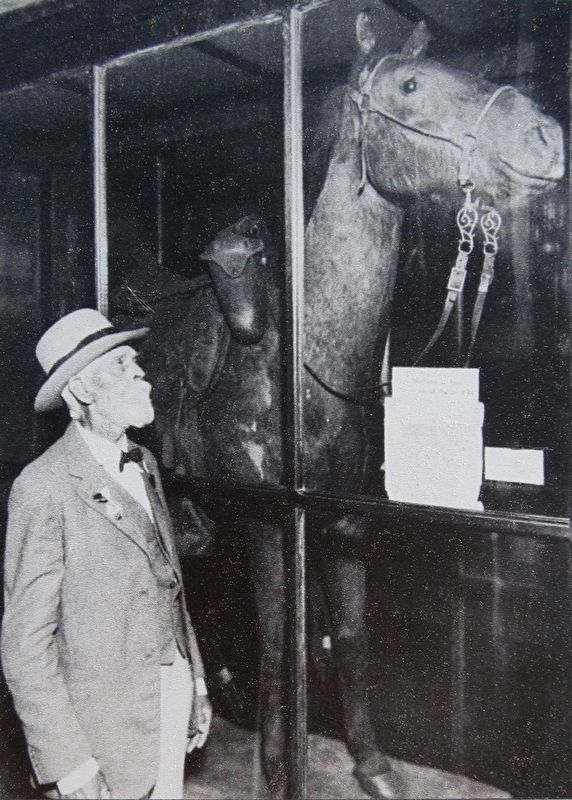
A favorite attraction in the soldiers' home museum was Stonewall Jackson's horse, Little Sorrel, who died on the grounds in 1886. The horse's preserved and mounted hide was on display—as seen in this 1932 photograph alongside veteran J.C. Smith—until its move to the Virginia Military Institute in Lexington in 1949. It remains on view there today. Photo: Dementi Studios
December 27, 2019
5. Robinson House Marker
Credits. This page was last revised on February 1, 2023. It was originally submitted on December 27, 2019, by Bernard Fisher of Richmond, Virginia. This page has been viewed 863 times since then and 84 times this year. Photos: 1. submitted on December 27, 2019. 2, 3, 4. submitted on April 19, 2011. 5. submitted on December 27, 2019.
