Ajanta in Aurangabad District, Maharashtra, India — भारत (South Asia)
Cave No. 1
⎯⎯⎯
गुफा क़. 1

Photographed by Shaw Zavoshy, January 14, 2020
1. Cave No. 1 Marker
The doorframe and pillars were beautifully carved. Every inch of this cave was originally painted, even the pillars and the sculptures being no exceptions. The ceiling painted with geometrical, floral and faunal depictions, creats an impression of a decorative shamiyana held above. The walls painted mostly with the Jataka tales and scenes related to Lord Buddha's life. The cave contains some of the masterpieces of the world of painting namely Padmapani and Vajrapani.
(Hindi text not transcribed)
Erected by Archaeological Survey of India, Aurangabad Circle.
Topics. This historical marker is listed in these topic lists: Arts, Letters, Music
this page online
Location. 20° 33.148′ N, 75° 42.134′ E. Marker is in Ajanta, Maharashtra, in Aurangabad District. It is on Caves Trail, on the right when traveling north. Touch for map. Marker is in this post office area: Ajanta, Maharashtra 43111-7, India. Touch for directions.

Regionally, it is in Asia, specifically in South Asia, in the Indian Subcontinent, on the Arabian Sea, on the Bay of Bengal, and in the Anglosphere. Historically, it finds itself in what was once the Mughal Empire, Portuguese colonies, and a British colony.
More about this marker. The marker is located at the entrance to the first cave north of the visitor center for the Ajanta Caves.
Also see . . . Ajanta Caves (Wikipedia). "The Ajanta Caves are 30 (approximately) rock-cut Buddhist cave monuments which date from the 2nd century BCE to about 480 CE in Aurangabad district of Maharashtra state of India. The caves include paintings and rock-cut sculptures described as among the finest surviving examples of ancient Indian art, particularly
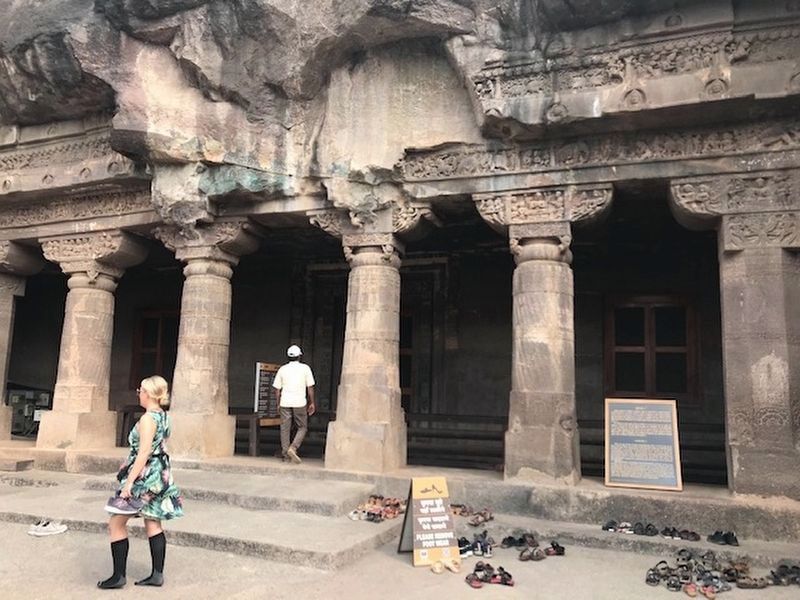
Photographed by Shaw Zavoshy, January 14, 2020
2. Cave No. 1 / गुफा क़ 1 Marker - wide view

Photographed by Shaw Zavoshy, January 14, 2020
3. General overview of Ajanta Caves - looking northeast
Cave No. 1 is at the very rightmost of the photo.

Photographed by Photo Dharma (via Wikimedia Commons under CC 2.0 license), March 8, 2017
4. Cave No. 1 interior
Credits. This page was last revised on April 14, 2020. It was originally submitted on January 14, 2020, by Andrew Ruppenstein of Lamorinda, California. This page has been viewed 318 times since then and 18 times this year. Photos: 1, 2, 3, 4. submitted on January 14, 2020, by Andrew Ruppenstein of Lamorinda, California.
