Lake Ariel in Wayne County, Pennsylvania — The American Northeast (Mid-Atlantic)
Lake Lacawac
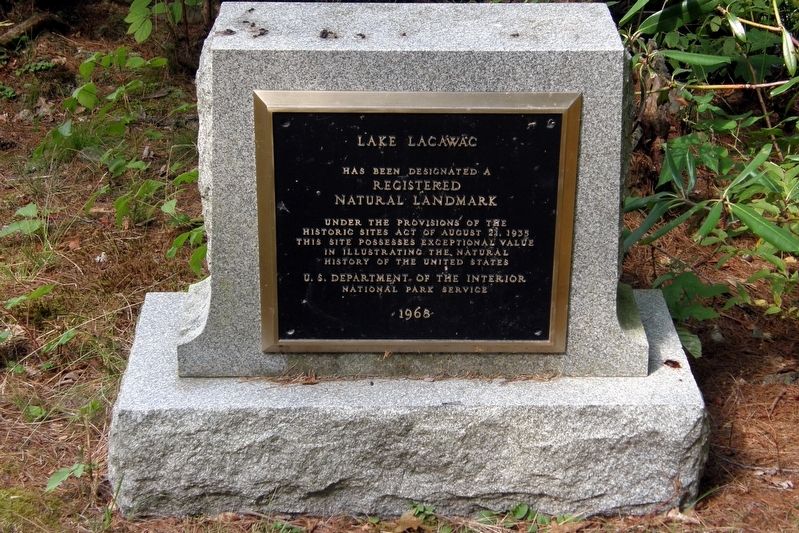
Photographed by Larry Gertner, August 30, 2019
1. Lake Lacawac Marker
Lake Lacawac
has been classified a
Registered National Landmark
under the provisions of the Historic Sites Act of August 21, 1935
This site possesses exceptional value in illustrating the natural history of the United States
U.S. Department of the Interior
National Park Service
1968
Erected 1968.
Topics and series. This historical marker is listed in this topic list: Environment. In addition, it is included in the National Natural Landmarks series list. A significant historical date for this entry is August 21, 1935.
Location. 41° 22.796′ N, 75° 17.54′ W. Marker is in Lake Ariel, Pennsylvania, in Wayne County. It can be reached from Sanctuary Road. Touch for map. Marker is in this post office area: Lake Ariel PA 18436, United States of America. Touch for directions.

Regionally, this marker is in Pennsylvania’s Pocono Mountains. It is also in the American Northeast, in the Mid-Atlantic, in Appalachia, and specifically in Northern Appalachia. Globally, it is in North America, the Western Hemisphere, the Western World, and the Anglosphere. Historically, it finds itself in what was once the Haudenosaunee (Iroquois)
this page online
Other nearby markers. At least 8 other markers are within walking distance of this marker: Watres Lodge / The Boat House (about 400 feet away, measured in a direct line); Coachman’s Cottage / The Spring House (about 400 feet away); The Ice House / The Woodshed (about 500 feet away); Welcome to Historic Connell Park (about 500 feet away); The Deagan Chimes (about 600 feet away); Connell Park (about 700 feet away); Louis Arthur Watres (about 700 feet away); The Lacawac Sanctuary (approx. ¼ mile away). Touch for a list and map of all markers in Lake Ariel.
More about this marker. The marker is northwest of the Watres Lodge, on the south shore of Lake Lacawac.
Also see . . . . “Lacawac Sanctuary is dedicated to inspiring lifelong connections to nature and shaping the next generation of scientists and earth stewards through research, education, preservation.” (Submitted on January 24, 2020, by Larry Gertner of New York, New York.)
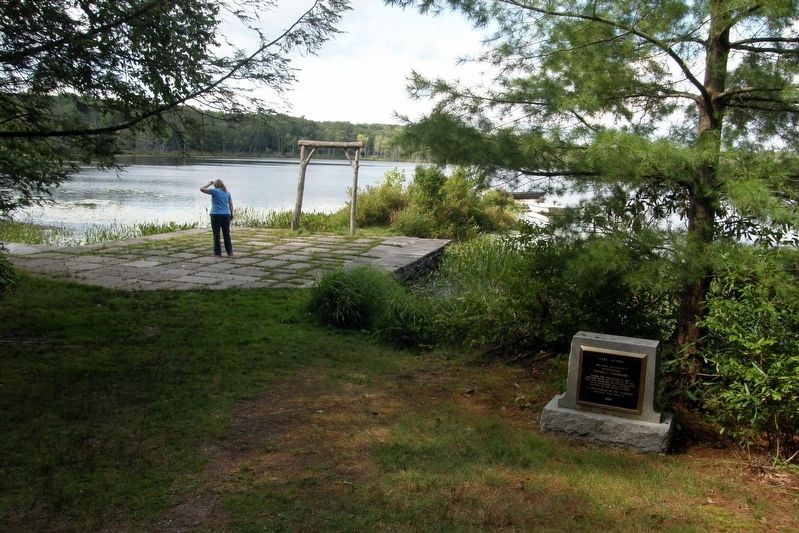
Photographed by Larry Gertner, August 30, 2019
2. Lake Lacawac marker and the boat dock
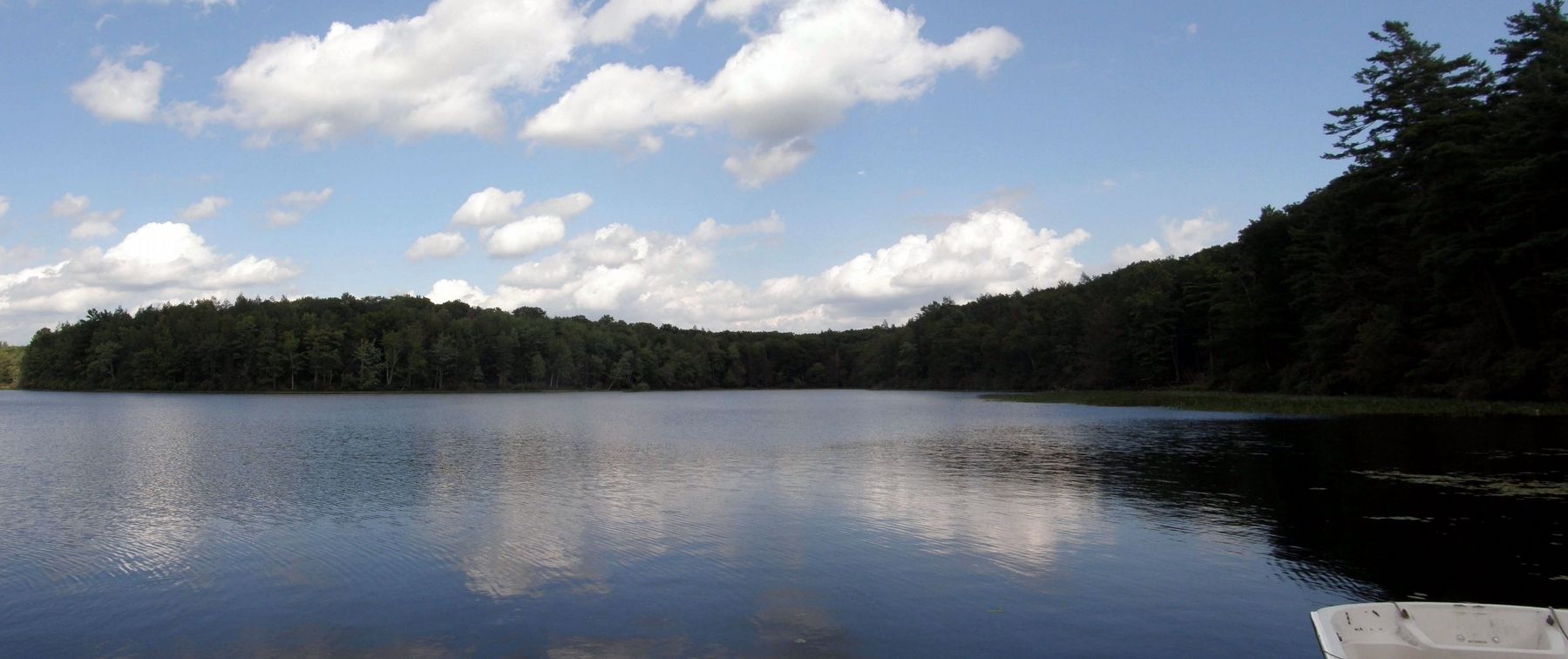
Photographed by Larry Gertner, August 31, 2019
3. Lake Lacawac
Credits. This page was last revised on January 25, 2020. It was originally submitted on January 24, 2020, by Larry Gertner of New York, New York. This page has been viewed 251 times since then and 12 times this year. Photos: 1, 2, 3. submitted on January 24, 2020, by Larry Gertner of New York, New York. • Bill Pfingsten was the editor who published this page.
