Near Cairo in Alexander County, Illinois — The American Midwest (Great Lakes)
Cairo, Illinois
Photographed by Craig Swain, March 17, 2009
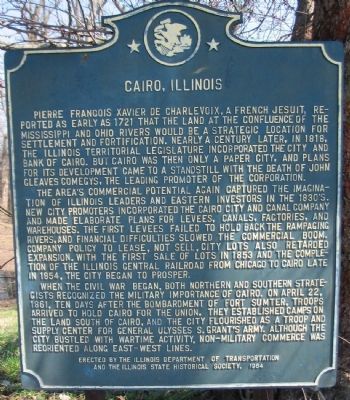
1. Cairo, Illinois Marker
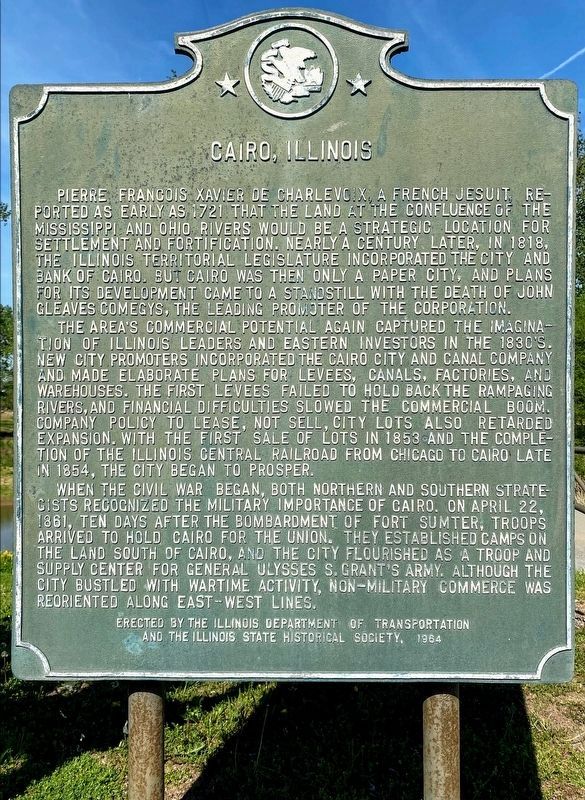
The area's commercial potential again captured the imagination of Illinois leaders and eastern investors in the 1830's. New city promoters incorporated the Cairo City and Canal Company and made elaborate plans for levees, canals, factories, and warehouses. The first levees failed to hold back the rampaging rivers, and financial difficulties slowed the commercial boom. Company policy to lease, not sell, city lots also retarded expansion. With the first sale of lots in 1853 and the completion of the Illinois Central Railroad from Chicago to Cairo late in 1854, the city began to prosper.
When the Civil War began, both Northern and Southern
this page online
Erected 1964 by Illinois Department of Transportation and the Illinois State Historical Society.
Topics and series. This historical marker is listed in these topic lists: Industry & Commerce • Settlements & Settlers • War, US Civil. In addition, it is included in the Illinois State Historical Society series list. A significant historical date for this entry is April 22, 1861.
Location. 36° 59.245′ N, 89° 9.013′ W. Marker is near Cairo, Illinois, in Alexander County. It is at the intersection of Washington Avenue (U.S. 60/62) and Fort Defiance Road, on the right when traveling north on Washington Avenue. Located at the entrance to Fort Defiance Park, in a parking area for the State Highway Patrol office. Touch for map. Marker
Photographed by Shane Oliver, May 1, 2021
2. Cairo, Illinois Marker

Regionally, this marker is in Southern Illinois — Little Egypt. It is also in the American Midwest, in the Ohio River Valley, in the Corn Belt, and in the Great River Road Region. Globally, it is in North America, the Western Hemisphere, the Western World, and the Anglosphere. Historically, it finds itself in what was once the territory of the Mississippian Culture and also the Northwest Territory.
Other nearby markers. At least 8 other markers are within walking distance of this marker: Critical River Confluence (a few steps from this marker); Cairo Connection (a few steps from this marker); Lewis & Clark (a few steps from this marker); Historical Survey Marker (a few steps from this marker); Lewis and Clark in Illinois (a few steps from this marker); Great River Road Information Kiosk (within shouting distance of this marker); The Mississippi River Bridge (about 400 feet away, measured in a direct line); The Ohio River Bridge (about 500 feet away). Touch for a list and map of all markers in Cairo.
More about this marker.
Photographed by Craig Swain, March 17, 2009
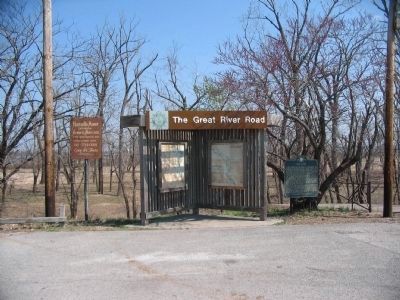
3. Marker and Kiosk at the Park Entrance
The kiosk provides information on the Great River Road in Illinois. The road is a auto tour route paralleling the Mississippi River.
Photographed by Craig Swain, March 17, 2009
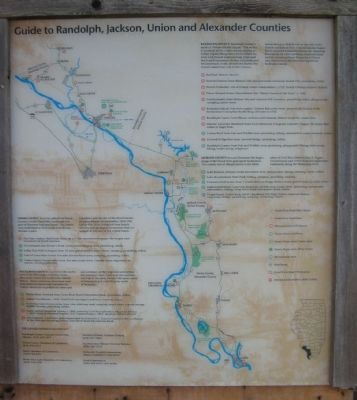
4. Guide to Randolph, Jackson, Union and Alexander Counties
Photographed by Craig Swain, March 17, 2009
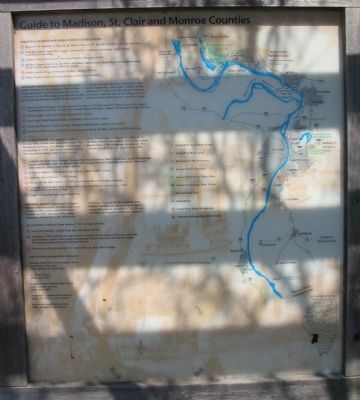
5. Guide to Madison, St. Clair, and Monroe Counties
Photographed by Craig Swain, March 17, 2009
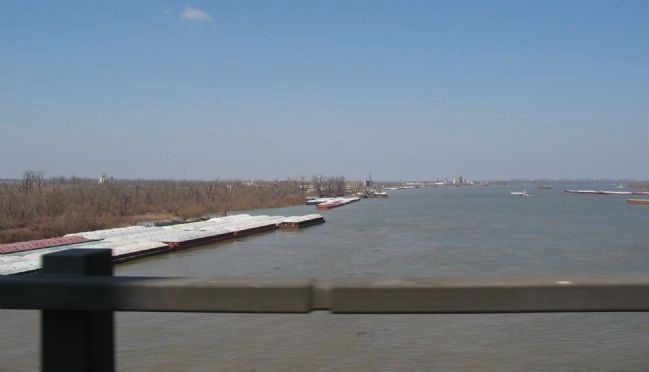
6. Cairo River Port
Looking from the nearby US Highway 62 Bridge crossing to Kentucky. The river port at Cairo is still an active stop for barge traffic. Due to an oddity of river geography, the bridge here crosses to the northeast into Kentucky, with the town of Cairo surrounded on three sides by the states of Missouri and Kentucky.
Photographed by Craig Swain, March 17, 2009
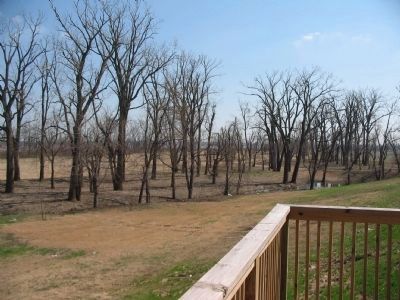
7. Fort Defiance Park
Photographed by Craig Swain, March 17, 2009
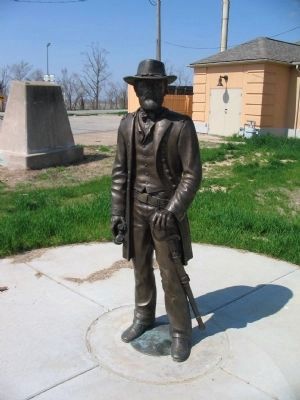
8. Statue of General U.S. Grant
Standing outside a visitor center and state police station is this statue of General Grant.
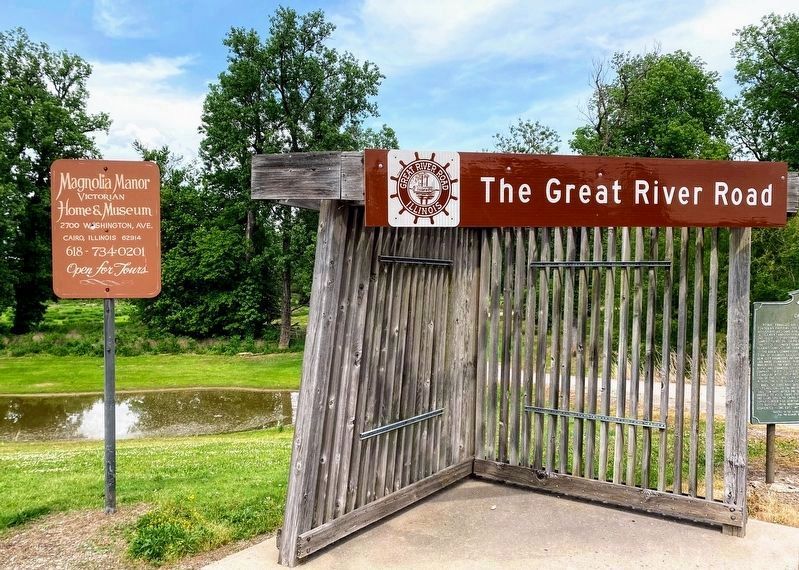
Photographed by Shane Oliver, May 22, 2021
9. Great River Road Marker Kiosk
The Great River Road Markers are no longer standing.
Credits. This page was last revised on November 17, 2024. It was originally submitted on May 27, 2009, by Craig Swain of Leesburg, Virginia. This page has been viewed 4,730 times since then and 142 times this year. Last updated on January 24, 2020, by Jason Voigt of Glen Carbon, Illinois. Photos: 1. submitted on May 27, 2009, by Craig Swain of Leesburg, Virginia. 2. submitted on June 2, 2021, by Shane Oliver of Richmond, Virginia. 3, 4, 5, 6, 7, 8. submitted on May 27, 2009, by Craig Swain of Leesburg, Virginia. 9. submitted on June 2, 2021, by Shane Oliver of Richmond, Virginia. • Devry Becker Jones was the editor who published this page.
