Alphabet City in Manhattan in New York County, New York — The American Northeast (Mid-Atlantic)
Tompkins Square Park
10.5 acres
Photographed by Larry Gertner, April 28, 2015
1. Tompkins Square Park Marker
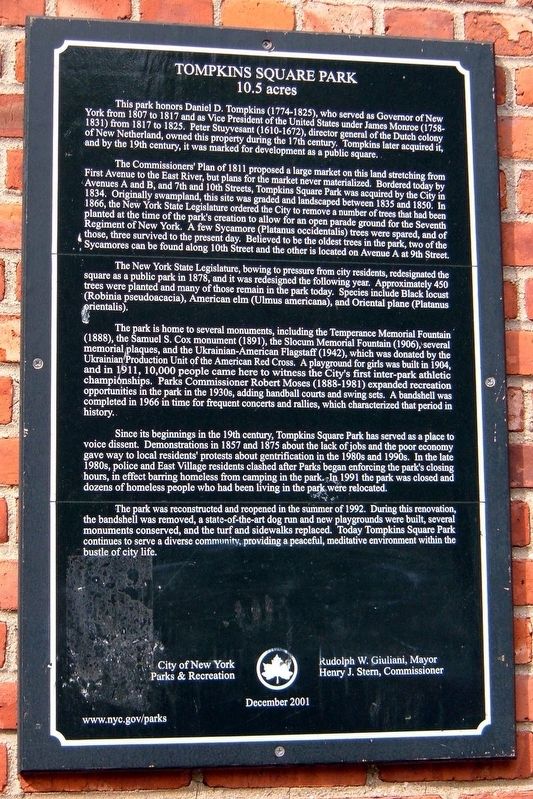
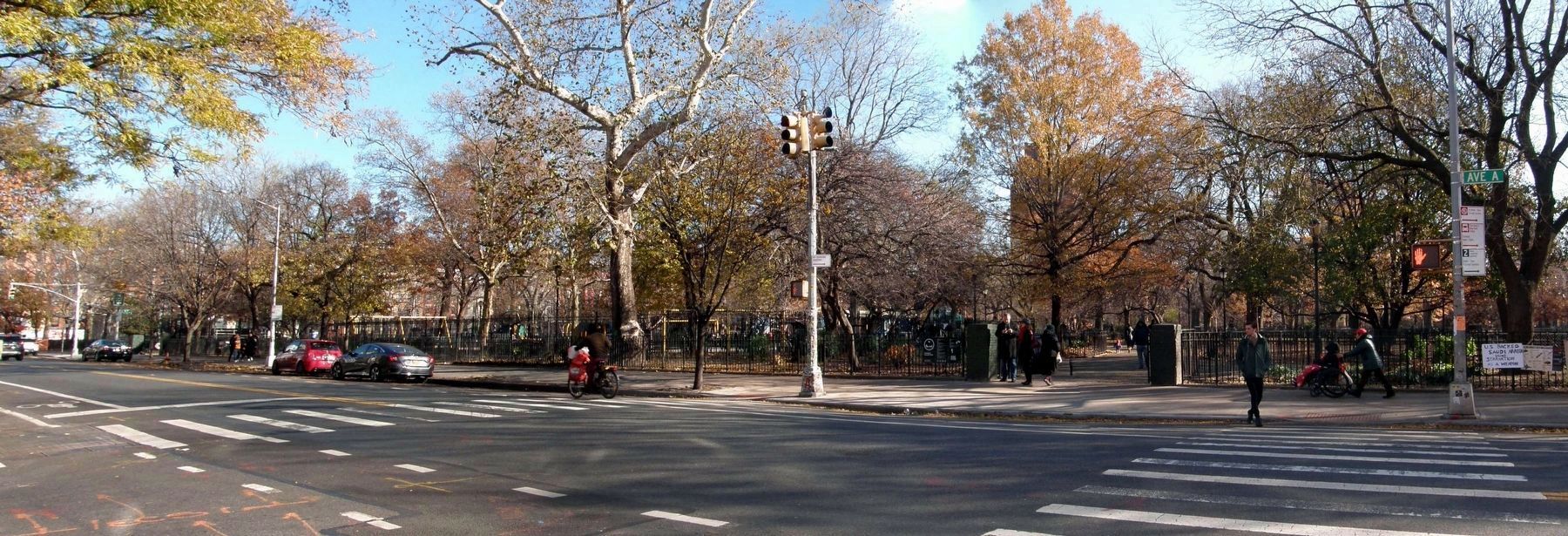
The Commissioners’ Plan of 1811 proposed a large market on this land stretching from First Avenue to the East River, but plans for the market never materialized. Bordered today by Avenues A and B, and 7th and 10th Streets, Tompkins Square Park was acquired by the City in 1834. Originally swampland, this site was graded and landscaped between 1835 and 1850. In 1866, the New York State Legislature ordered the City to remove a number of trees that had been planted at the time of the park’s creation to allow for an open parade ground for the Seventh Regiment of New York. A few Sycamore (Platanus occidentalis) trees were spared, and of those, three survived to the present day. Believed to be the oldest trees in the park, two of the Sycamores can be found along 10th Street and the other is located on Avenue A at 9th Street.
The New York State Legislature, bowing to pressure from city residents, redesignated the square as a public park in 1878, and it was redesigned the following year. Approximately 450 trees were planted and many of those remain in the park today. Species include Black locust (Robinia pseudoacacia), American elm (Ulmus Americana), and Oriental plane (Platanus orientalis).
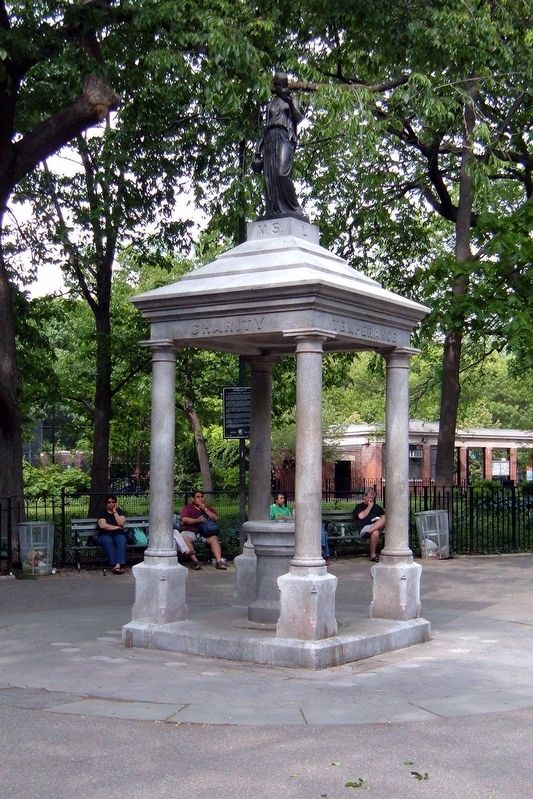
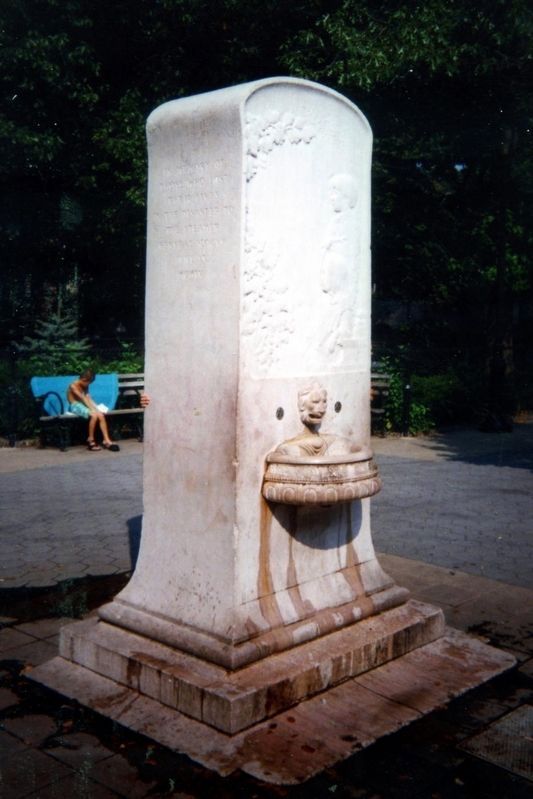
The park is home to several monuments, including the Temperance Memorial Fountain (1888), the Samuel S. Cox monument (1891), the Slocum Memorial Fountain (1906), several memorial plaques, and
this page online
The park was reconstructed and reopened in the summer of 1992. During this renovation,
Photographed by Larry Gertner, November 30, 2019
2. Tompkins Square Park
City of New York Parks & Recreation
Rudolph W. Giuliani, Mayor
Henry J. Stern, Commissioner
December 2001
Erected by The park is listed in the "AIA (American Institute of Architects) Guide to New York City, Fifth Edition".
Topics and series. This historical marker is listed in these topic lists: Colonial Era • Parks & Recreational Areas. In addition, it is included in the Former U.S. Presidents: #05 James Monroe, and the NYC Parks series lists.
Location. 40° 43.611′ N, 73° 58.89′ W. Marker is in Manhattan, New York, in New York County. It is in Alphabet City. It can be reached from the intersection of park path at St. Marks's Place and Avenue A, on the left when traveling east. Touch for map. Marker is in this post office area: New York NY 10009, United States of America. Touch for directions.

Regionally,
Photographed by Larry Gertner, September 17, 2019
3. Temperance Memorial Fountain
Within the park, mentioned in text.
Other nearby markers. At least 8 other markers are within walking distance of this marker: Ukrainian-American Flagstaff (a few steps from this marker); Slocum Memorial Fountain (a few steps from this marker); a different marker also named Slocum Memorial Fountain (a few steps from this marker); Harry Lloyd Hopkins (about 400 feet away); General Milan Stefanik (about 400 feet away); Charlie Parker Residence (about 400 feet away); Frank O'Hara (1926-1966) (about 500 feet away); 519 East 11th Street (about 500 feet away). Touch for a list and map of all markers in Manhattan.
Another marker is no longer nearby. Temperance Fountain (was about 300 feet away, measured in a direct line but has been confirmed missing).
Regarding Tompkins Square Park. The park is listed in the "AIA (American Institute of Architects) Guide to New York City, Fifth Edition".
Also see . . . Tompkins Square Park. Official NYC Parks description. (Submitted on February 8, 2020, by Larry Gertner of New York, New York.)
Photographed by Larry Gertner, September 17, 2019
4. Slocum Memorial Fountain
Within the park, mentioned in text.
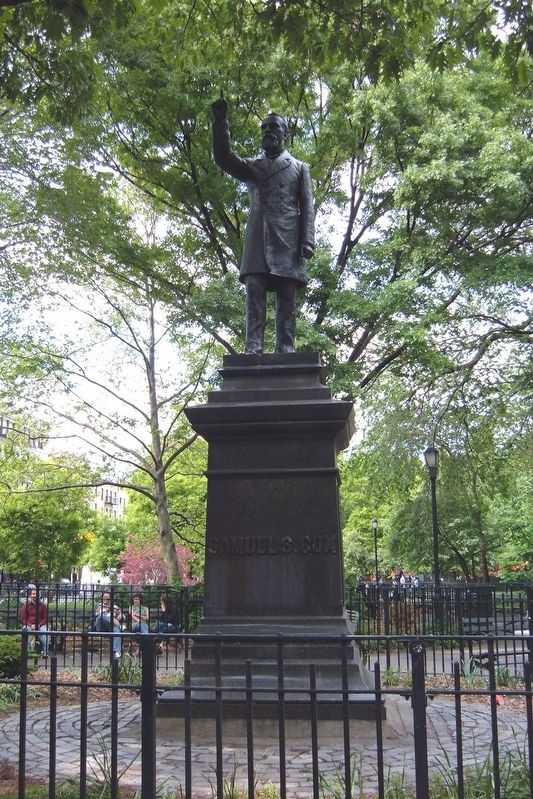
Photographed by Larry Gertner, September 17, 2019
5. Samuel S. Cox monument
Within the park, mentioned in text.
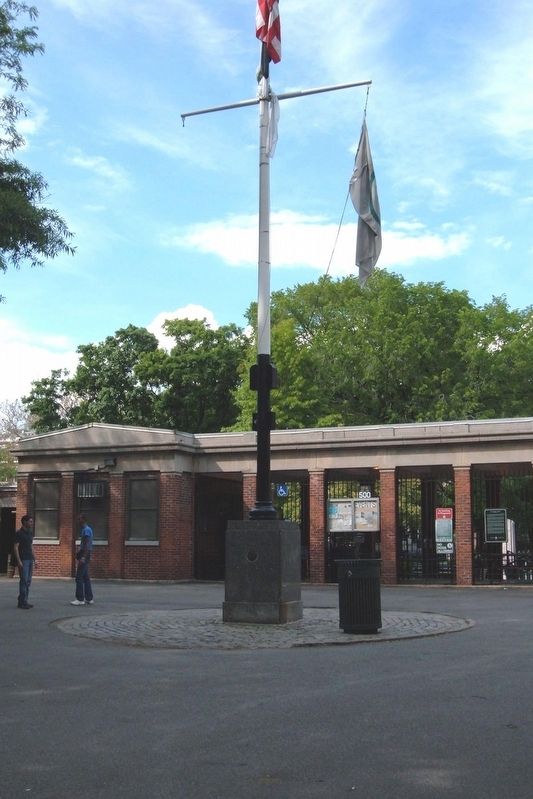
Photographed by Larry Gertner, September 17, 2019
6. Ukrainian-American Flagstaff
Within the park, mentioned in text.
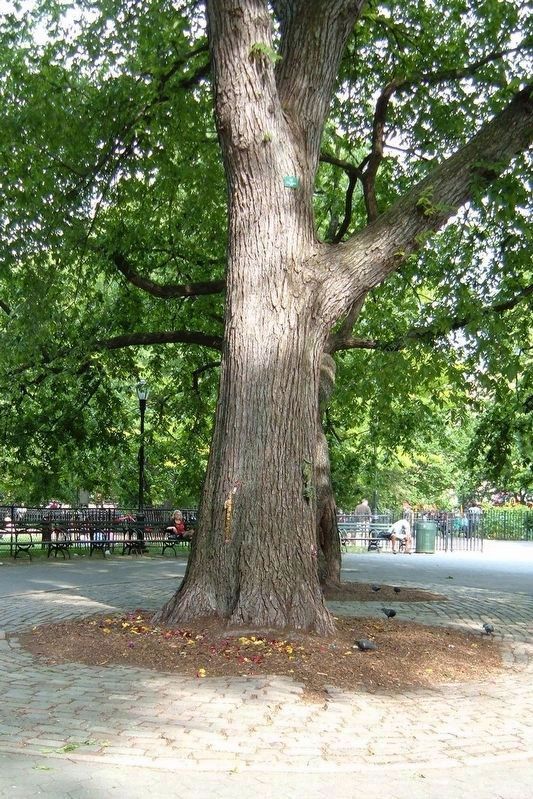
Photographed by Larry Gertner, September 17, 2019
7. The Hare Krishna sycamore
Within the park, mentioned in text.
Credits. This page was last revised on January 31, 2023. It was originally submitted on February 8, 2020, by Larry Gertner of New York, New York. This page has been viewed 965 times since then and 53 times this year. Photos: 1, 2, 3, 4, 5, 6. submitted on February 8, 2020, by Larry Gertner of New York, New York. 7. submitted on February 9, 2020, by Larry Gertner of New York, New York. • Michael Herrick was the editor who published this page.
